A. What the machine is and how it draws
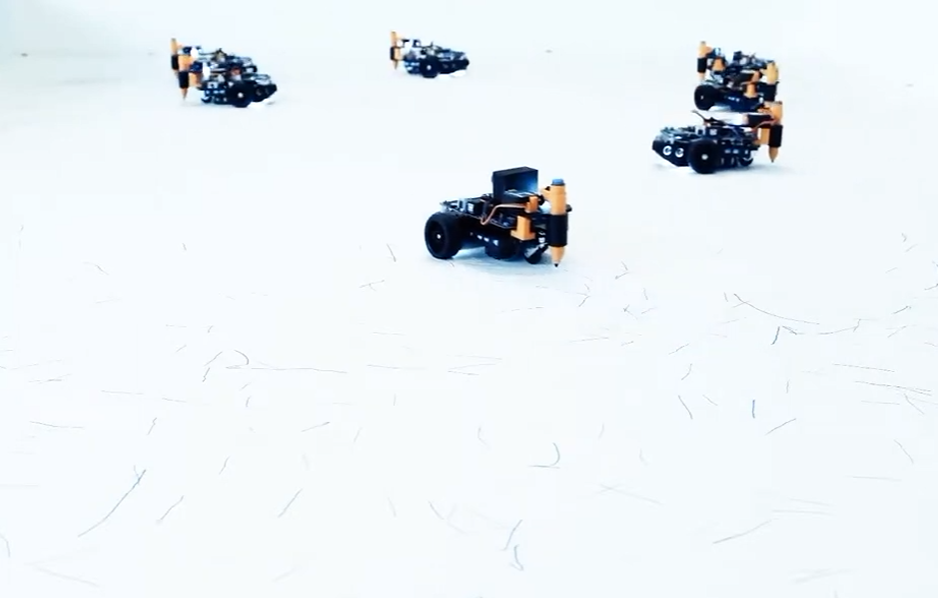
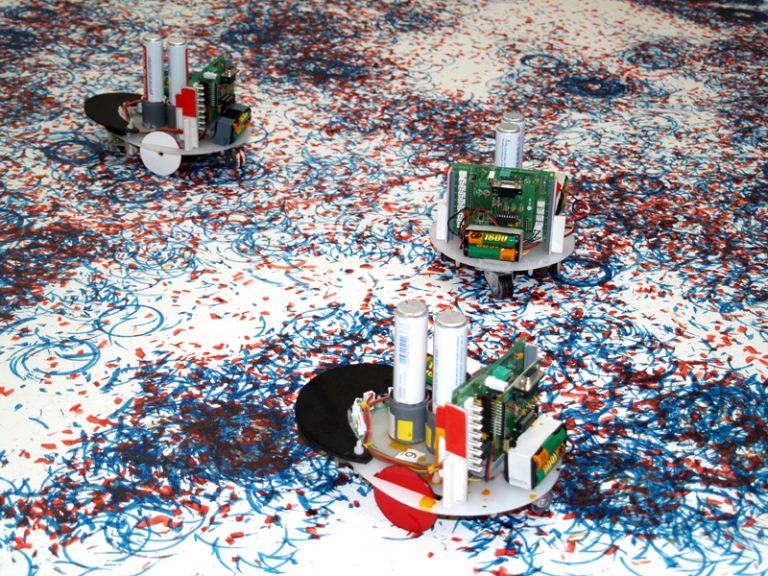
The category of robots we decided to research was mobile drawing robots. We started by taking a look at the given example, “Bebot”, created by Leonel Moura. This category of robots is essentially small scale robots with wheels that kind of resemble a remote control car; they usually have some type of brush or pen attached to them that can trace the ground beneath them.
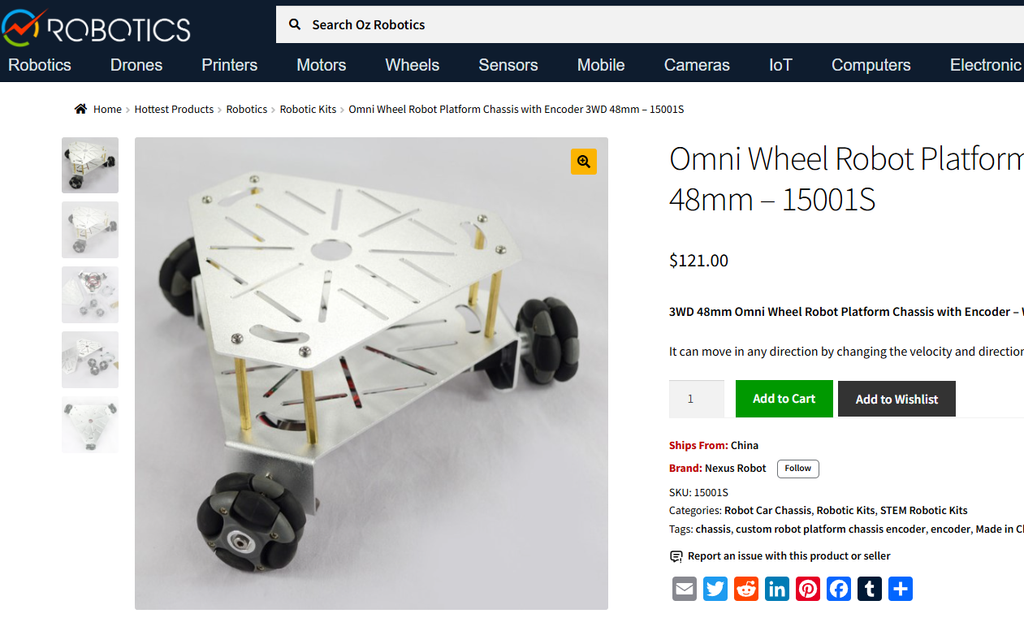
Many of the robots in this category were mobile with omni-directional wheels. That is, it can move in any direction despite the number of wheels it has. In fact, we found many people selling kits for this type of robot. Here’s an example of a mobile drawing robot we found online being sold by Nexus robots.
B. What makes its approach to drawing interesting
This approach could make drawing more interesting by creating patterns shaped by the movement of omni wheels and input from various sensors. At first, we might imagine that such a machine could produce only simple lines connecting one point to another, or endless circles drawn in either direction.
However, our research suggests that a device like this can draw with some degree of precision while also allowing us to introduce an element of randomness. A mobile drawing machine could therefore produce interesting results by attempting to follow a specific drawing path while introducing unexpected variations along the way. Alternatively, we could make its movements entirely random and explore the patterns that emerge from the erratic movement.
And although we thought the function of an omni wheel was really impressive—it might’ve almost been a bit too perfect. We thought about “Bebot” by Leonel Moura and we thought there was a certain expression in its limited mobility with just three non-omnidirectional wheels. The full robot would have to turn in order to change which direction it wanted to draw. There is a fun layer of expression in its limitation.
C. The essential mechanical, electronic, and software components needed to build it
When it comes to materials, here’s what we were guessing a project would need:
- Arduino Uno or equivalent.
- Board to solder the cables to.
- Cables (the ones used to connect and solder).
- Three 3D-printed omni wheels.
- At least two 3D-printed bases that we need to design on our own.
- Portable Batteries.
- Screws to connect the pieces.
- Three servo motors to connect to the 3D omni wheels.
- At least 3 pens or markers to draw.
- Probably other pieces that we are not sure.
We were thinking that if we were to build our own mobile robot later on, we were envisioning using some pre-done 3D-printed assets since we are not expert enough to design these in our own.
Browsing on the internet, we found some websites that can help with this, such as the following website: https://www.yeggi.com/q/omni+wheel/
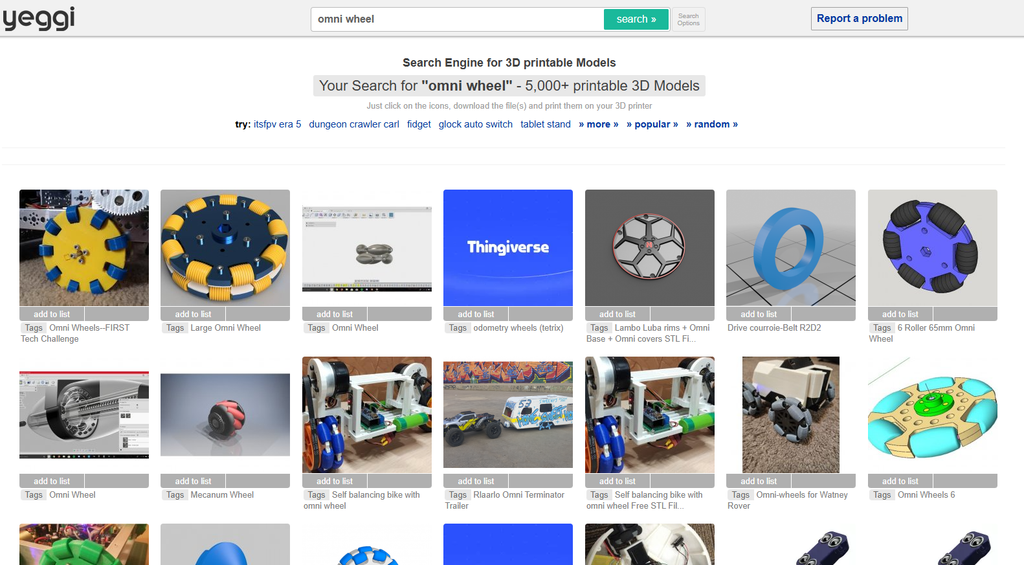
For the base, Figure 1 shows several custom shapes, although we expect to design our own. We will probably use Tinkercad or another design program for this.
Regarding the software, our research suggests two possible approaches: using a workflow similar to that of a pen plotter or writing custom code for an Arduino. Neither approach appears to require highly specialized software beyond the tools we already use. The software we choose will depend on our final approach.
D. Examples of drawings
From the videos we explored, it appears that this mobile drawing robot can mimic the drawings of a pen plot, that is, it can draw with the precision of one. Check the following video from Thanos Eleftherakos for an example:
However, we are not searching to create another pen plotter that can draw with a lot of precision. We are mostly looking for a machine that can produce erratic results. Such as the following videos and images:
Video by Amy Poehler’s Smart Girls.
Video by scanlime.
E. Relevant references, projects, or artists/designers who have explored similar systems
One of the first projects we came across in this category of drawing robots was by user “lingib” on the Autodesk Instructables website. This was simply titled “Omni Wheel CNC Plotter V2” and
https://www.instructables.com/Omni-Wheel-CNC-Plotter-V2
Another project we found was called “The Butterfly-Infinity Plotter” by Basil Abraham. It seems like this one was a final project for some coursework. It’s very well documented. They also use the same omniwheel piece as the previous designer.
https://fabacademy.org/2024/labs/kochi/students/basil-abraham/project.html