Assignment 7 – Drawing Robots and Machines
Group Members: Mouza, Meera, and Mhara
Introduction
When we think of painting, we usually imagine an artist holding a brush and deciding what to paint. But what if a robot could do the same thing?
For this project, we chose e-David, a robotic painting system that uses real brushes and paint to create artworks. What caught our attention was that e-David doesn’t just follow instructions and paint an image. It actually takes pictures of its work, checks what it has painted, and makes changes as it goes.
We found this especially interesting because painting is something we usually connect with human creativity, personal expression, and making decisions while working. Seeing a machine perform some of these actions made us curious about how much of the painting process can be controlled through technology.
We wanted to explore how e-David works, what makes it different from other drawing machines, what is needed to build a system like it, and how artists have used similar technologies in their work.
1. What Is e-David, and How Does It Paint?
e-David stands for Electronic Drawing Apparatus for Vivid Image Display. It was developed by researchers at the University of Konstanz in Germany, and the project has been running since 2009. It was developed under the supervision of Professor Oliver Deussen, and Michael Stroh currently leads the project.
The robot uses an industrial robotic arm that holds a paintbrush and moves it across a canvas. Unlike a printer, which places ink directly onto paper, e-David works with actual paint and brushes, just like an artist would. It can use different brushes, change colours, and clean its brushes when needed.
The process starts with a digital image that the robot uses as a reference. This could be a photograph or a digital drawing. The software studies the image and breaks it down into smaller shapes, colour regions, and details that can be painted. It then plans how the robotic arm should move to create these different parts of the image.
Instead of painting every detail immediately, e-David can work in layers, starting with larger areas of colour before adding smaller details. This is similar to how some artists begin with the general composition and gradually build up their painting.
What makes the process different is that e-David has a camera that takes pictures of the painting as it progresses. The computer compares these pictures with the original image to see which areas still need work. It then tells the robot where to add more brushstrokes.
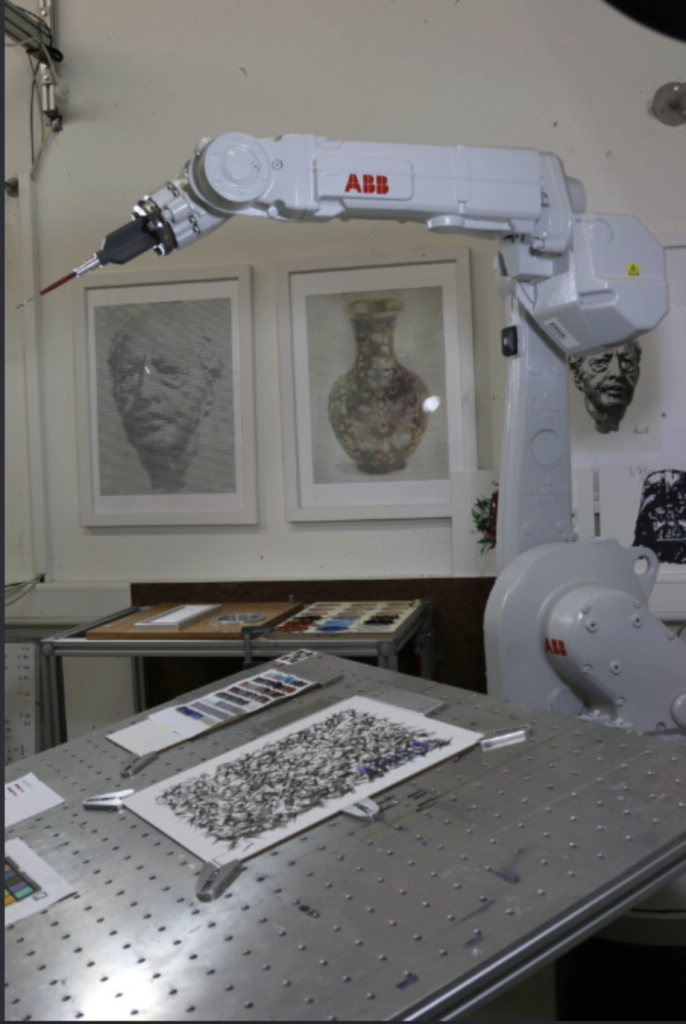
The process can be broken down into five steps:
- Image analysis: The software looks at the reference image and separates it into shapes, colours, and areas that need to be painted.
- Planning: The computer decides where the brushstrokes should go, which colours to use, and how the robotic arm should move.
- Painting: The robotic arm picks up paint and moves the brush across the canvas, gradually building the image through different strokes and layers.
- Checking: A camera takes pictures of the painting so the computer can compare the actual result with the reference image.
- Adjusting: The software identifies areas that need improvement and plans additional brushstrokes to make the painting closer to the intended result.
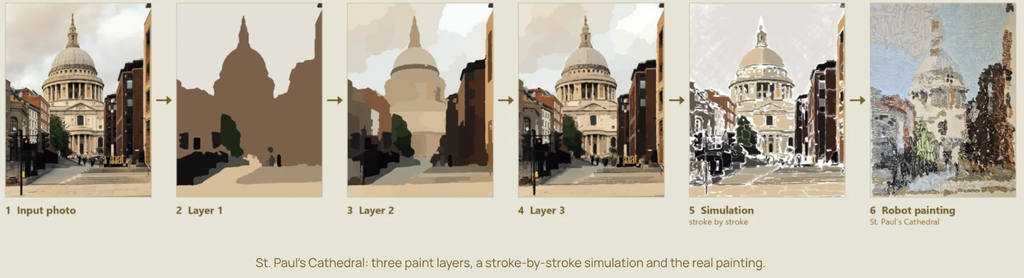
These steps repeat until the painting is finished.
One detail we found interesting is that the robot doesn’t necessarily paint the image in the same order that a person would. Its software can organize the painting into regions and decide how to fill each one based on its shape and the amount of detail needed.
Something else we found interesting is that even though the robot follows computer instructions, the paint doesn’t always behave exactly as expected. Sometimes a brushstroke might be thicker or lighter than planned, or the paint might spread differently depending on the surface. This means the robot has to keep checking its work instead of assuming every stroke turned out perfectly.
2. What Makes e-David Interesting?
What interested us most about e-David is that it can look at what it has painted and make adjustments.
Most drawing machines, like traditional pen plotters, follow a set path that has already been programmed. They move a pen across the paper according to coordinates, but they don’t usually check whether the drawing looks right afterward.
e-David is different because it uses something called a visual feedback system. This means that the robot uses a camera to see what it has painted and then uses that information to decide what needs to be done next. This is also known as a closed-loop system, where the result of an action influences the next action.
We found this interesting because painting isn’t always predictable. The amount of paint on the brush, the pressure against the canvas, and even the texture of the surface can change how a brushstroke looks.
For example, the robot might plan to paint a thin line, but the brush could leave a thicker mark. Instead of continuing without checking, e-David can detect the difference and take it into account when planning its next movements. It cannot always undo a mark that has already been made, but it can adjust the painting by adding more strokes.
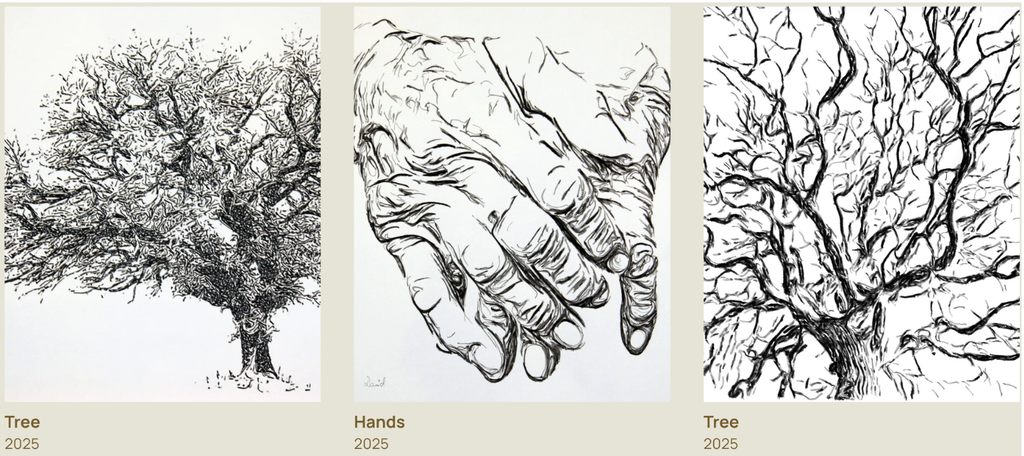
Another thing we liked is the combination of precise robotic movements and the less predictable nature of paint. The robot can control where the brush goes, but it can’t completely control how the paint behaves.
This creates an interesting contrast between the machine and the material. The robotic arm is designed to move accurately, but the paintbrush is flexible, the bristles bend, and the amount of paint changes throughout the process. Even when the robot repeats the same movement, the mark might not look exactly the same.
We also found it interesting that e-David can produce different painting styles. It doesn’t have to focus only on making a realistic copy of a photograph. By changing how the software plans the strokes, the robot can create more simplified, abstract, or experimental results.
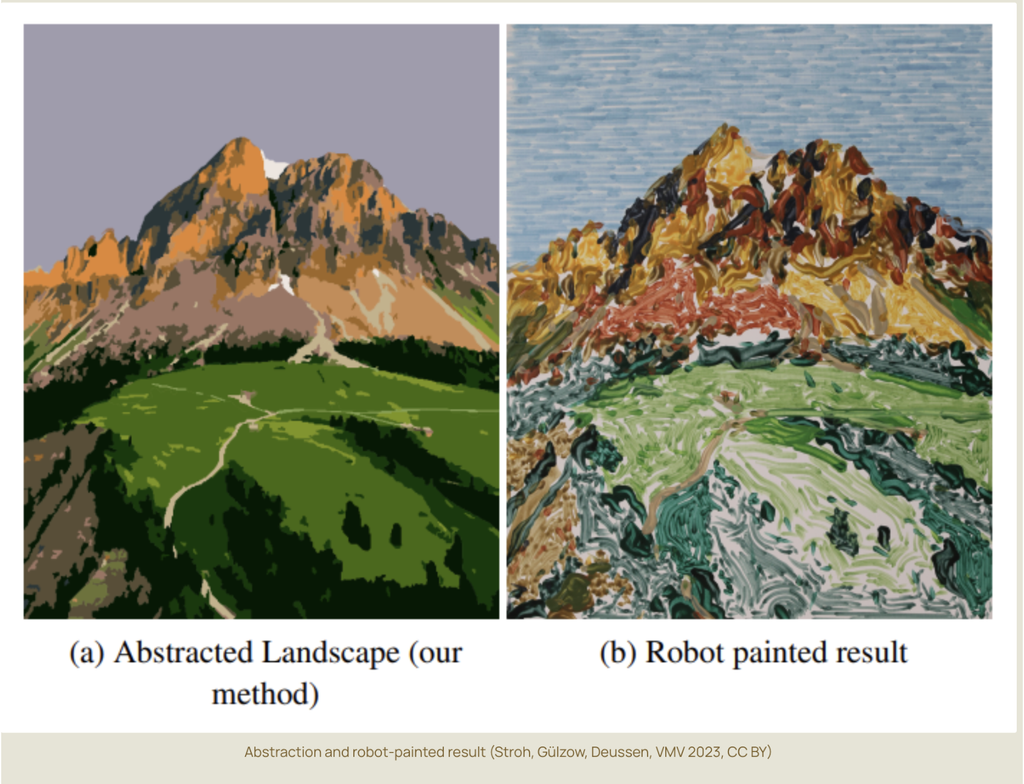
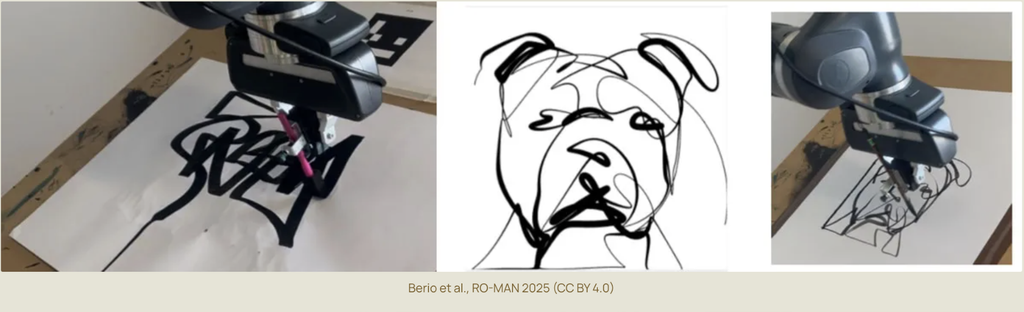
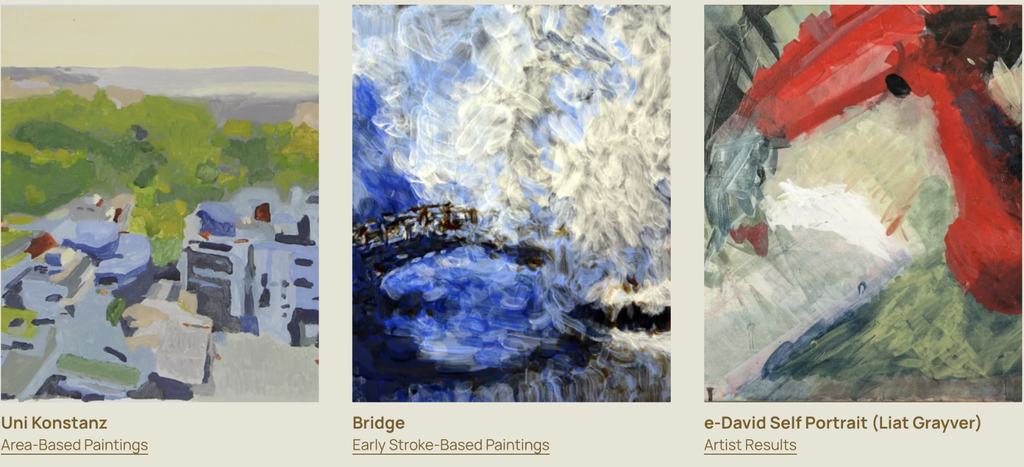
This made us think about how artists work too. When painting by hand, artists often make changes as they go because something doesn’t look exactly how they imagined it. They might add another layer, change a colour, or adjust the composition.
Although e-David works through software rather than human intuition, we thought it was interesting that its painting process also involves checking, changing, and improving the work along the way.
For us, this is what makes e-David more interesting than a machine that simply follows a drawing path. It is not just about how accurately the robot moves, but also about how it responds to the marks it has already made.
3. What Components Are Needed to Build e-David?
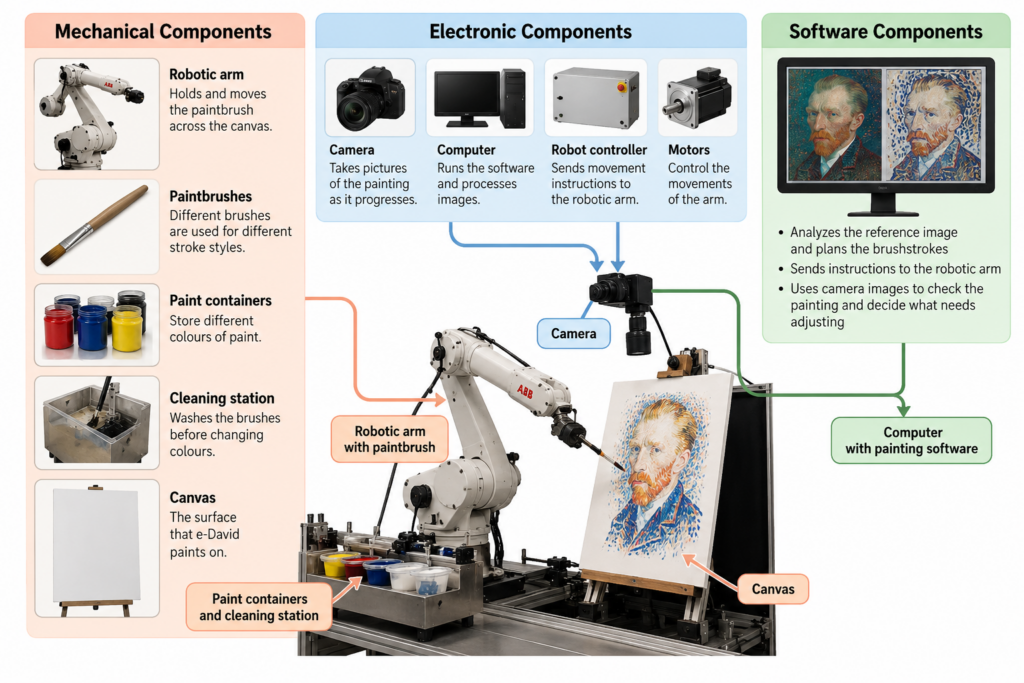
To build a painting robot like e-David, several mechanical, electronic, and software components are needed. Each part has a different role, and they all have to work together for the robot to paint.
Mechanical Components
The main mechanical component is a robotic arm that can move in different directions. Some versions of e-David use six-axis industrial robotic arms, including ABB robots. These arms can move and rotate in different ways, allowing them to control the position and angle of the brush.
The robotic arm needs a brush holder that can securely hold the paintbrush while it moves. The system also requires different brushes because different sizes and shapes produce different types of strokes.
Another important part is the paint station. This holds the available colours and allows the robot to dip its brush into the paint when needed. Earlier versions of e-David were designed to work with up to five brushes and 24 paint colours.
The robot also needs a brush-cleaning station so it can wash and dry the brush before changing colours. Without this, the colours could mix unintentionally and affect the painting.
Finally, the system needs a stable canvas or paper support positioned within the robot’s working area.
These are the parts that allow the robot to physically paint. Even though the movements are controlled by a computer, the robot still needs tools and materials similar to those used by a human painter.
Electronic Components
One of the most important electronic components is the camera. It takes pictures of the canvas so the computer can check the painting’s progress.
The position of the camera and the lighting are important because the software needs clear images to compare the painting with the reference. Changes in lighting or shadows could make it harder for the computer to identify the actual colours and marks on the canvas.
The system also needs a computer, a robot controller, motors, and the necessary power and communication connections.
The computer processes the images and calculates the brushstrokes, while the robot controller translates these instructions into movements. The motors inside the robotic arm allow its different joints to move.
Some robotic painting setups also use sensors to help measure distances or maintain the correct position between the brush and the painting surface.
Safety equipment is another important part of the setup, especially when working with an industrial robotic arm. The robot needs a controlled working area and an emergency stop system so that it can operate safely around people.
Software Components
The software is responsible for planning and controlling the painting process. It connects the digital reference image to the physical movements of the robot.
It includes several important functions:
- Image processing: Studies the reference image and the pictures taken by the camera to identify colours, shapes, and details.
- Image abstraction: Simplifies the original image into regions and layers that the robot can paint more easily.
- Brushstroke planning: Decides where the brushstrokes should be placed, which direction they should follow, and which brush or colour to use.
- Motion planning: Works out how the robotic arm should move between the canvas, paint station, and cleaning station.
- Visual feedback: Compares the painting with the reference image and identifies areas that need more work.
- Robot control: Sends the movement instructions to the robotic arm so it can carry out the painting process.
An important part of the software is how it translates an image into physical movements. A digital image is made of pixels, but a painting is made of brushstrokes. The software has to decide how to turn areas of colour into marks that a real brush can produce.
For example, a large area of blue in a photograph might be painted using several longer strokes, while a smaller detail might require a different brush and shorter movements.
The software also has to account for the limits of the robot and its materials. The arm cannot move everywhere at once, brushes need to be cleaned, and paint may need to be applied in several layers.
We think the camera and feedback software are especially important because they are what allow e-David to check its work.
Without them, the robot would be much closer to a regular drawing machine that simply follows a set of instructions. The combination of all three component groups is what allows e-David to plan, paint, observe, and adjust.
4. Examples of Artworks Created with e-David
e-David has been used to create different types of paintings, including portraits, realistic images, landscapes, and abstract artworks.
One example is e-David’s self-portrait, which was featured in the RobotArt competition. This is interesting because the robot is being used to create a recognizable image rather than just a geometric pattern. It shows how a painting machine can gradually build up a detailed composition using individual brushstrokes.
Another example is Homage to Jackson Pollock, which was also presented as part of e-David’s RobotArt work. Unlike a traditional portrait, this example connects robotic painting to a more expressive and abstract style.
We found this especially interesting because Jackson Pollock is known for paintings that emphasize movement, gesture, and the physical act of applying paint. Seeing a robot explore a style associated with spontaneous human movement creates an interesting contrast.
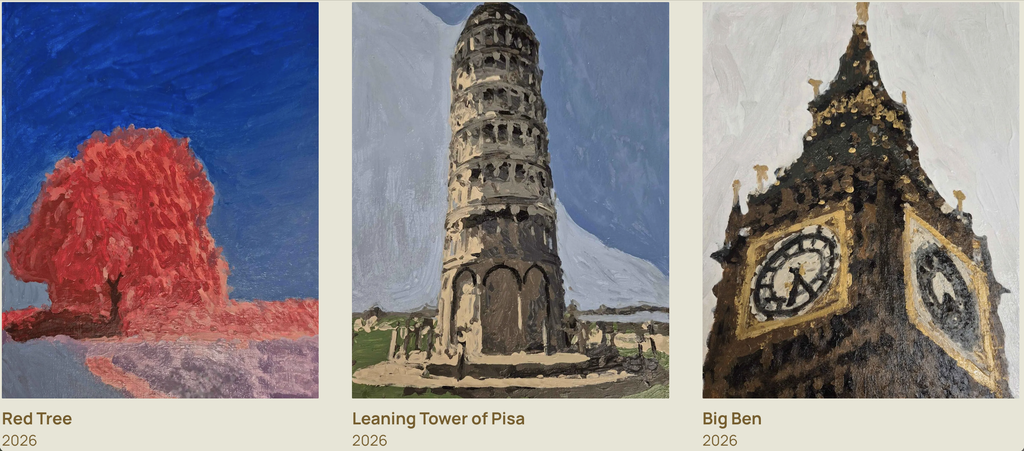
e-David has also produced landscape and architectural paintings. More recent examples from the project include Red Tree, Leaning Tower of Pisa, and Big Ben. These works show how the system can use different shapes, colours, and levels of detail to create recognizable scenes.
Another example is e-David’s collaboration with artist Gretta Louw on the Orchid Diptychs project. In this work, the robot contributed painted elements to artworks that also involved the artist’s own creative decisions.
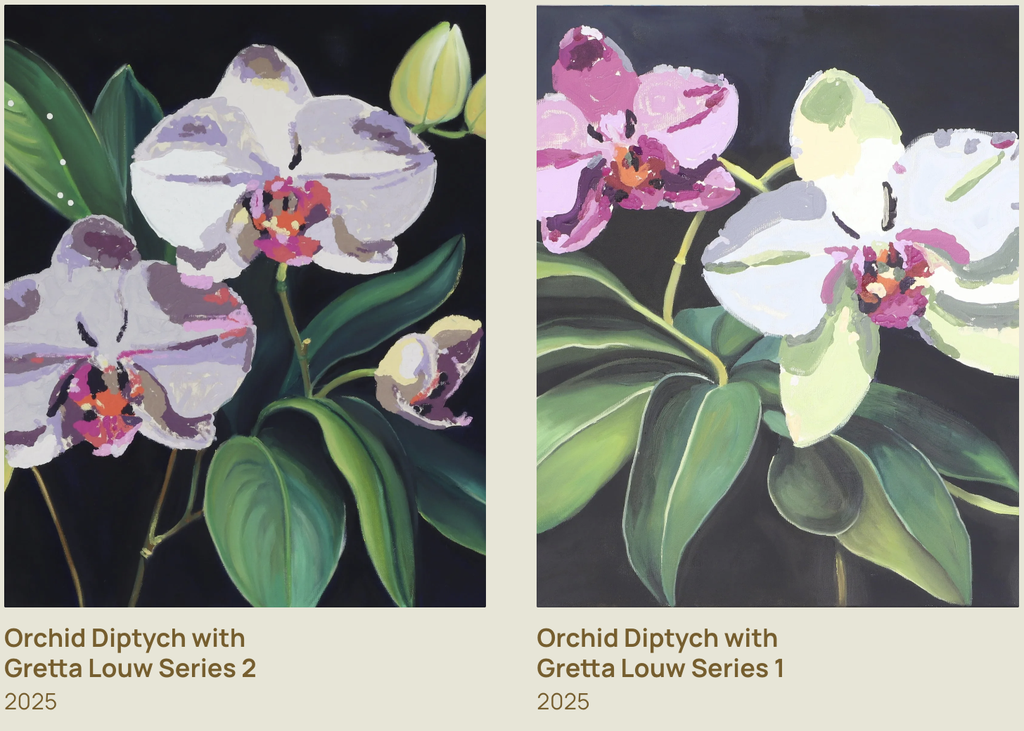
We liked this example because it shows how a robot can be involved in making art alongside a human rather than just copying an existing image. The artist can make decisions about the composition and the overall direction of the work, while the robot contributes through its programmed movements.
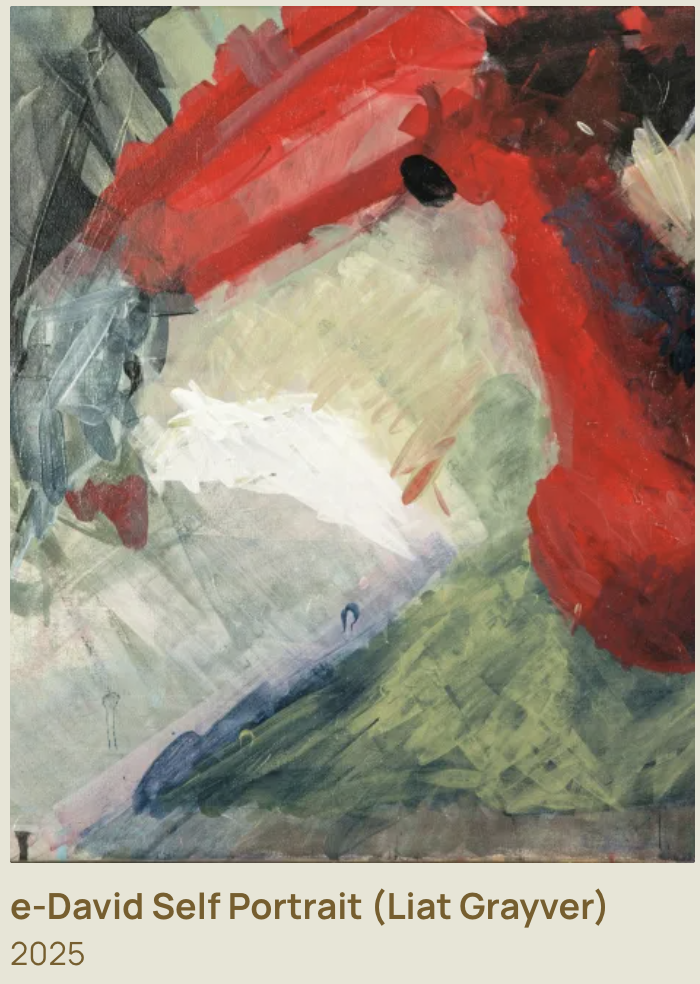
e-David has also been used by artist Liat Grayver, who explores how robotic movements and brushstrokes can be used in painting.
One of her projects with e-David, InComputable Imagery: Reimagining the Brushstroke, explored how a painting could develop through a continuous process of robotic brushstrokes and visual feedback.
In the exhibition, Grayver began the process with an initial brushstroke, after which the robot continued adding marks. The system used feedback from the developing image to influence the next strokes.
We found this example particularly interesting because the final artwork was not simply a copy of a photograph. The focus was on the movement of the brush, the behaviour of the materials, and how the painting changed over time.
Looking at these examples, we noticed that e-David can be used in different ways. Sometimes the goal is to create a recognizable image, while other times the goal is to experiment with the painting process itself.
This variety is one of the reasons we chose e-David. The same machine can be used for technical experiments, realistic paintings, and collaborations with artists.
5. Related Artists and Drawing Machines
While researching e-David, we came across other artists who use robots and machines to create drawings and paintings.
Patrick Tresset: Robotic Drawing
Patrick Tresset is an artist who creates robots that can observe people and draw their portraits.
One of his projects, Human Study, uses robotic drawing systems with cameras and pens. The robots observe a person and create a drawing on paper.
The machines are designed to imitate certain aspects of human observation and drawing. They use a camera to capture visual information and a mechanical arm to make marks on paper.
We thought this was similar to e-David because both systems use cameras and robotic movement to create physical artwork. In both cases, the machine is translating visual information into movements that produce marks on a surface.
The main difference is that Tresset’s robots usually work with pens and focus on drawing, while e-David uses paintbrushes and paint.
There is also a difference in how the materials behave. A pen generally produces a more consistent line, while a paintbrush can create marks with different thicknesses, textures, and amounts of paint.
We also found it interesting that both projects explore what happens when a machine takes on a task that we usually associate with human artists.
Liat Grayver: Painting with Robots
Liat Grayver is an artist who has worked with e-David to explore new ways of painting.
Rather than using the robot only to copy images, she experiments with its movements and the marks it can make. Her work often focuses on the relationship between control and unpredictability.
In traditional painting, an artist can immediately respond to the way the brush feels against the canvas. With a robot, the movement has to be translated into instructions that the machine can understand.
Grayver uses this difference as part of her artistic process. Instead of trying to make the robot behave exactly like a human painter, she explores what happens when mechanical movements interact with physical materials.
Her work shows how artists can use robots as part of their own creative process.
We liked this approach because the artist is still making important decisions, but the robot introduces another way of working with paint.
It made us think about how technology can become part of an artist’s process without taking away the artist’s role.
Traditional Pen Plotters: Drawing Through Coordinates
Another system we thought was useful to compare with e-David is the traditional pen plotter.
A pen plotter uses motors to move a pen across paper according to programmed coordinates. The drawing is usually created from lines or paths generated by software.
Unlike e-David, a typical pen plotter does not use a camera to constantly check the result. Once the drawing begins, the machine usually follows the planned paths until it finishes.
Pen plotters are often used for geometric drawings, generative art, and repeated patterns. Artists can create complex designs by writing code that controls the position and movement of the pen.
This comparison helped us understand what makes e-David different. Both machines turn digital instructions into physical marks, but e-David adds another step by observing the painting and using that information to adjust its process.
6. Our Thoughts on e-David
After learning more about e-David, we started thinking about the difference between a person painting and a robot painting.
When a person paints, they make decisions based on what they see, what they want to express, and how they feel about the artwork. e-David doesn’t work in the same way. It uses software and cameras to decide what to do next.
However, we thought it was interesting that both processes can involve making changes along the way.
An artist might notice that a colour is too dark or that a shape doesn’t look right and decide to fix it. e-David also checks its painting and makes adjustments, but it does this by comparing images through software.
What we found most interesting was that the robot doesn’t create the entire painting in one perfect attempt. It builds the image slowly and keeps working on it.
We also liked how e-David has been used in collaborations with artists. Instead of using the robot only to reproduce an image, artists can experiment with its movements and see what kinds of marks it can make.
One question that came up during our research was whether the robot is actually being creative or whether the creativity still comes entirely from the people who design and use it.
We think the human role is still very important. Someone has to choose the reference image, develop the software, decide how the robot should work, and determine what kind of result they want.
At the same time, the physical painting process can introduce unexpected results. The artist or programmer might plan a certain brushstroke, but the actual mark could turn out differently because of the paint or the surface.
This is something we find interesting because unexpected results can sometimes become part of the artwork rather than simply being treated as mistakes.
We also thought about how e-David relates to other drawing machines we have explored. A pen plotter is interesting because it can turn code into precise physical drawings, while e-David shows what happens when a machine also has to respond to materials that are harder to control.
For us, this was one of the most interesting parts of the project because it shows that a drawing machine can be used for much more than following a programmed path.
Conclusion
Researching e-David helped us understand how a robotic painting system works and how different it is from a regular drawing machine.
We learned that it uses a robotic arm, paintbrushes, a camera, and software to create paintings while checking its progress and making adjustments.
What stood out to us most was the feedback system and the way the robot responds to what is actually happening on the canvas. We found it interesting that the machine can move very precisely, but still has to deal with unpredictable materials like paint and brushes.
We also enjoyed looking at the different artworks and collaborations because they showed us that robots can be used in art in more than one way. They can reproduce images, experiment with different painting styles, or become part of an artist’s creative process.
Overall, we chose e-David because it combines something very traditional, painting with a brush, with technology that allows the machine to observe and adjust its work.
It left us wondering how artists might use machines like e-David in the future, and what new kinds of artwork could come from working with them.
References
- University of Konstanz. Painting Robot e-David. Computer Graphics and Media Informatics Research Group.
- e-David Project. Official Project Website, Works, and Video Documentation. University of Konstanz.
- Deussen, O., Lindemeier, T., Pirk, S., & Tautzenberger, M. (2012). Feedback-guided Stroke Placement for a Painting Machine. Proceedings of the Eighth Annual Symposium on Computational Aesthetics in Graphics, Visualization, and Imaging.
- Gülzow, J., Paetzold, P., & Deussen, O. (2020). Recent Developments Regarding Painting Robots for Research in Automatic Painting, Artificial Creativity, and Machine Learning. Applied Sciences, 10(10), 3396.
- Gülzow, J., Grayver, L., & Deussen, O. (2018). Self-Improving Robotic Brushstroke Replication. Arts, 7(4), 84.
- RobotArt. (2017). e-David, University of Konstanz. Robotic Art Competition Archive.
- Patrick Tresset. Human Study #1. Robotic Drawing Installation.
- Liat Grayver. InComputable Imagery: Reimagining the Brushstroke. Artistic collaboration with e-David.
- Weizmann Institute of Science. The Painting Robot: Liat Grayver and e-David. Exhibition Documentation.