Modified RC Car
By: Asma Al Murr
Video of how it works:
Concept
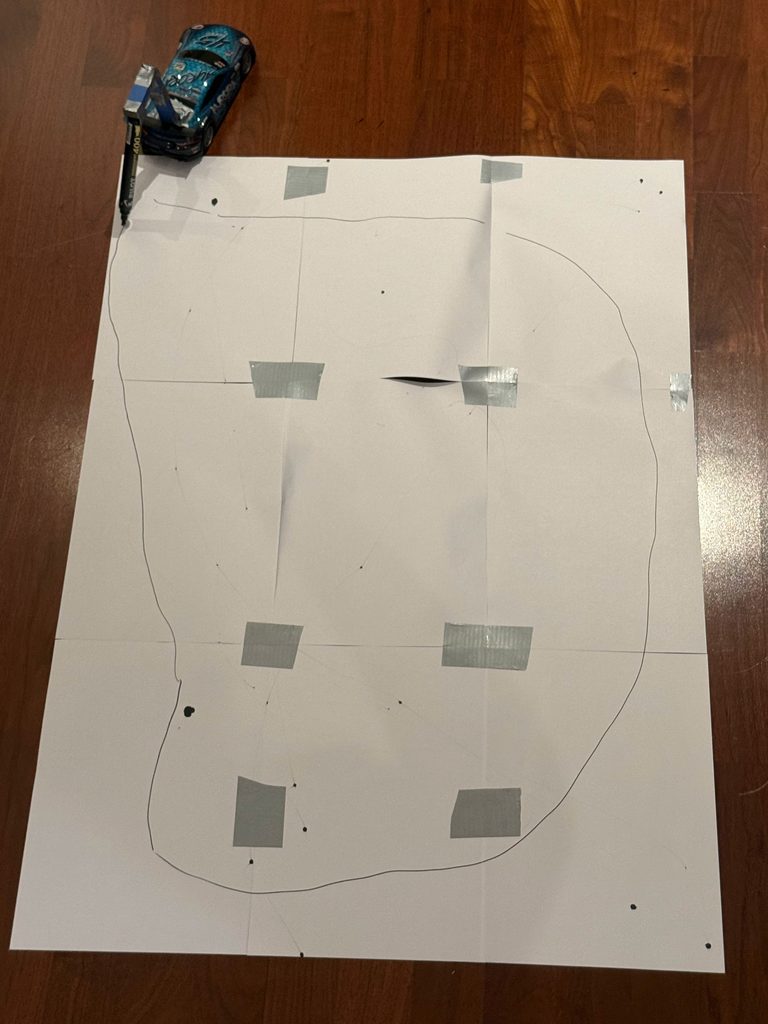
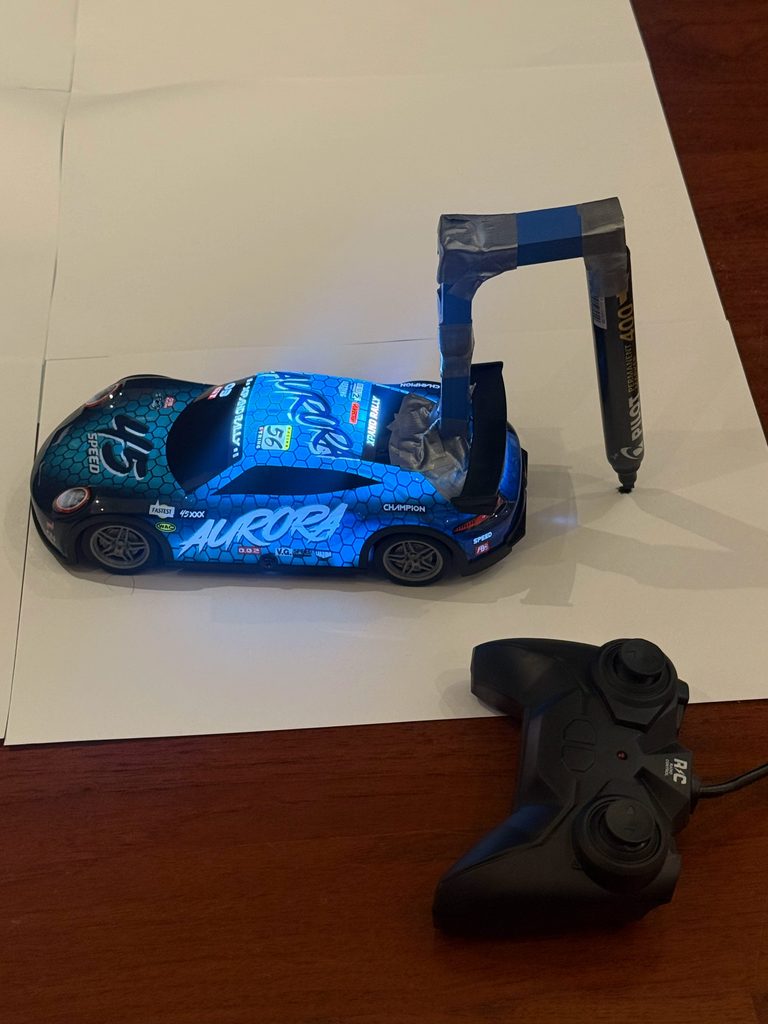
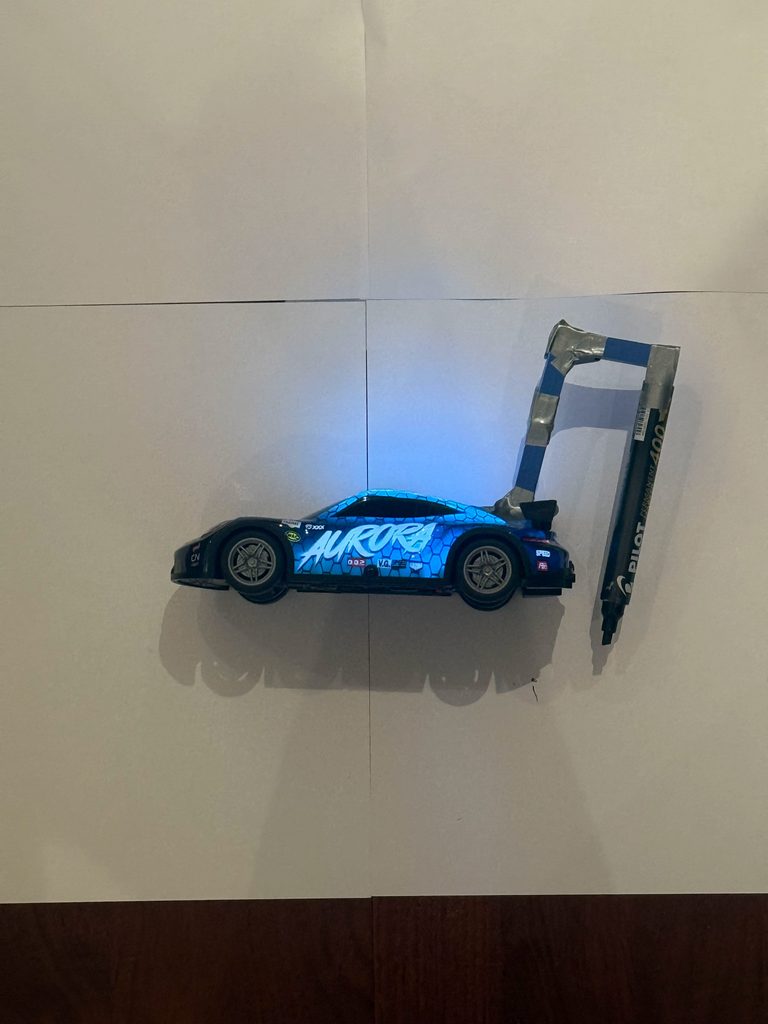
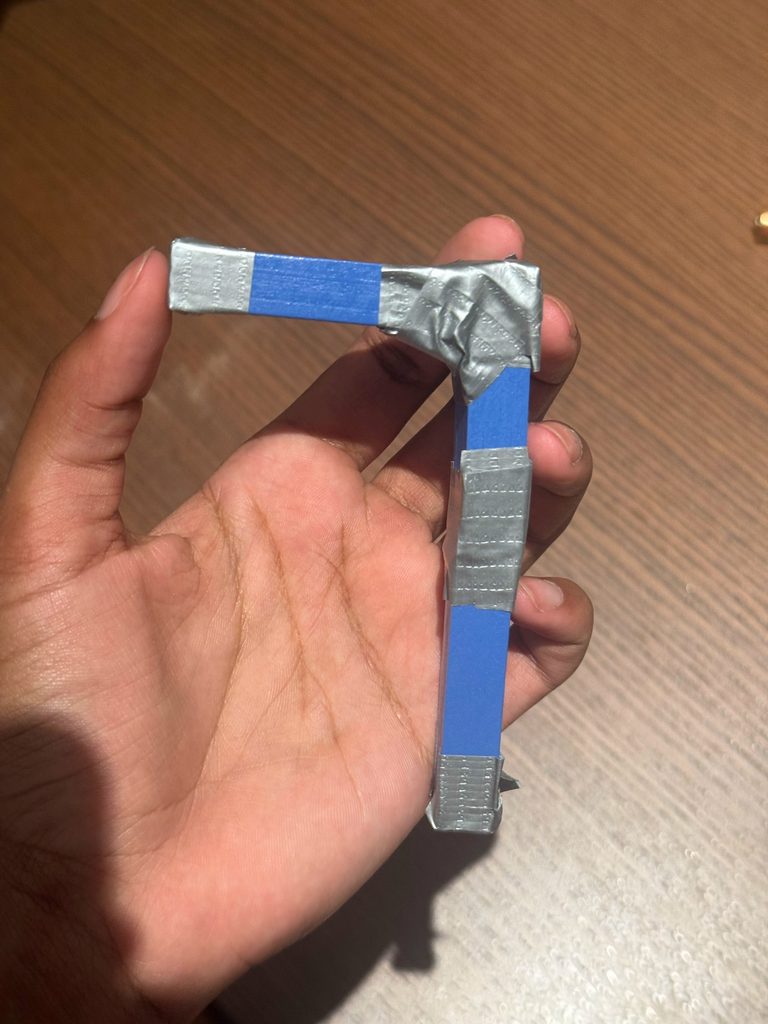
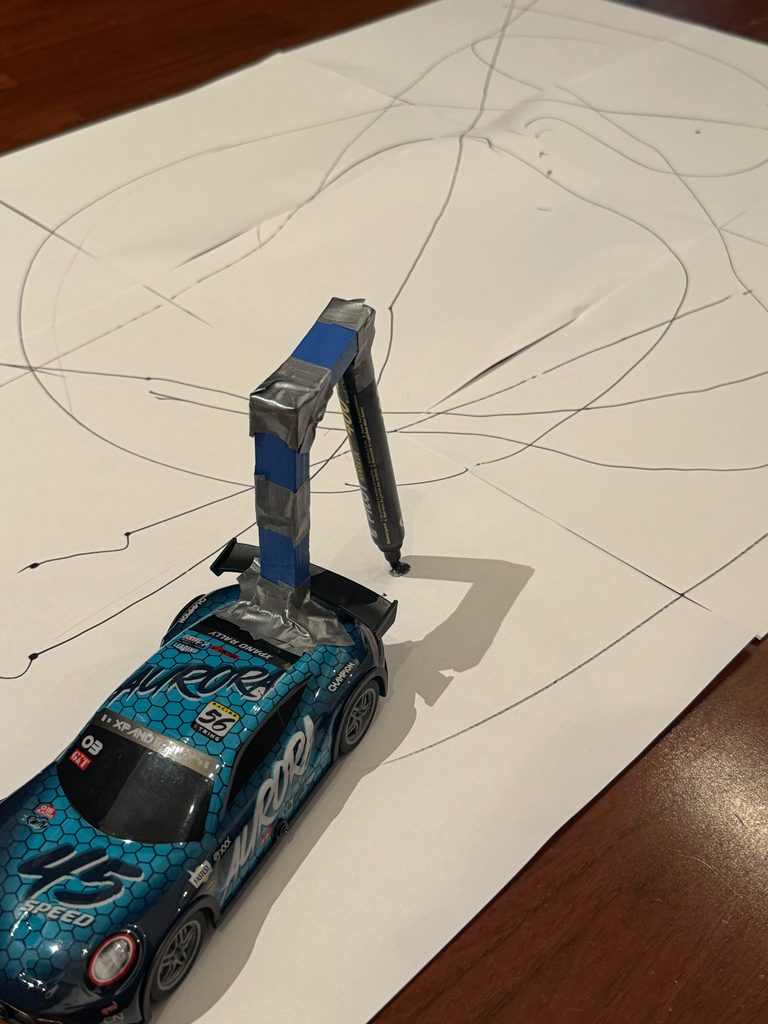
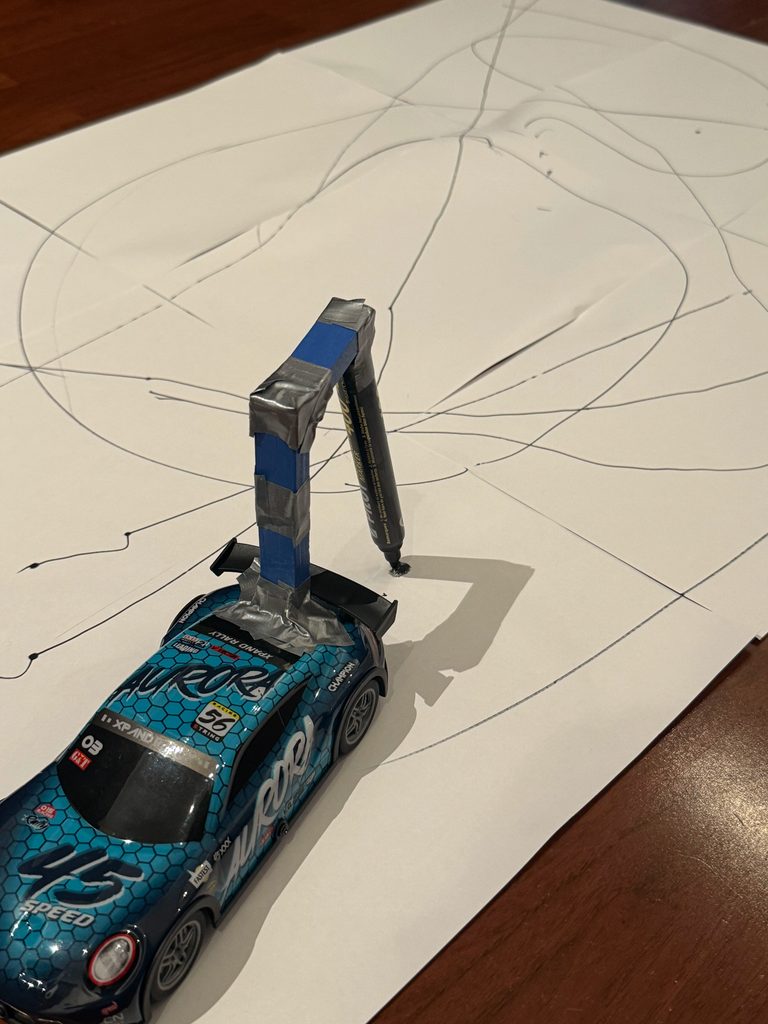
For this assignment I took my brothers old RC car and turned it into a low tech drawing machine by taping a homemade wooden arm to the back of it. The arm is made out of three Jenga blocks stacked together with duct tape, going up and then bending back down so a marker hangs off the end, angled toward the paper. Basically the idea was that as I drive the car around, the marker drags/bounces along and draws whatever path the car takes, but not perfectly (the wobbly arm and the car’s own movement add a bunch of randomness so I’m not really in full control of the line) but it still turned out pretty good. I liked this because it’s kind of a low-tech way to get at that idea of using a machine to make marks instead of just drawing by hand.
Process and challenges
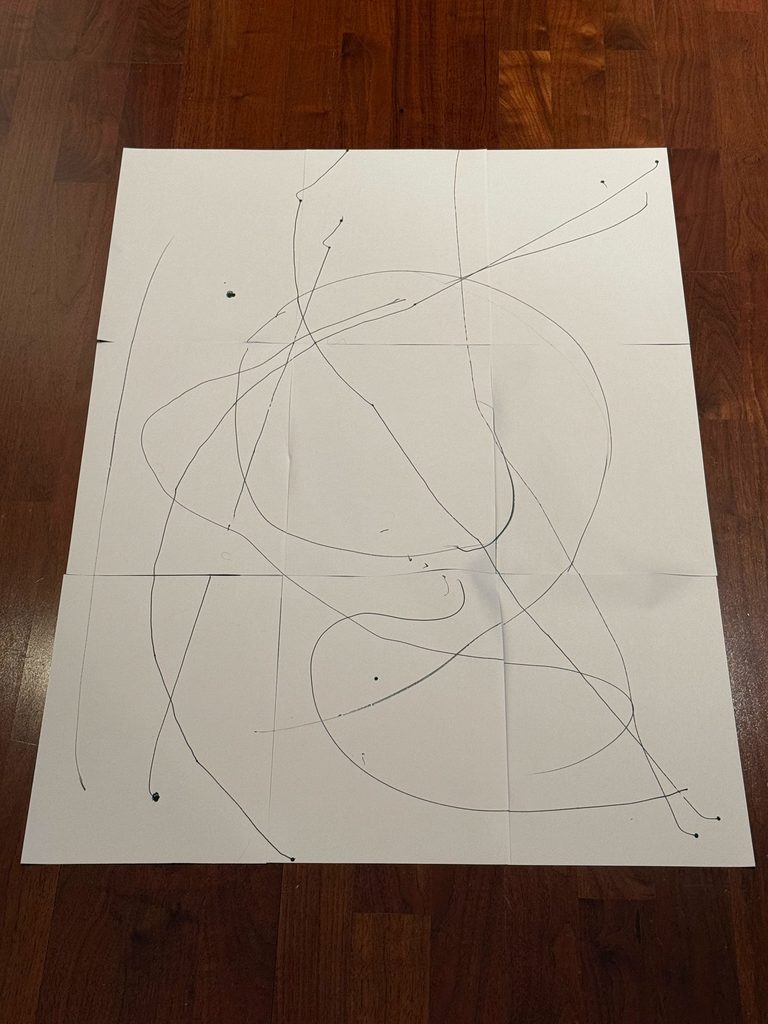
Honestly the biggest problem I ran into had nothing to do with the car, it was the marker and the specific way I had to angle it with enough pressure to actually be visible on the page. I started out with a regular pen, but it turned out that pen only actually put down ink if it hit the paper at a hard angle with a lot of pressure, so half the time I’d drive the car around and get basically nothing, or just a faint scratchy line that barely showed up. That wasn’t the kind of unpredictability I wanted, it wasn’t adding anything interesting, it was just failing. So I swapped it for a black permanent marker instead, which lays down ink way more consistently no matter what angle it’s hitting the paper at, and that fixed most of the problem. Building the arm was also trickier than I expected because duct tape isn’t exactly a stiff joint, so every place where the Jenga blocks connect has a little bit of wobble in it, and since there are three blocks, all those little wiggles add up by the time you get to the marker at the end. So even small bumps or turns from the car turn into much bigger swings at the tip. I also had to mess around with how tight I wrapped the tape and what angle I set the marker at so it would actually stay touching the paper instead of skipping off during turns or digging in and dragging when the car slowed down. Also another major issue was SPACE! Driving around an RC car requires more space than just a regular piece of paper. So what I did was take 9 sheets of A4 paper and taped them together to give the car more room to move without ruining my floor.
Reflection on control, chance, and authorship
Thinking about what I actually controlled versus what I didn’t: I picked the car, built the arm (how many blocks, how I taped them), I picked the marker, and I steered the car. But once the car was actually moving, I lost control over the exact lines it produced. How much each taped block flexed at any given moment, or how the marker’s angle shifted mid-turn, wasn’t really up to me, and sometimes the marker wouldn’t get enough pressure against the paper to leave a continuous line, so it left random gaps instead. The car’s physical limitations added their own kind of chance, too. Since it isn’t built for sharp turns, drawing anything like a square or rectangle was basically off the table so I ended up mostly getting straight lines and loose curves or squiggles instead. I also noticed that wherever I stopped the car, the marker would sit in place just long enough to bleed into a little ink blot, so the drawing ended up dotted with these small dark patches marking every pause. And since the car could only move forward, not backward, I couldn’t retrace a line or correct a mistake once I’d made it, which made every move final and took away the chance to “undo” and pushed even more of the results out of my hands.
Relation to Sol LeWitt
This assignment connects to what LeWitt says about “the idea becoming the machine that makes the art” which I actually learned in the course Understanding Interactive Media. The machine is basically the tool that carries out that idea, and the drawing is just proof that it happened. When we look at LeWitt’s thinking, the actual “art” isn’t the drawing itself, it’s the system behind it. So if someone else built the exact same setup using my instructions and ran it themselves, the drawing they got would look different in the details, but it would still count as my piece. That’s because what I actually created was the idea and how it works, not the specific lines that ended up on the paper. The arm and car setup is the “machine,” and it’s carrying out a plan I made (wooden arm and a marker that reliably makes contact) without me controlling every single line by hand. I think the idea in this piece lives mostly in the design choices I made before I even started drawing anything. For example choosing to use three loosely taped blocks instead of one stiff arm, and figuring out the marker issue so the randomness I wanted would actually show up as ink instead of just not drawing at all. Even switching the pen wasn’t really changing my idea, it was just making sure the idea could actually come through on paper instead of getting lost because the tool wasn’t cooperating. So in LeWitt’s terms, I’d say the idea is in the setup/design, and the final drawing and art is just what’s left over after the system (machine) runs.
Results:
attempt 1: (total randomness)
attempt 2: (trying to draw a circle)