Pencil Spin
Concept
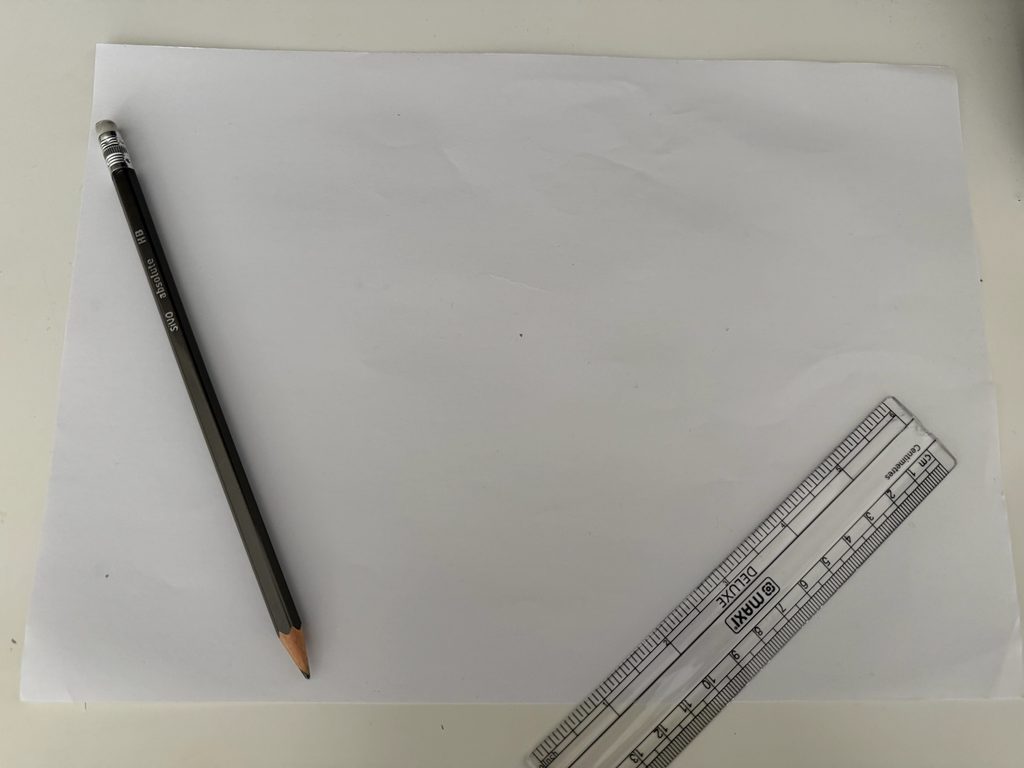
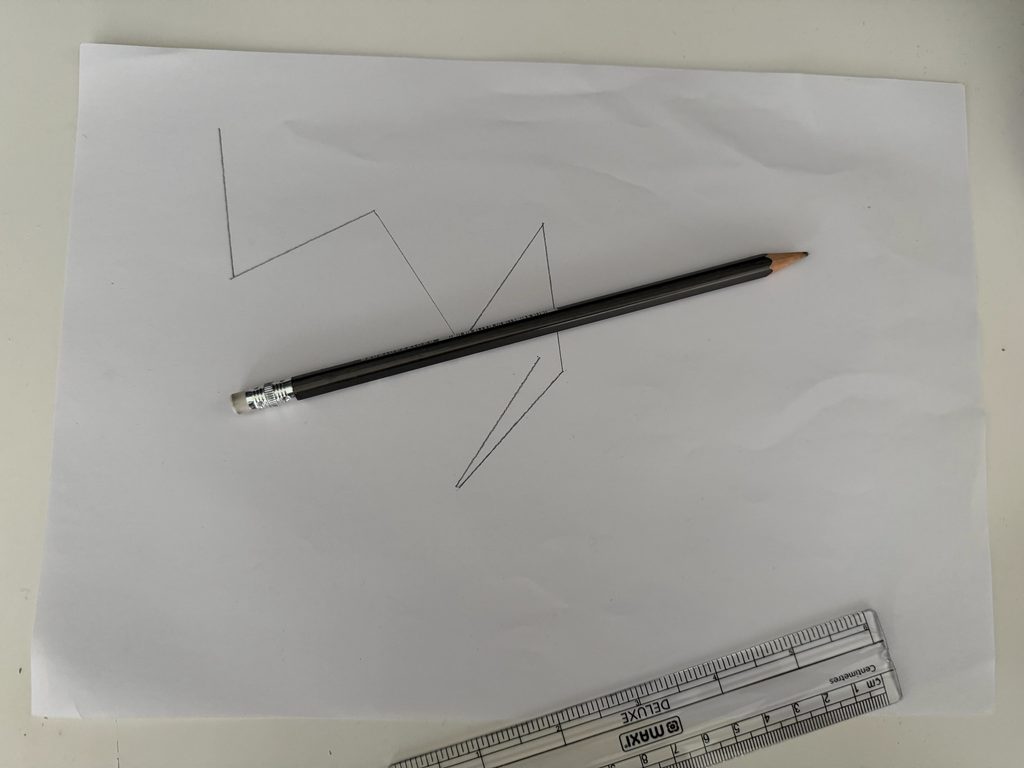
I created a simple system for my drawing machine that only requires a pencil, ruler, and paper. Instead of choosing where I wanted each line to go, I let the pencil decide. I would lay the pencil on the paper, and spin it like a bottle. I drew a straight line in the direction the tip of the pencil was pointing when it stopped. Then the end of that line became the start of the next spin.
Before I started, I came up with some rules that I had to follow throughout the drawing:
- Each line had to be the same length (5 cm)
- The direction had to be determined by the pencil spin.
- I couldn’t change the direction because I thought another direction would look better.
- After drawing the line, I had to start the next spin from its endpoint.
The purpose of the system was to take away some of my control over the final composition. While I was physically making the marks, I was no longer deciding where exactly they went.
Process
I started by marking a dot in the centre of the paper, and then spinning the pencil to see which direction to draw my first line. Wherever the sharpened end pointed when it stopped became the direction of my first line. Then I continued the same process of spinning, drawing, and moving to the new endpoint.
At the start I noticed that I kept wanting the drawing to go in certain directions, especially when I felt that one area was becoming too crowded or when I thought another direction would make the drawing look more balanced. However, I followed the system exactly instead of making decisions based on what I thought would look better.
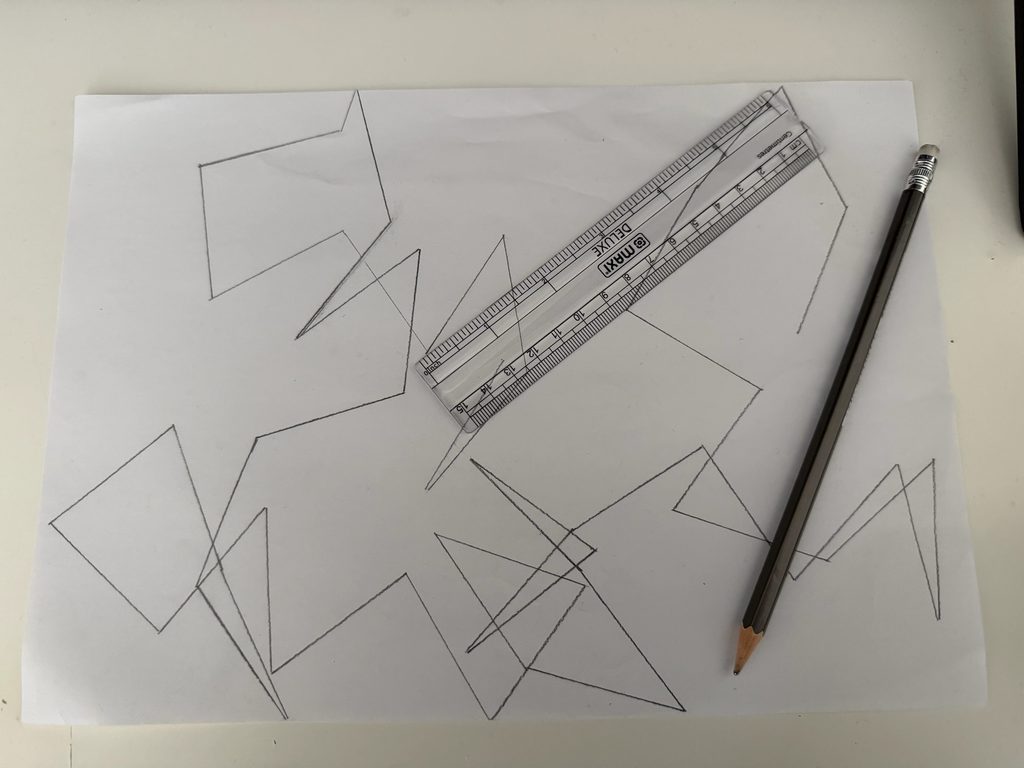
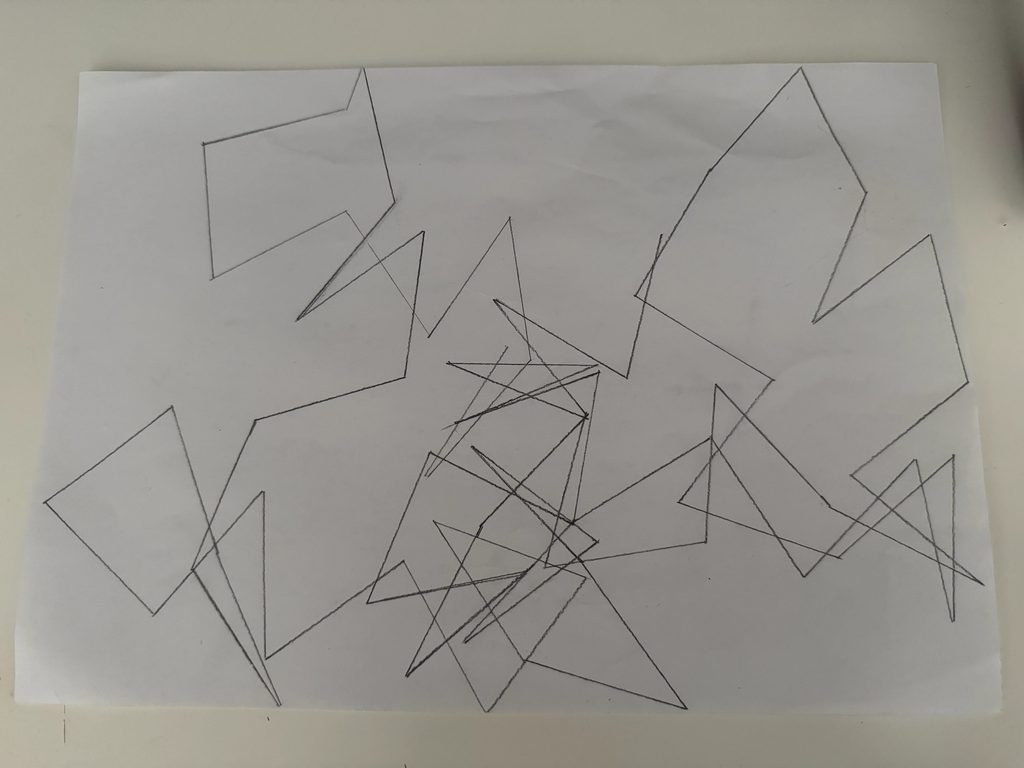
I repeated the same process to create multiple drawings using the same rules. Even though the pencil, rules, and process stayed the same, each drawing developed differently because the direction of every spin was unpredictable.
Challenges
I think one of the main challenges was trying not to interfere with the system. Sometimes the pencil would point toward a section that already had a lot of lines, and my instinct was to spin again or slightly change the direction. However, I realised that doing this would give control back to me, so I had to accept the direction the pencil landed in, even if I did not prefer the visual result.
Another challenge was to make sure that I was reading the direction of the pencil as accurately as possible. I realised that even with a system that is based on chance, it can still be difficult to totally remove human control because I was still the one spinning the pencil and translating its direction into a line.
Reflection: Control, Chance, and Authorship
Overall, I think this changed how I view how much control an artist needs to have over an artwork. I came up with the system and thought about all the rules before I started, which meant I still had an important role in creating the work. However, when I actually started, I gave up a certain amount of control over one of the most important decisions, the direction of each line. This means that chance really became an important part of the drawing process. I was not able to predict what the next spin would produce or even what the finished composition would look like. At the same time, the drawing was not completely random because it was still limited by the rules I had created. This then led me to reflect on the idea of authorship, and how I see myself more as the author of the “system” rather than the exact appearance of the final drawing. The pencil and chance influenced the result, but they were only able to do that because of the rules I created.
Connection to Sol LeWitt
My drawing system connects to Sol LeWitt’s idea that in conceptual art, the planning and decisions can be made before the artwork is actually produced. He describes this by saying that the idea can become the “machine” that makes the art. I think the idea of my drawing mainly resides in the design decisions and rules of the system, rather than in a specific finished drawing. Before I started, I already decided how the pencil would be spun, how I would respond to the direction it pointed, and how each line would be made. After I established those rules, I made as few subjective decisions as possible while creating the drawings. This is related to LeWitt’s discussion of working with a pre-set plan, where the artist chooses the basic rules and then allows the plan to determine the work.
However, my system is slightly different from LeWitt’s approach because chance is intentionally important in my project. While I knew the rules before, I did not know what the pencil would decide with each spin. Because of this, I would say the final drawing is evidence of the idea rather than the idea itself. If I gave the same instructions to another person, they could create a completely different drawing, but it would still be the same concept.
I also considered the process of an artwork to be as important as the final product. LeWitt points out that sketches, failed works, studies, conversations and other stages of a work can reveal the artist’s thought process and may even be more interesting than the final product. In my case, seeing the pencil being spun and really understanding the rules behind every line is crucial because without knowing the system, the final drawing may simply look like a collection of random lines.