Concept
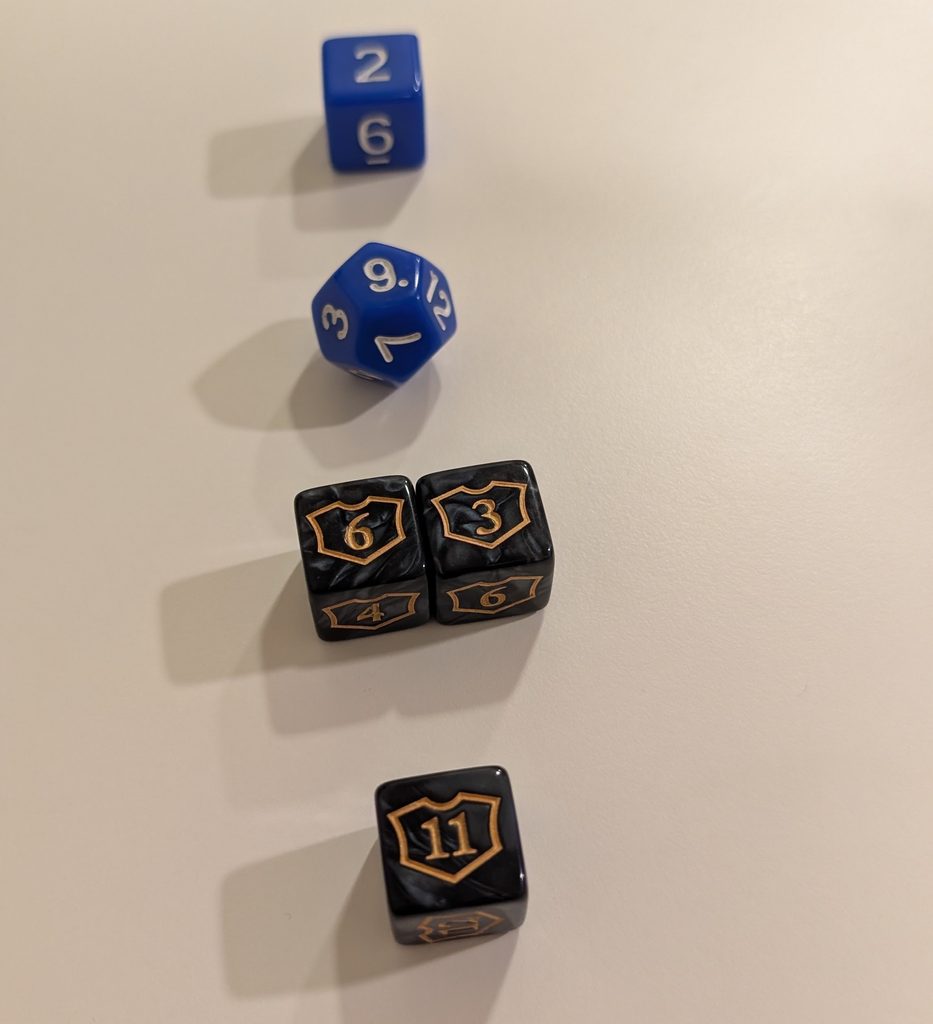
To recreate my method, the user needs a few D6 dice and at least one D12 dice. One of the D6 should preferably be numbered 7 to 12 instead of the usual 1 to 6 but you could just remember which one is supposed to be different.
Step 1: Set Up Paper
On a piece of paper, I would ask someone else to draw points as tiny circles labelled 1 through 12.
Step 2: Rolling the Dice
I will determine four individual values indicated as points A, B, C, and D. This is how the values of ABCD are determined:
Point A = Result of Blue D6
Point B = Result of Blue D12
Point C = Sum of Two Black Marble D6
Point D = Result of unique D6 (7-12)
Step 3: Connect the Points
Let’s say for example point A is 3 and point B is 12, I’m going to draw a straight line from the point labelled “3” to the point labelled “12”. If point C is also “12” then that’s where I came up with a new rule:
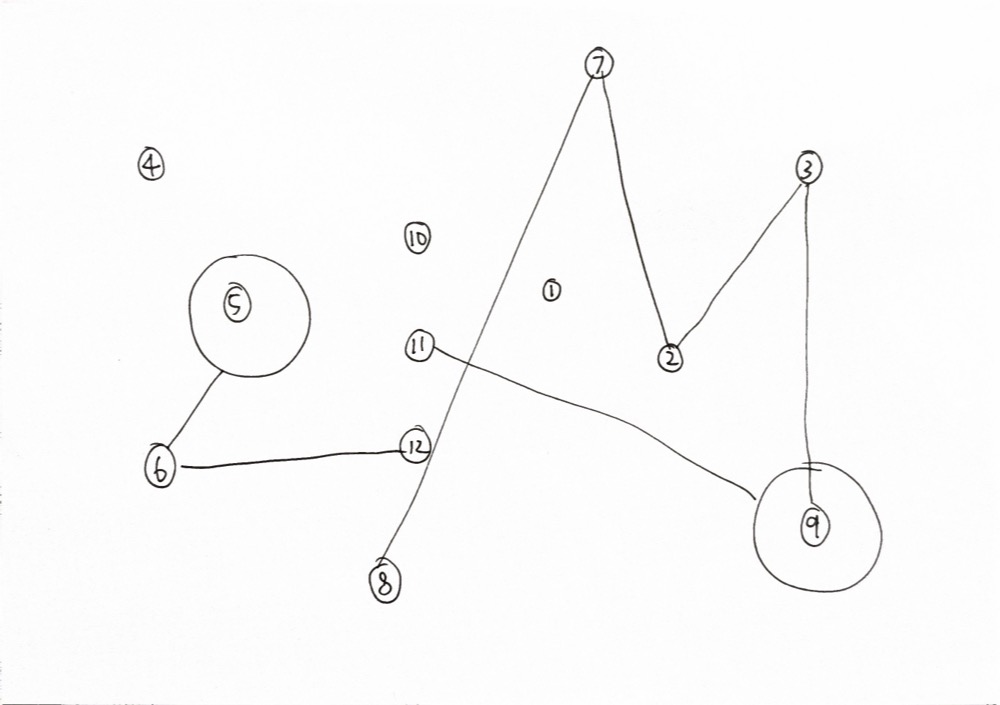
If any two numbers overlap back to back, I would draw a circle around that point.
Step 4: Repeat
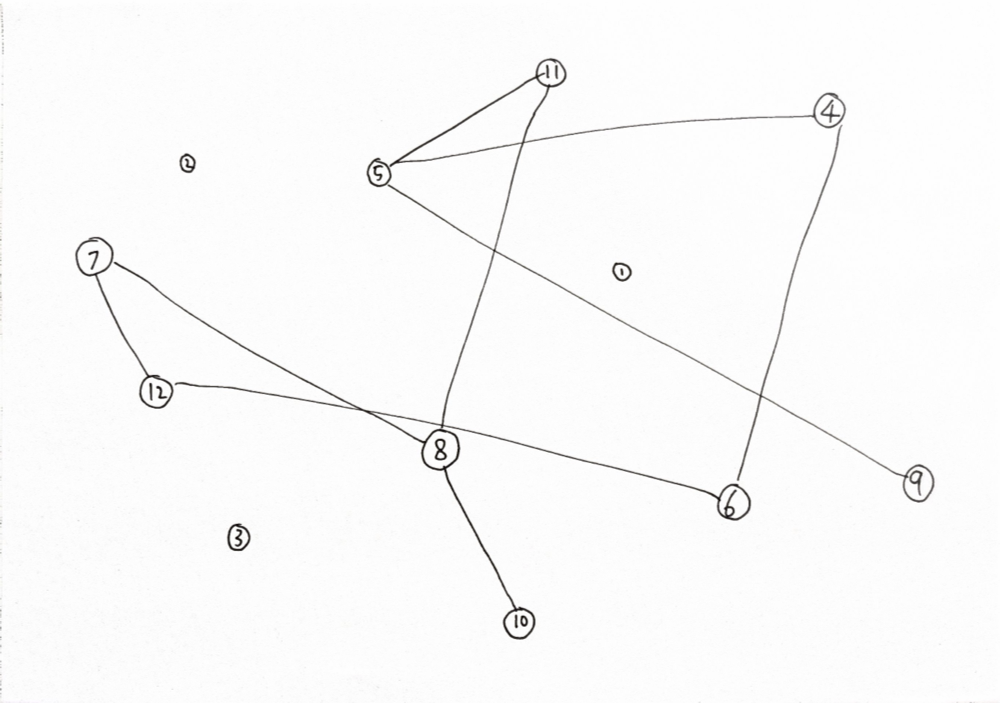
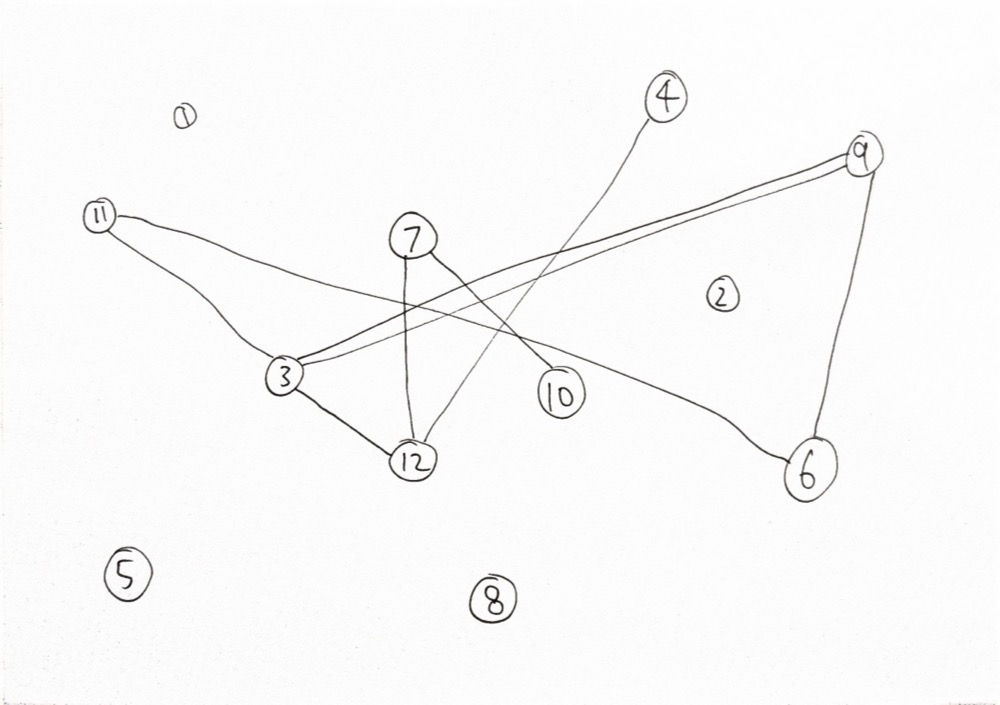
Repeat Step 2 and Step 3 again two more times. That should create a pretty interesting visual.
Result:
Process & Challenges
Originally I was pretty perplexed on how to approach this project. I think the example video with the oscillating fan led me seeking out something mechanical throughout the week. I had considered my skateboard trucks, the A5C dorm elevator door, and even some gym equipment (which they definitely would not have allowed haha).
So I got my current idea when I met up with a friend to play a card game, Magic the Gathering, and remembered I had some pretty interesting dice at my disposal. Specifically I had dice that were D6 but started from 7 and ended at 12. They’re usually used to track planeswalker loyalty (a variable stat that’s basically their health points), but they could definitely make for something interesting here.
Reflection on Control, Chance, and Authorship
When I first designed this system, I actually was expecting a lot more repeating numbers so I could create interesting patterns with stacking circle shapes, but in practice it only showed up twice and only in the third attempt.
The dice introduced chance into the whole equation but perhaps if I wanted a specific aspect of the result to appear more often(such as the circles), then I needed to adjust the number of potential outcomes and the probability of each outcome to create something more visually riveting. For example, Maybe I should have just used 6 points instead of 12 points.
In Response to Sol LeWitt
I believe LeWitt would agree that the idea of my drawing lies in the rules of my system that I designed– the repeatable process that anyone can perform. It’s obvious that no two people and not even two different results will appear the same.