Concept
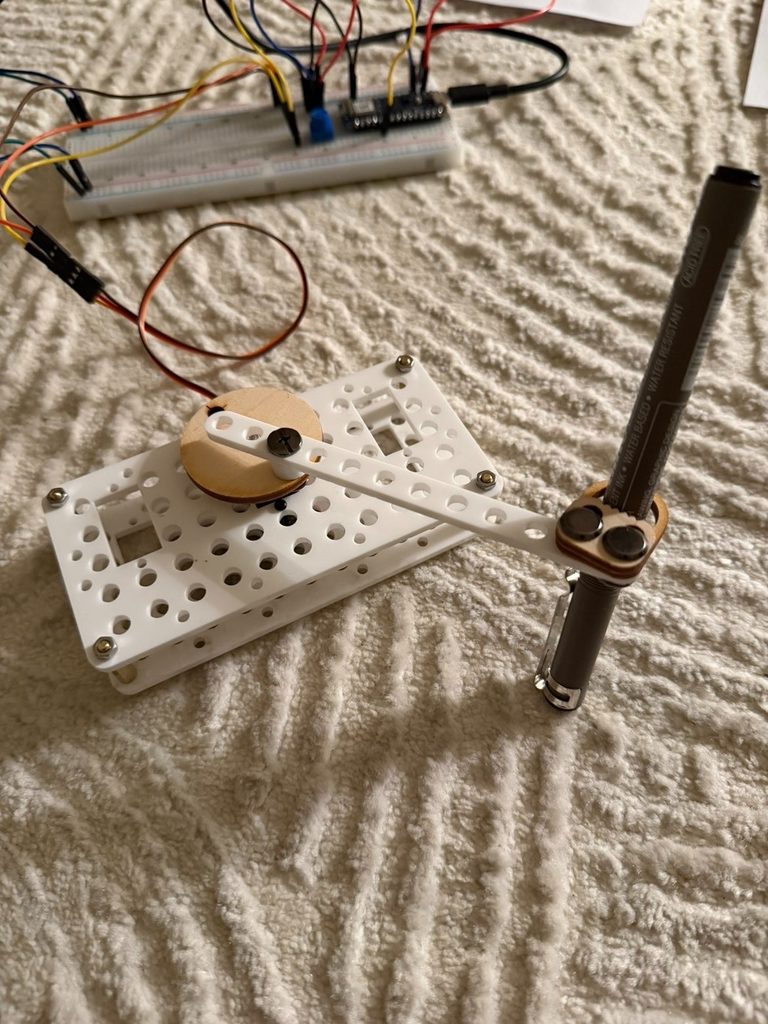
For this project, we built a simple mechanical drawing machine that uses servo‑driven motion to move a pen. We decided to keep the physical model very minimal with only one linkage arm and a single servo. This made it easier for us to focus on experimenting with the code and seeing how different angles and delays changed the drawings. Keeping the structure simple helped us spend more time testing motion instead of fixing complicated parts.
Photos and Videos:
Process
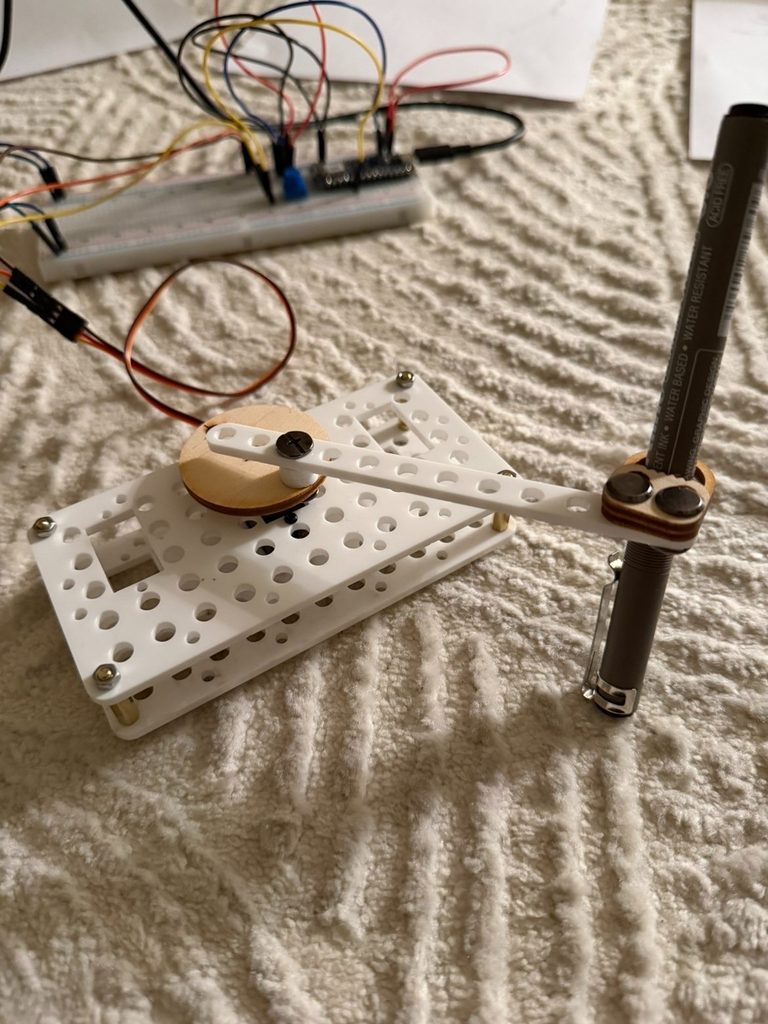
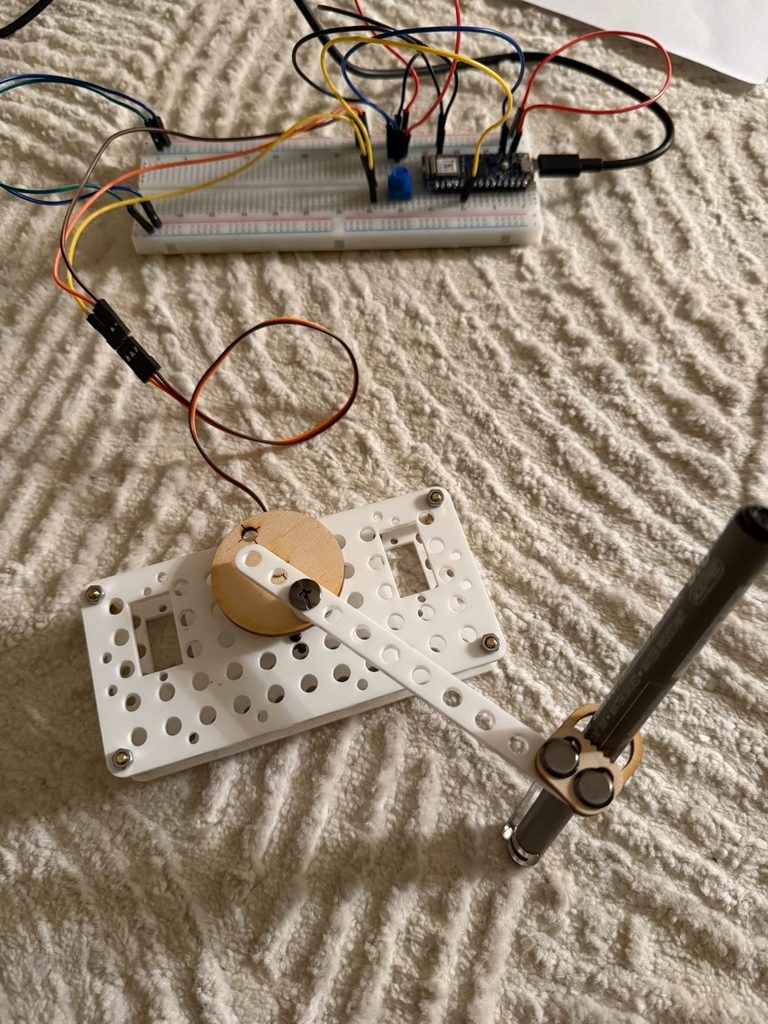
We started with the laser‑cut kit and assembled a basic linkage system. The servo was attached to a circular wooden disk, which rotated and moved a white plastic arm that held the pen. The pen was secured with small screws and a wooden bracket so it stayed steady while the servo moved.
We connected the servo to an Arduino on a breadboard and wrote simple code using the Servo library. Our goal was to test different angle ranges and delay values. Each change created a different drawing pattern, so we documented them as separate trials.
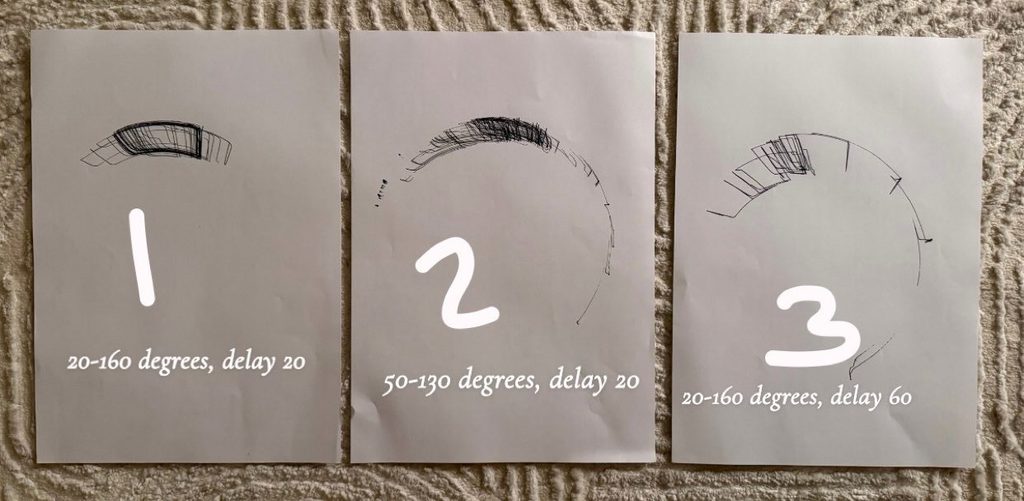
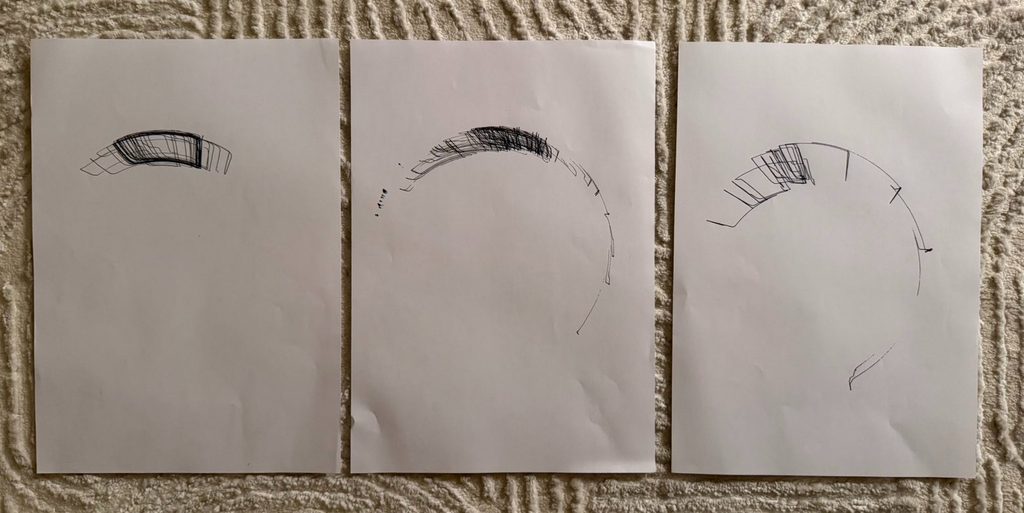
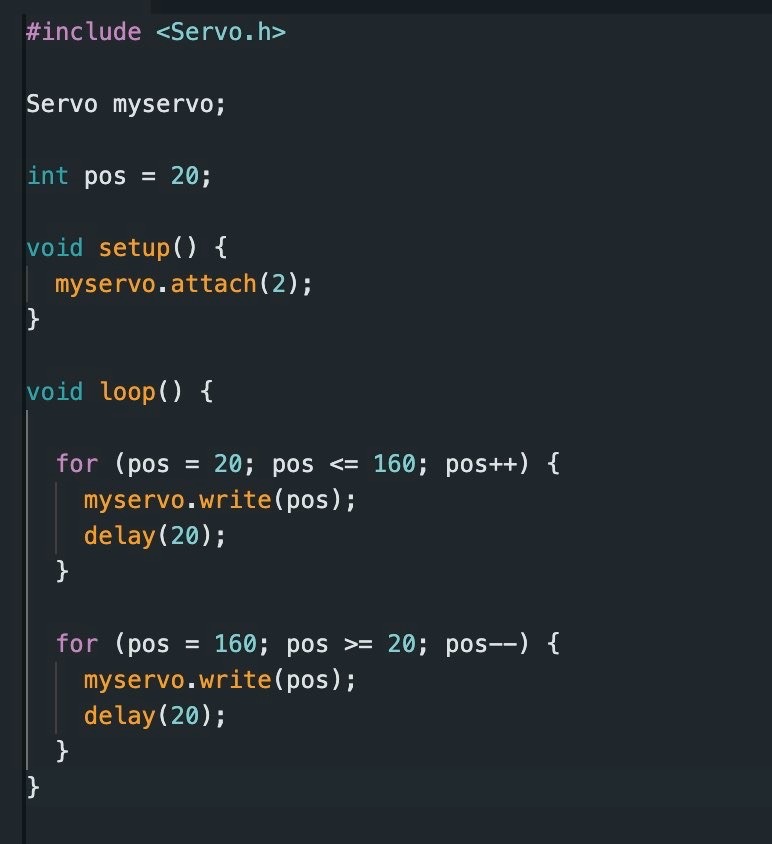
For the first trial, we used 20 to 160 degrees with a delay of 20. This created dense overlapping lines that formed a shaded arc. The fast delay made the servo move quickly, which produced compact marks.
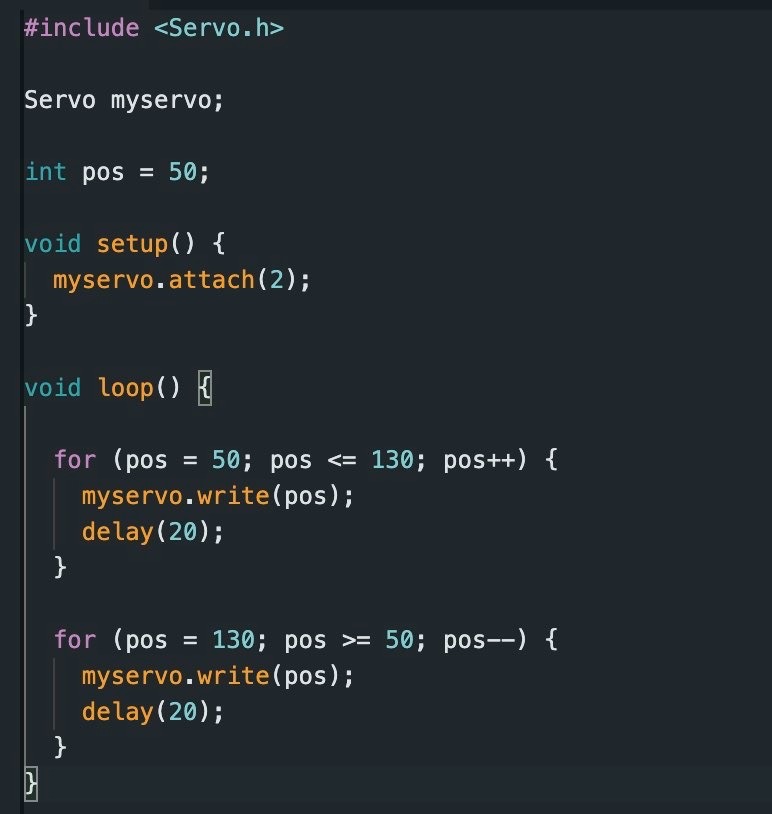
In the second trial, we changed the angle range to 50 to 130 degrees with the same delay. This gave us a smoother and more open curve. The drawing looked lighter and more gradual.
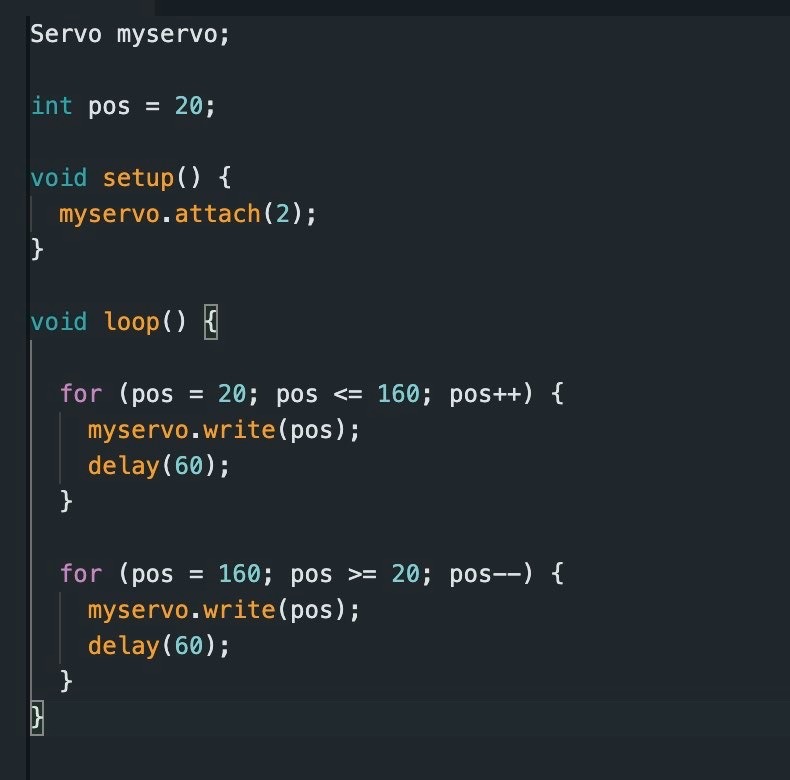
For the third trial, we went back to 20 to 160 degrees but increased the delay to 60. Slowing the servo down created more spaced‑out lines with less overlap. The marks looked more mechanical and rhythmic.
Reflection
We noticed that even small changes in the code had a big effect on the final drawings. Adjusting the delay changed the speed of the motion, which affected how dense or light the marks were. Changing the angle range changed the shape of the curves. Faster movements created darker and layered areas, while slower movements produced cleaner arcs.
Keeping the mechanism simple helped us understand how motion becomes mark‑making. It also made it easier to test different parameters without having to adjust complicated parts every time.
Challenges
One of the main challenges was calibrating the servo so the pen stayed on the paper without pressing too hard or lifting off. We also had to find the right delay values to balance speed and control. Fast movements made the lines messy, while slower movements sometimes felt too stiff. Another challenge was keeping the structure stable while the servo moved, because the vibration sometimes shifted the setup. We also had to organize the wiring on the breadboard so it would not get in the way during testing.
Conclusion
This project helped us understand how mechanical motion and code work together to create visual patterns. By changing only a few variables, we were able to explore many different results. The simplicity of the design made the process feel more like experimentation and discovery, which is exactly what we wanted.