Linkage Arm Plotter: ( TRS Drawbot)
A linkage arm plotter is a category of drawing machine that uses connected mechanical arms and rotating joints to guide a pen across a surface. Rather than moving a pen along horizontal and vertical rails, it positions the pen through the combined motion of its links. These machines can have different configurations, including a jointed arm resembling a human shoulder and elbow, or multiple linked arms working together.
In motorised versions, software translates points in a digital drawing into the joint angles needed to position the pen. The motors then move in coordination to trace lines, curves, and patterns. The lengths of the arms and the joints’ movement limits determine the drawing area, while the rigidity of the links and accuracy of the motors affect the quality of the marks.
What makes this category interesting is the relationship between the mechanism and the drawing it produces. Simple rotating movements can combine to create complex paths, making the drawing process visually engaging.
The TRS Drawbot belongs to this category: its shoulder and elbow servos move a pen through instructions encoded in audio. Other linkage arm plotters use different control systems and may include a pen-lifting mechanism similar to what we assembled in class, allowing them to draw separate lines as well as continuous paths.
What the machine is and how it draws
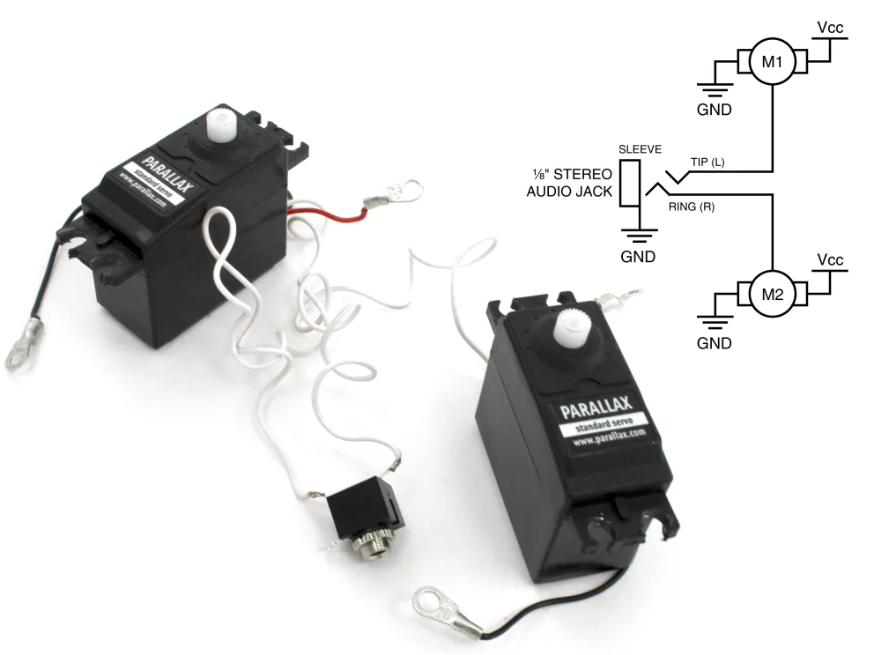
The TRS Drawbot is a drawing robot that uses a pen mounted on a mechanical arm to reproduce digital artwork on paper. Its arm has two joints, similar to a human shoulder and elbow, each controlled by a servo motor. By coordinating the angles of these joints, the robot moves the pen to different positions across the page. Its drawing instructions come from a specially generated WAV audio file. The Drawbot WAVE Synthesizer software reads points from an SVG drawing and calculates the motor angles needed to reach them, using the lengths of the arm segments. It then encodes these angles as electrical pulses in a stereo sound file. When played through a headphone jack, the left audio channel controls the shoulder motor and the right channel controls the elbow motor. A separate power source supplies electricity to the motors.
Video: https://youtu.be/9gvkEeRP8Yk?si=zIbOVln4pmNHaGa5
What makes its approach to drawing interesting
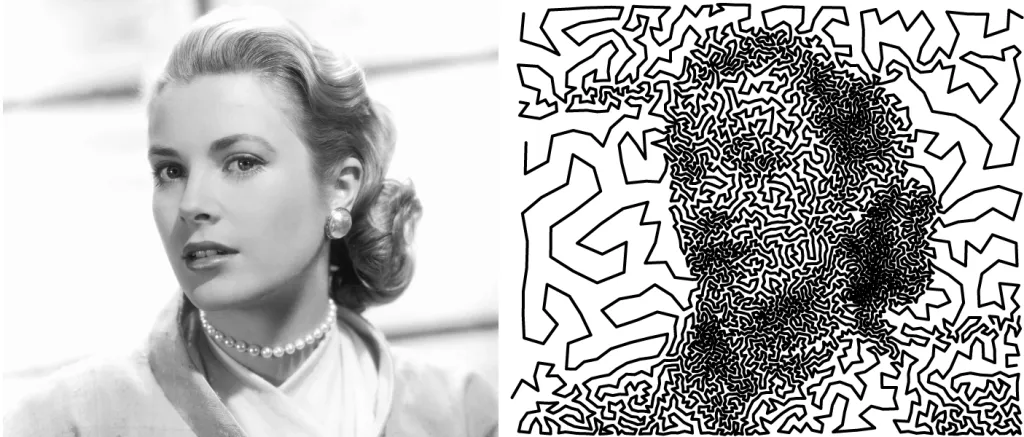
The most distinctive feature is its use of audio as a set of movement instructions. Instead of relying on an onboard microcontroller, the robot receives control signals directly from an audio player. This creates an unusual connection between sound and visual art: playing a sound file produces a physical drawing. However, it requires carefully generated control pulses rather than ordinary music. Its mechanical limitations also shape the artwork. Both stereo channels are needed to move the arm, leaving no channel for lifting the pen. Consequently, the drawing must follow a continuous path. One method converts an image into dots, then uses a Travelling Salesman Problem algorithm to connect them along a short route. The result is a recognisable image made from one unbroken line. Artistically, this makes the limitation productive: the machine’s structure helps determine the visual style of its drawings.
The essential mechanical, electronic, and software components needed to build it
The TRS Drawbot is very simple to build as it uses two servo motors and an audio signal instead of a regular microcontroller.
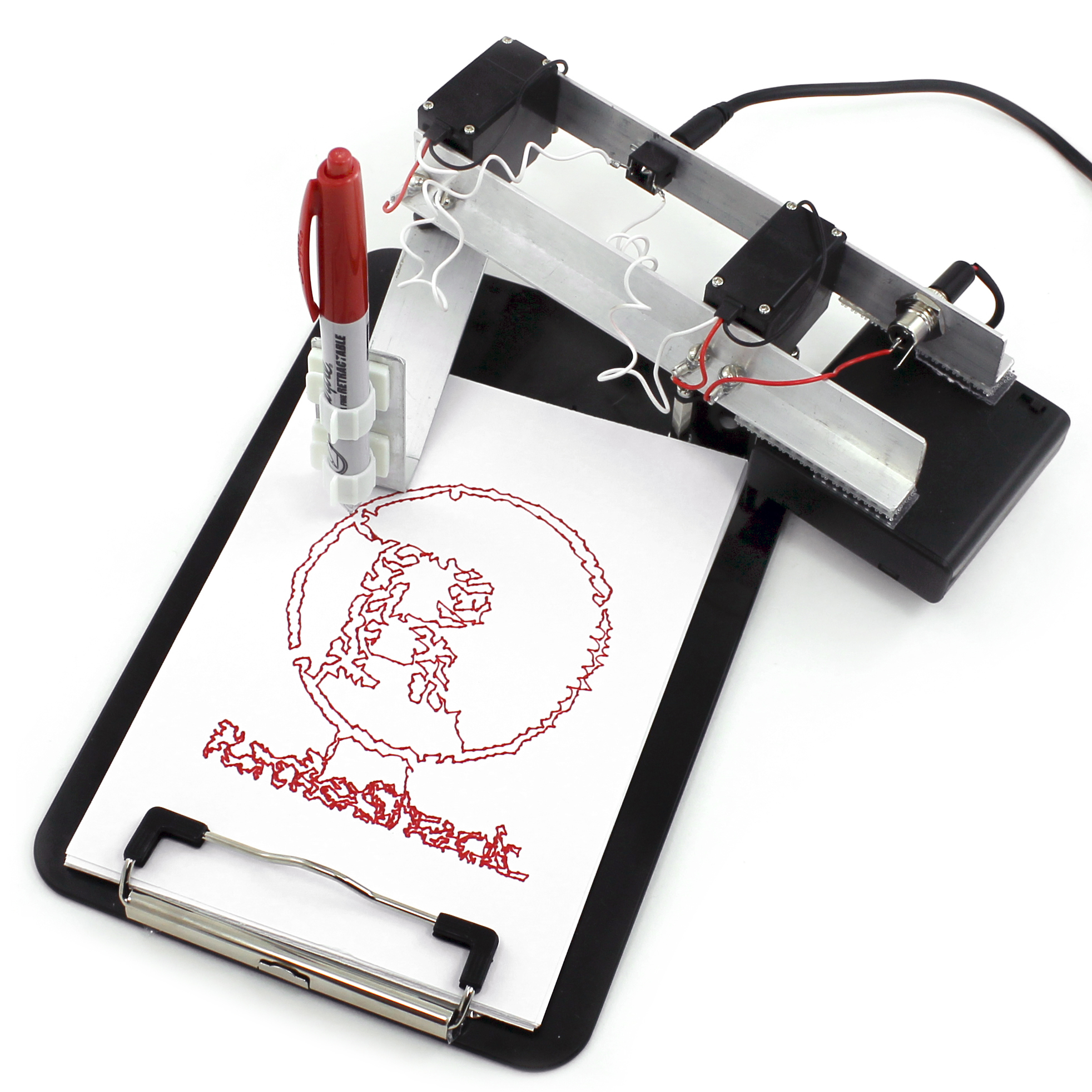
– Mechanical components: Two servo motors, aluminum arms to make the drawing mechanism, a clipboard to act as the base, a pen holder and screws and brackets to connect the parts.
– Electronics: a stereo TRS headphone jack, stereo audio cable, battery pack or 6V power supply, wiring to connect the servos. The motors are controlled independently by the two audio channels.
– Software: The Drawbot WAVE Synthesizer converts SVG drawings to WAV audio files. It translates the drawing coordinates to servo angles and encodes them in electrical pulses. The motors move the pen along the drawing path as the audio file is played on a computer or other compatible audio device.
The interesting thing about the system is that you do not need a microcontroller to interpret the drawing instructions. The audio file itself instead guides the movement of the machine.
Examples of drawings or artworks produced with it
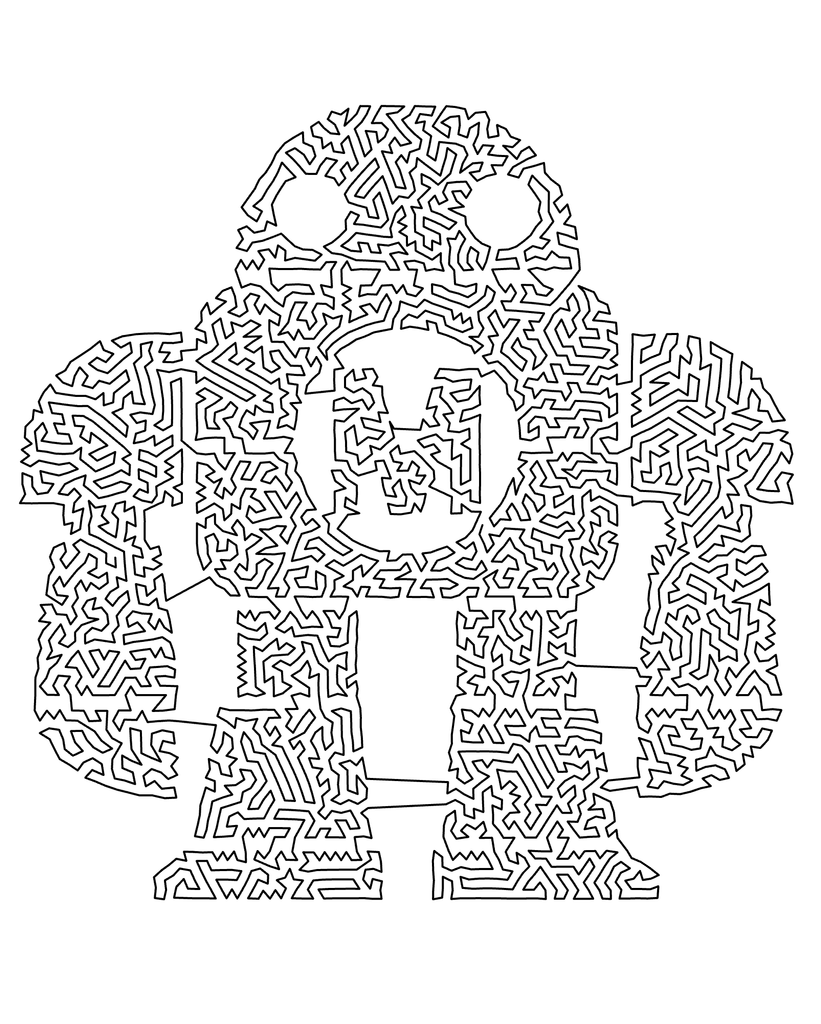
The TRS Drawbot is capable of producing various continuous-line drawings, from simple geometric figures to more intricate illustrations and portraits. The machine can not lift its pen automatically, hence the drawings need to be in a continuous path. Some examples from the original project were stars, the RadioShack logo, the Maker Faire mascot and a portrait created with the Traveling Salesman Problem (TSP) method.
The TSP drawings are particularly interesting to us because they demonstrate how a complex image can be reproduced by means of a single continuous line. First, the image is pixelated into dots and an algorithm finds a path between those dots. This enables the robot to create recognizable images within the mechanical constraints.
Relevant references, projects, or artists/designers who have explored similar systems
These references connect to the TRS Drawbot through robotic movement, algorithmic drawing, and the use of mechanical systems to make art.
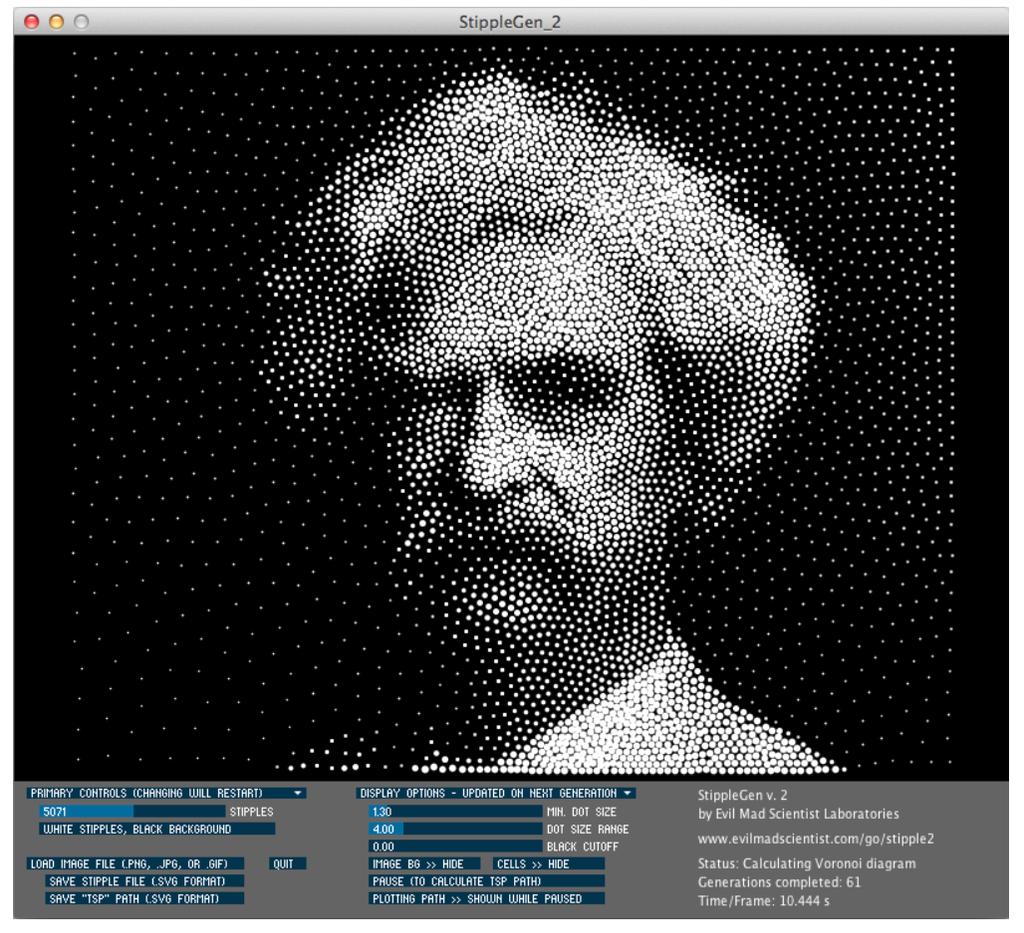
- StippleGen: Evil Mad Scientist Laboratories
StippleGen converts images into arrangements of dots and can connect them into a continuous path using a Travelling Salesman Problem algorithm. It is directly relevant because the TRS Drawbot tutorial uses this software to prepare its single-line artwork. It demonstrates how an algorithm can transform a photograph into a path a machine can draw.
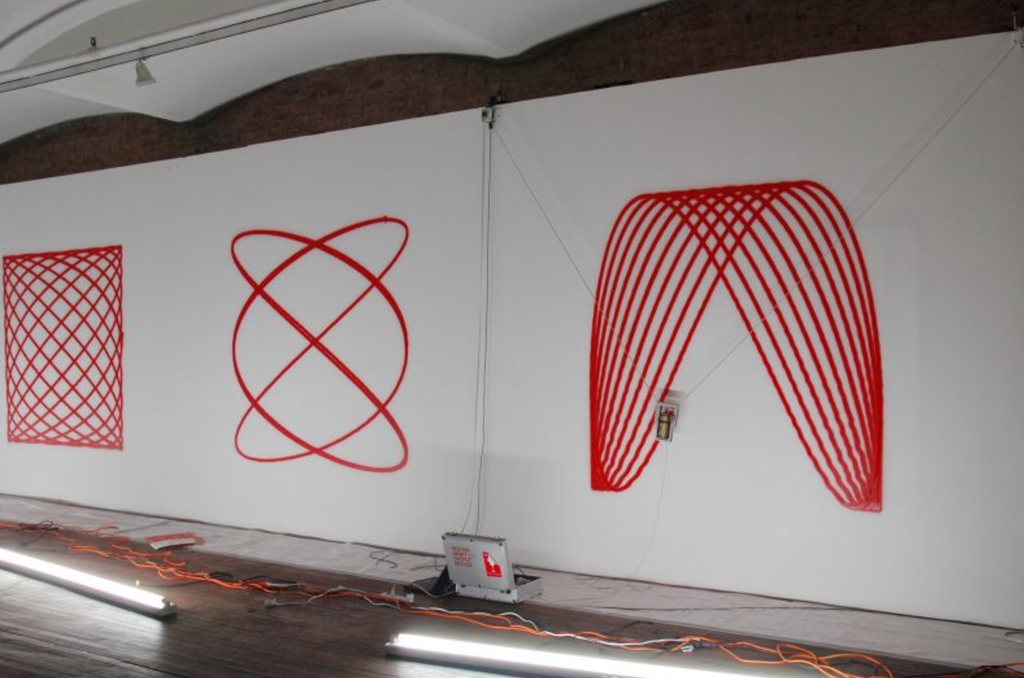
- Hektor: Jürg Lehni and Uli Franke, 2002
Hektor is a computer-controlled drawing machine that moves a spray paint can using two motors and toothed belts. Its software translates digital paths into motor movements. Like the TRS Drawbot, it produces drawings through a simple mechanism, but uses a suspended spray can instead of a jointed pen arm. Its trembling and wobbling give the finished work a distinctive character, showing how mechanical imperfections can become part of an artwork’s aesthetic.
https://juerglehni.com/works/hektor?utm_
Sources:
https://juerglehni.com/works/hektor?utm_