Concept
My design is based on how a simple rule can create an organic-looking form. I started with the basic idea of a snowflake (or a flower, idk :)) and represented each spike as a repeated rectangular block arranged radially around a central point. Instead of making all the spikes identical, I used a mathematical function to change the radius and height of each spike. This creates controlled variation, making the snowflake look less mechanical and more natural.
I also wanted to add some kind of random element into this assignment, which serves the concept well because randomness is a part of how nature works. The code also randomly generates the number of spikes, ranging from 3 to 7, so each version of the design can be slightly different. As a result, the final object sits somewhere between natural growth and structure.
I was particularly interested in exploring how I can depict the difference between natural imperfections and computer-generated repetition. I tried to recreate this idea computationally rather than manually designing every spike.
p5j sketch
https://editor.p5js.org/Joud_290/full/eqZRVQq_E
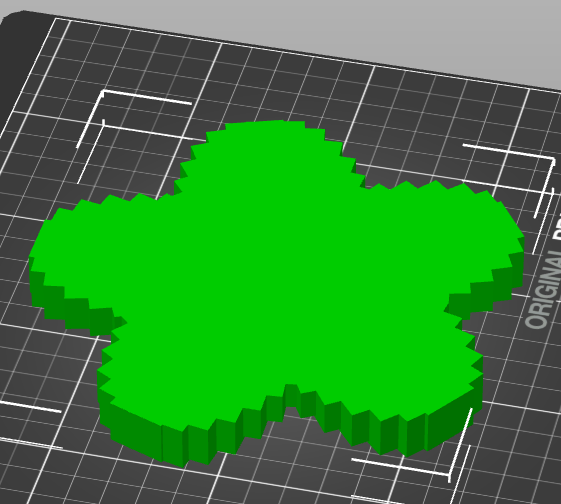
p5j generated pictures
The random function was used to determine the number of spikes/petals of the object. I set it to be between 3 and 8.
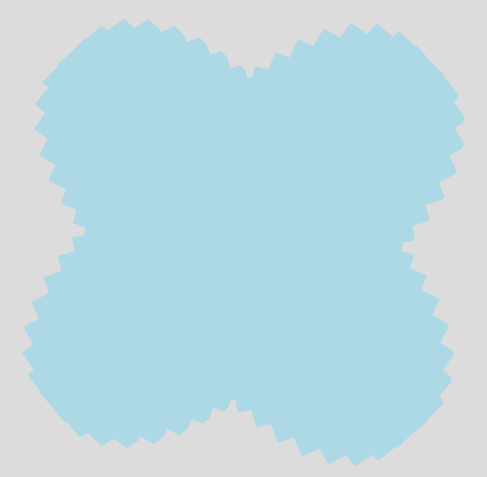
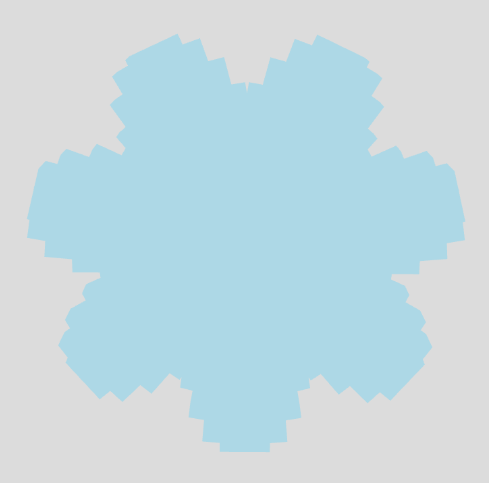
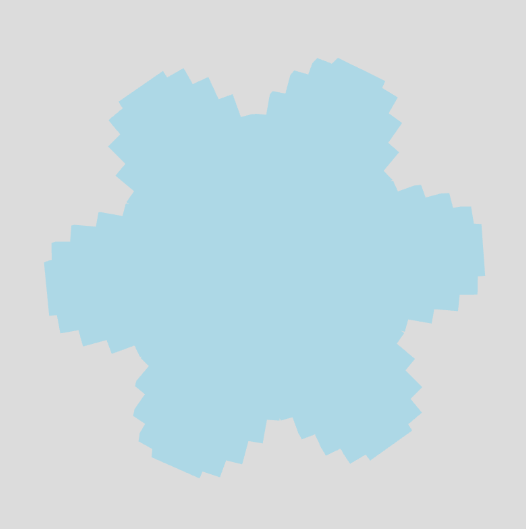
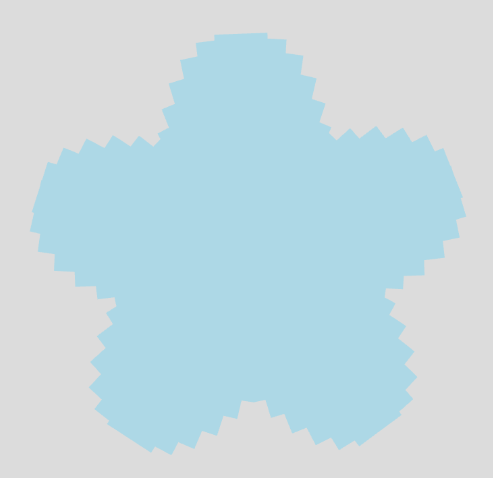
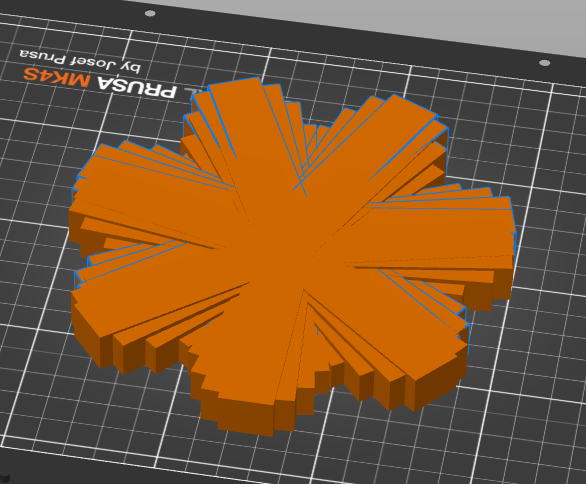
Prusa Slicer
The object after slicing on Prusa Slicer
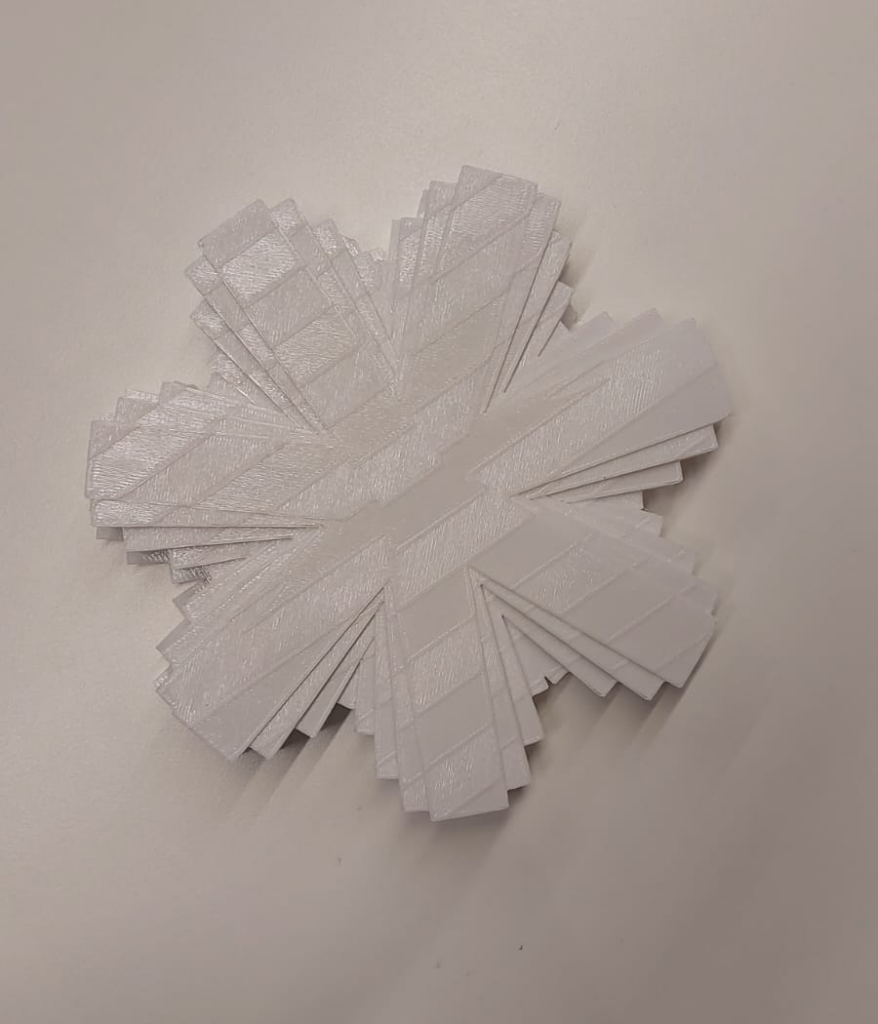
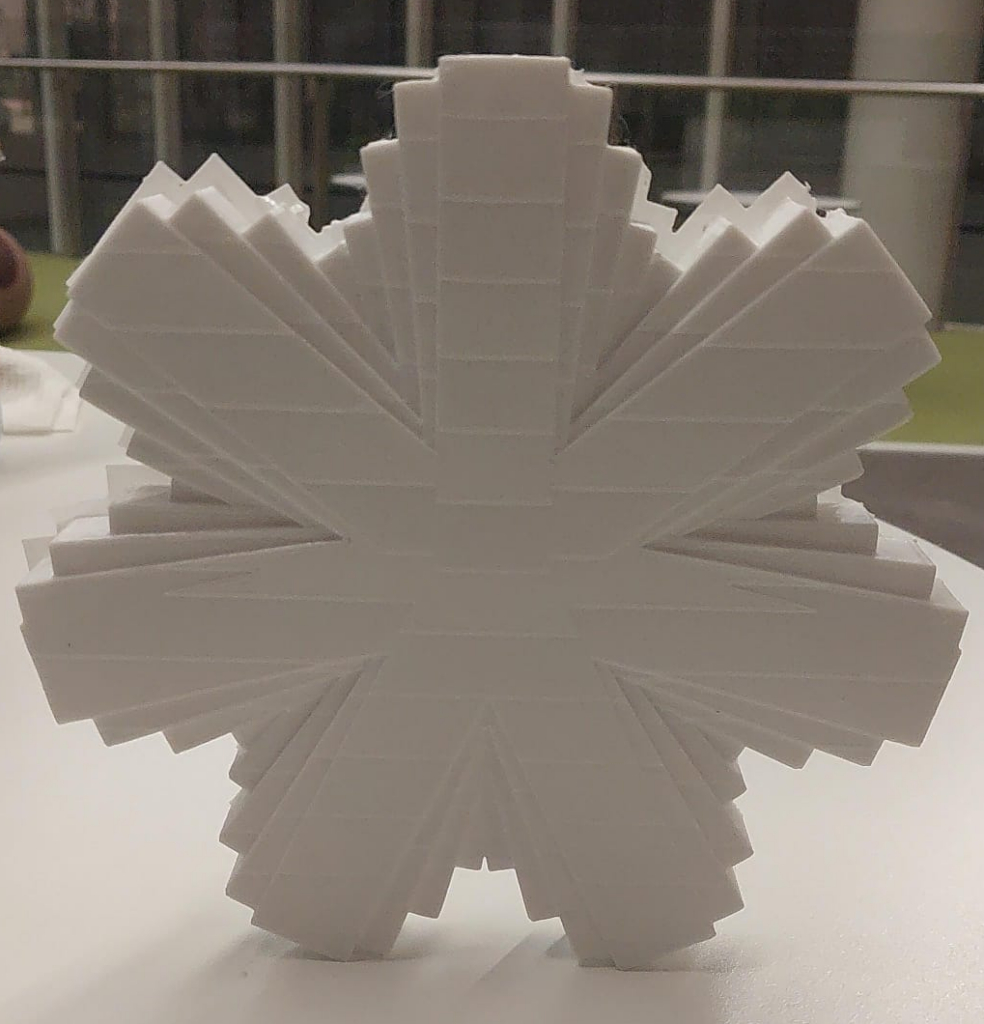
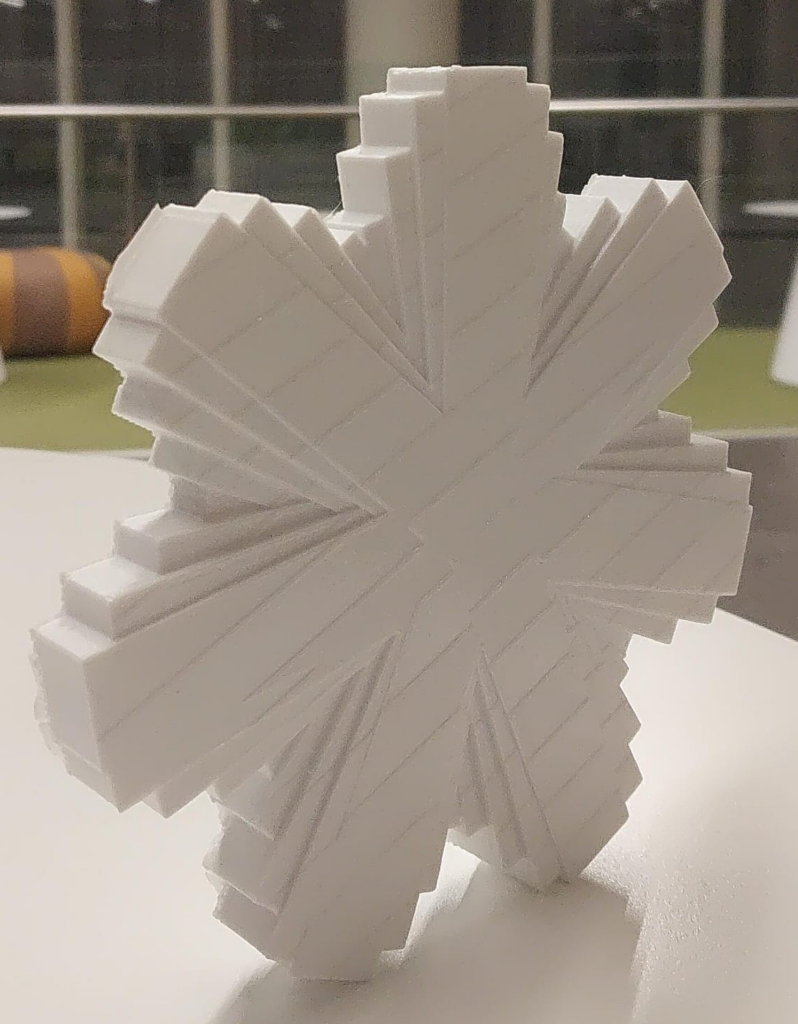
Final physical result
In p5.js, I first created the flower shape using repeated petals, rotation, and some mathematical variation. At this stage, it was mainly about getting the overall pattern and shape that I wanted.
When I imported it into PrusaSlicer, I could see how the design would actually work as a 3D object. It was the step to check for any errors in terms of connectivity, edges, etc. After editing, the shape became more solid, and I could see the thickness and the way the spikes would be printed layer by layer. There was initially a problem with open edges, but it got resolved
The final 3D print ended up being very similar to the PrusaSlicer preview. There were only small differences from the physical printing process, but the details of the shape stayed the same. This was useful because it showed me that the design I created digitally translated quite well into the actual object.
I also found that each stage showed something different. p5.js was just for creating the pattern, PrusaSlicer was for preparing it for printing and running to see if it has any problems, and the final print showed how the design actually worked as a physical object.
Reflection
never tried designing 3D objects with code before, so even though it was challenging at the beginning, it was a fun project to work on. I learned how to use different techniques in p5.js to get a specific shape that I wanted. I used sine waves to control the size and height of the petals and make the design change more smoothly. I also learned that creating something digitally and turning it into a physical object are two different steps. Seeing the design in PrusaSlicer and then as an actual 3D print helped me understand how the code and the physical printing process connect. Overall, this project helped me become more comfortable with using code as a way to create and experiment with 3D forms.