Concept
For this project, I wanted to explore how repetition and variation in p5.js could create a three dimensional object that would be difficult to design manually. I also wanted the final object to have some kind of function rather than being completely decorative.
I experimented with a few different ideas before reaching my final design. My first idea was a small mug, and after that I experimented with a more abstract form. Through these tests, I eventually developed the final vase.
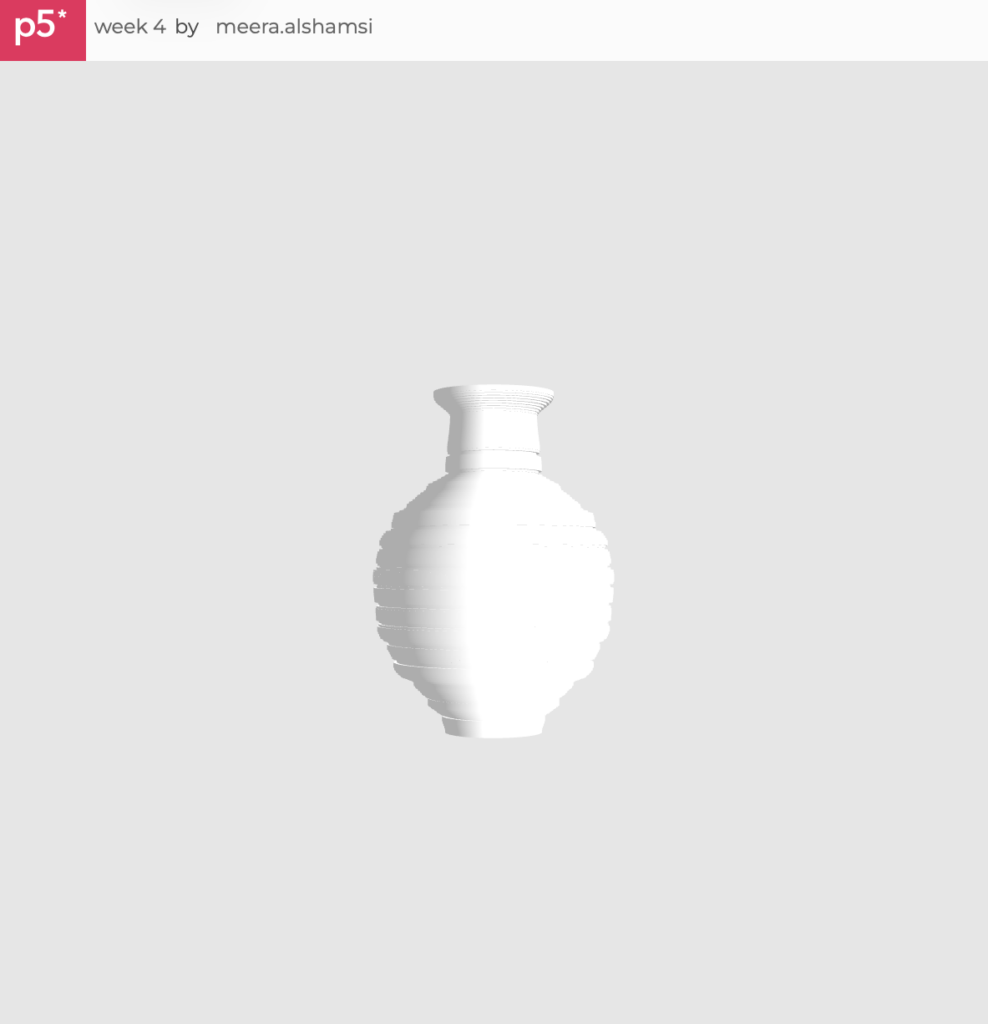
For the vase, I used repeated layers to gradually build the form vertically. The dimensions of the layers change as they move upward, creating the rounded body and narrower neck. The repeated horizontal layers also became a visible part of the final aesthetic, which I really liked because they show how the form was generated rather than hiding the computational process.
I also wanted to push the vase beyond the basic requirement of creating a printable 3D form. Rather than using one repeated shape at a constant size, I used repetition together with gradual variation to control the entire silhouette. The form continuously expands, contracts, and changes as it moves upward, creating the rounded body, narrow transition, and opening at the top while still remaining one connected structure. This meant I had to think about the vase as both an algorithm and a physical object at the same time. I also intentionally kept the repeated ridges visible instead of trying to make the surface completely smooth, because they reveal how the form was constructed and give the final object its own texture and visual rhythm. Making it hollow and functional added another level of difficulty, since I had to consider the interior space, wall thickness, stability, and printability alongside the exterior appearance. For me, going further with this project meant not just generating an unusual shape, but using the algorithm to control structure, function, texture, and form all at once, while making sure the final result could successfully exist outside the screen.
p5.js Sketch
https://editor.p5js.org/meera.alshamsi/full/1M5nv6Xss
I developed the form using p5.js in WEBGL. Instead of modeling the vase manually, I used code to control its overall structure and generate the repeated layers.
The main elements I experimented with were the number of layers, height, width, rotation, and how much the form expanded or contracted at different points. Small changes to these values could completely change the silhouette.
This was one of my favorite parts of the project because I could keep changing the algorithm and immediately see different versions of the same basic idea.
3D Design and Workflow
My workflow was much more experimental than I originally expected.
I began by testing a mug because I wanted to create a recognizable and usable object. The mug did successfully print, including the handle and hollow interior, but it came out much smaller than I intended. I was having trouble understanding how the scale of my digital model would translate into the final print.
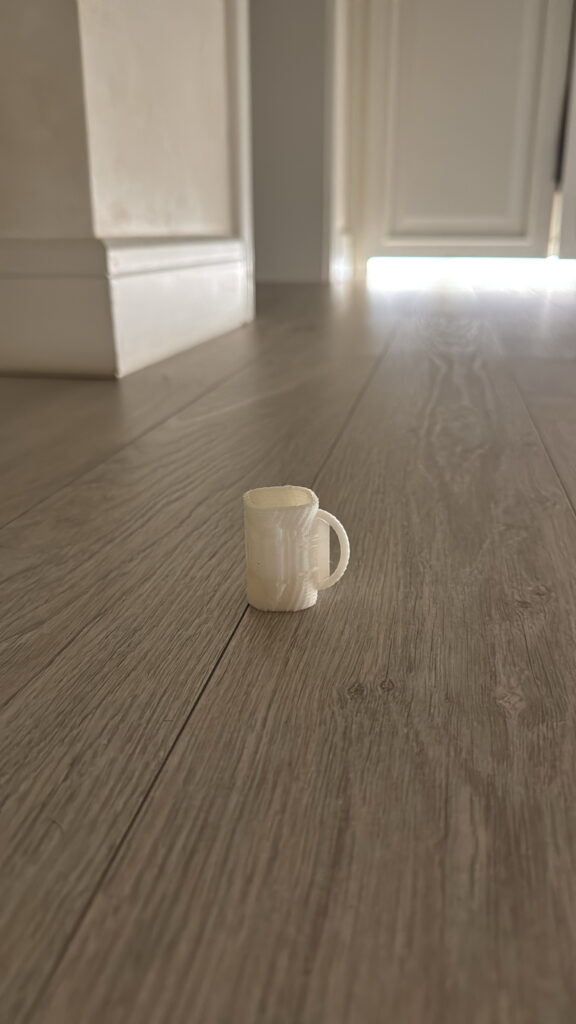
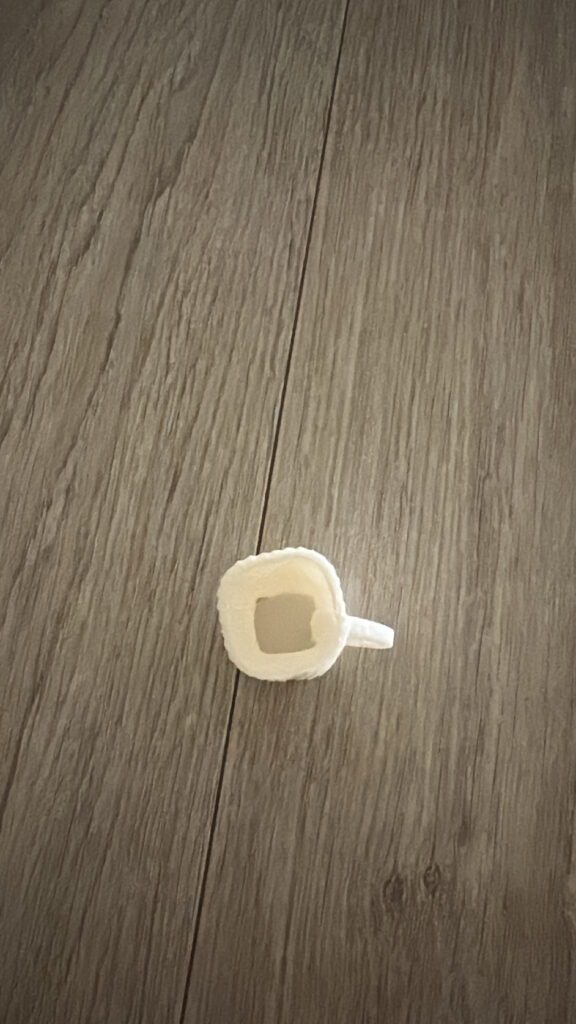
After the mug, I decided to experiment with a more abstract algorithmic form. I wanted to push the design further and create something less predictable using repeated geometry.
However, this test stopped printing partway through because there were problems with the design itself. Some parts of the geometry were not suitable for the printer, so the printer could not successfully continue building the object.
At first this was frustrating, but it became one of the most useful tests because it showed me that creating an interesting 3D form on a screen is very different from creating an interesting form that can actually exist physically.
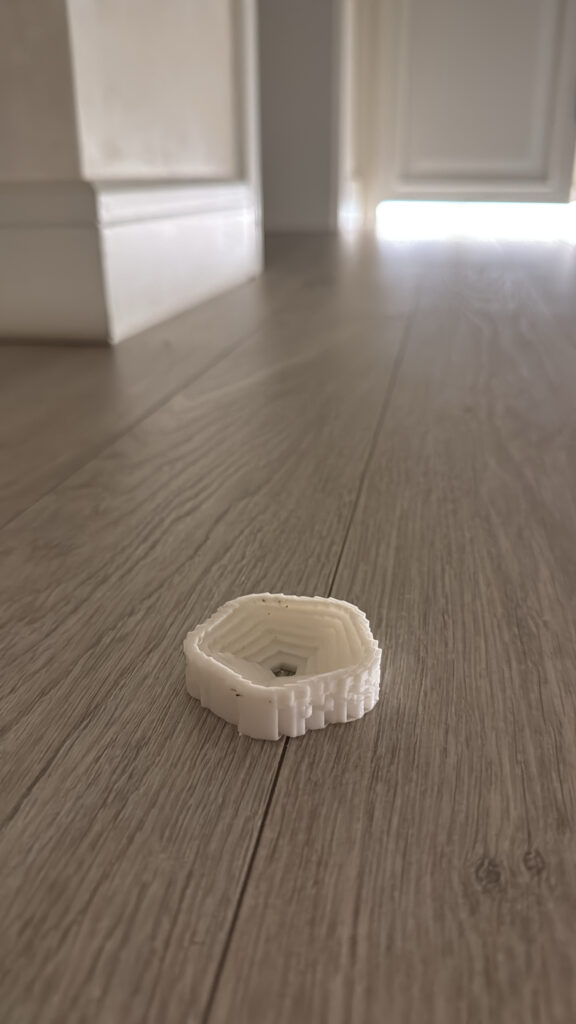
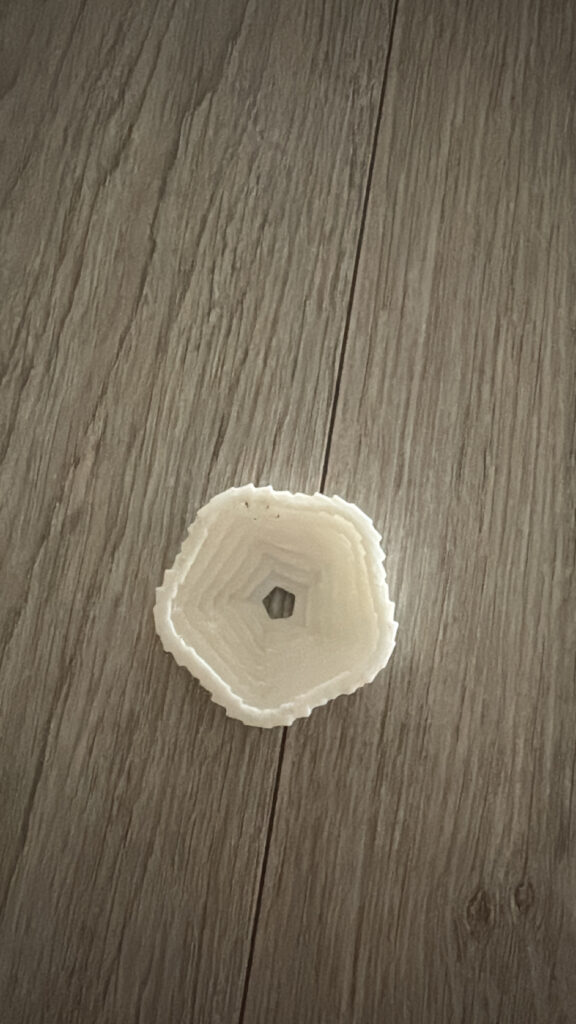
After these experiments, I redesigned the form as a vase. For this version, I paid much more attention to making the geometry continuous and connected while still keeping the algorithmic qualities I wanted.
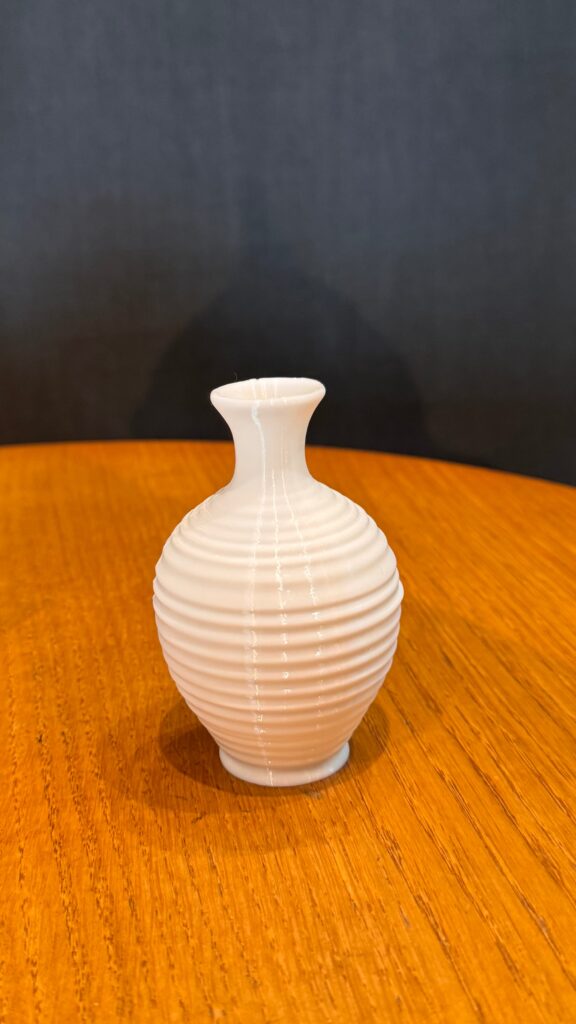
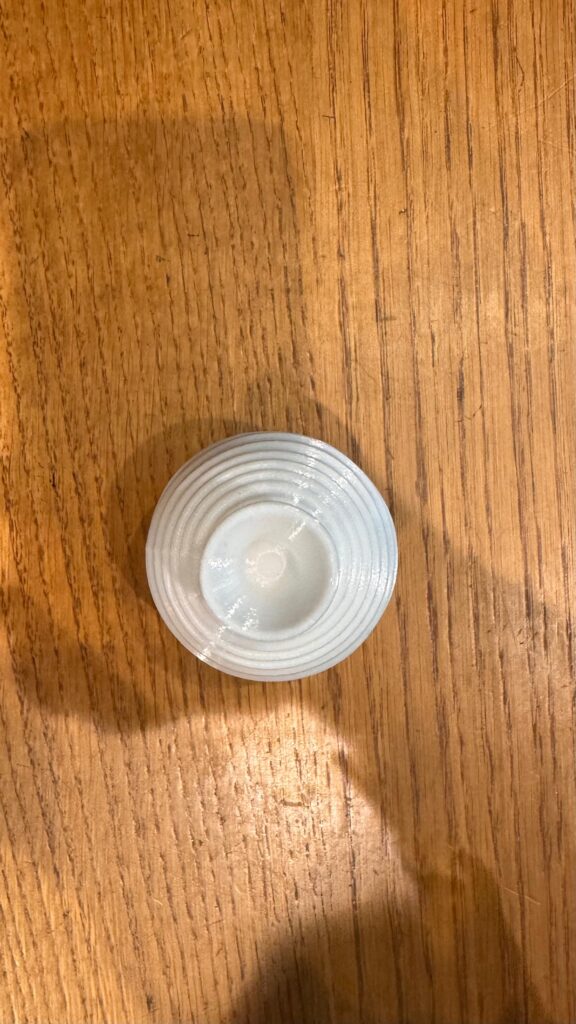
Final 3D Print – Vase
My final piece is the vase.
The vase uses repetition throughout its structure, but the repeated layers gradually vary in size to create the overall silhouette. The lower section expands outward into a rounded body before gradually becoming narrower toward the neck and opening again slightly at the top.
What I especially like about the final print is that the repetition is still visible. The horizontal ridges give the vase texture and make the process of building the form layer by layer noticeable in the physical object.
Compared with my earlier tests, the vase also feels much more resolved. It is still clearly an algorithmically generated object, but it has a recognizable and practical function.
Process and Challenges
The biggest challenge throughout this project was learning that a 3D model that looks correct on the screen is not necessarily suitable for 3D printing.
I ran into this problem several times. My first mug successfully printed, but it was much smaller than expected because I was struggling with scaling the model correctly. This taught me that dimensions have to be considered much earlier in the process instead of only when I am ready to print.
My second experiment created a different problem. I tried making a more abstract object, but the print stopped because of an issue with the geometry. Parts of my design worked digitally but were not structured correctly for fabrication. This made me go back into the design and think much more carefully about connections, thickness, openings, and whether the printer could physically build each part.
Making the vase required several adjustments for exactly this reason. There were many moments where I liked how something looked digitally but had to change it because it would not print successfully. I eventually learned to think about the printer while I was coding instead of treating printing as something that only happens after the design is finished.
Another challenge was time. Every failed print meant going back to the design, changing something, exporting it again, preparing it for printing, and testing it again. Because 3D printing itself takes time, even a small design problem could slow down the entire process.
Reflection
This project probably taught me more through the things that went wrong than through the things that immediately worked.
At the beginning, I was mainly asking myself, “Does this look good in p5.js?” By the end, I was also asking, “Can this actually be printed?”
That completely changed the way I approached computational design. The small mug taught me about scale. The failed abstract piece taught me about geometry and printability. The vase brought those lessons together because I had to create something that was visually interesting, algorithmic, connected, and physically printable at the same time.
I also realized that 3D printing places limitations on computational design, but those limitations can actually improve the design. I had to simplify certain ideas, strengthen connections, think about wall thickness, and make sure the form worked as one continuous object. Instead of seeing those limitations only as problems, I started using them as design decisions.
My final vase is very different from where I started, and I think that progression is an important part of the project. I did not simply create a digital object and send it to the printer. The failures of the physical prints changed the code and ultimately shaped what the final object became.
That was probably my biggest takeaway from this assignment that computational design and fabrication are not two separate stages at all, they directly affect each other.