Concept
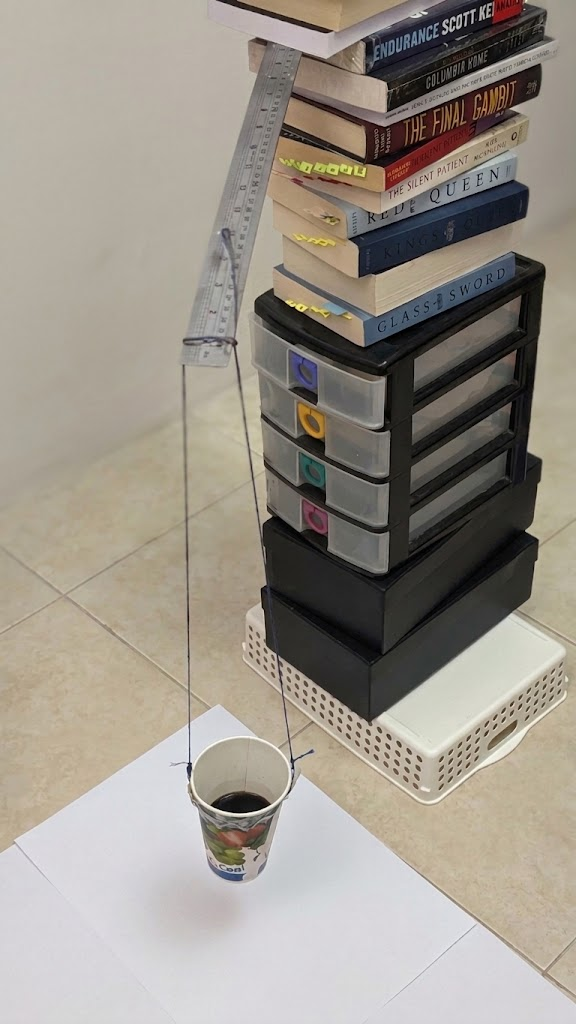
For this assignment, I built a Low-tech pendulum drawing machine using a paper cup filled with watered-down paint attached to two strings. The paper cup has a small hole punched into it, allowing paint to drip from it onto the paper underneath as it swings. The idea is that the unpredictability comes from how the material flows across the canvas (in this case, paper), with the use of the swing’s angle, speed, and the type of material and how they each affect the marks left, but not in a way I can fully predict or control in the moment.
Video
Process and Challenges
I built the base of my machine by stacking boxes and books into a tower, with a metal ruler laid across the top to suspend two strings. My first attempts used embroidery thread attached to a paint marker, then a paintbrush as drawing tools. However, I found that all three methods caused the friction between the tip and paper kept interrupting the swing, which made short streaks. I thought the reason could be the height of the pendulum but even when I lowered the string so the tip barely grazed the paper, the friction still caught and stalled the motion.
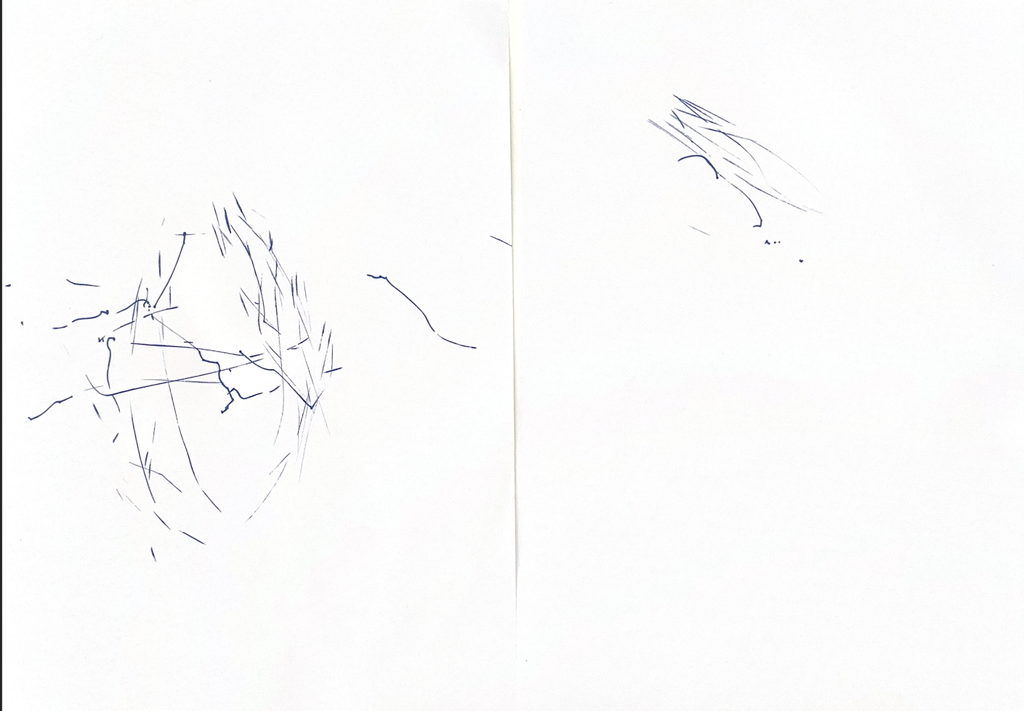
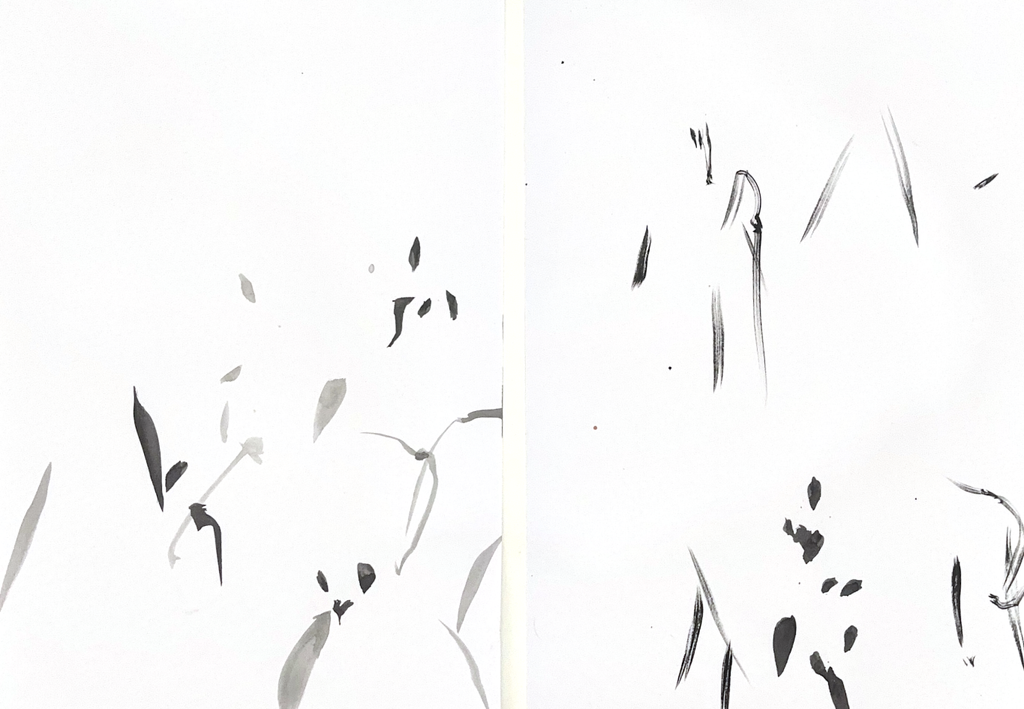
As a result, I decided to experiment further and switched to a paper cup filled with watered-down acrylic paint, with a hole poked in the bottom. This let the paint drip out as the cup swung, and let me control the flow through the angle and speed of the swing. Surprisingly, the biggest challenge was the paint’s consistency (thickness), since if it was too thick, it dropped in blobs instead of flowing into lines, and if it was too thin, the color became barely visible against the white paper.
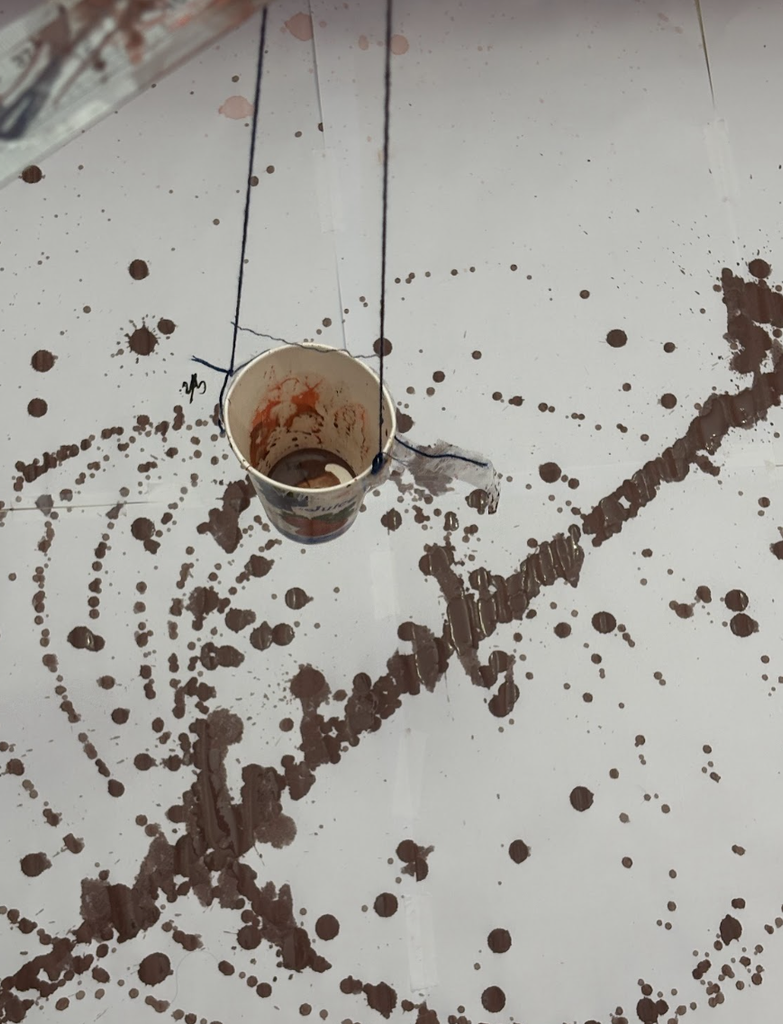
After mixing colors, it thickens the consistency, so I added more water to bring it back to a flowing consistency. In addition to this, taping and releasing the cup was also tricky, since paint started leaking the moment the tape came off, so I had to move quickly once I started.
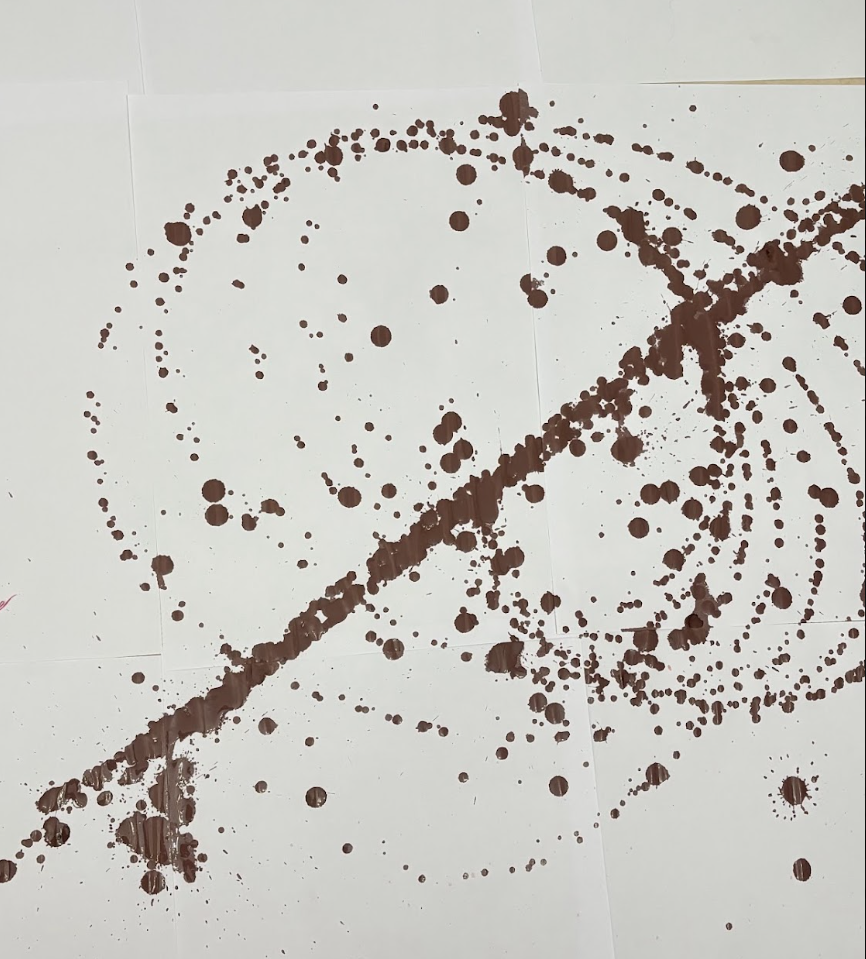
Reflection
In relation to Sol LeWitt’s Paragraphs on Conceptual Art, the “idea” of my drawing resides in the machine and my design choices since the pendulum system itself was set from the start, though it took some exploring to find what tool to pair it with, but once running, the machine determined the specific marks I couldn’t control.
Sol LeWitt in his Paragraphs on Conceptual Art argues that once an artist sets the basic rules of a plan, the fewer decisions made afterward, and removing the arbitrary and the subjective from the process (13). In my case, I only arrived at using a cup of paint after testing a paint marker and a paintbrush. Even once I landed on this tool, I kept changing paint consistency, switching colors, re-thinning the mixture.
In addition to this, he says the basic form used should be simple and uninteresting, so the focus stays on the arrangement it creates, not the object itself (LeWitt 13). In my case, the pendulum’s swing isn’t interesting on its own, but the marks it produced are. He also argues that the in-between steps of making art, like testing, adjusting, and failed attempts, matter just as much as the final piece, since they show the artist’s thought process, which is sometimes more interesting than the final product (LeWitt 14). Looking at my own process this way, it taught me that I figure things out by physically testing them to see what the results are like.