Concept
For this Assignment, I took inspiration from Jonas Spieker’s 100 Spins, where he spins a coin marked with two lines exactly 100 times and draws a line across the paper wherever the coin lands. The result is almost entirely chance, held together by a very small set of design rules.
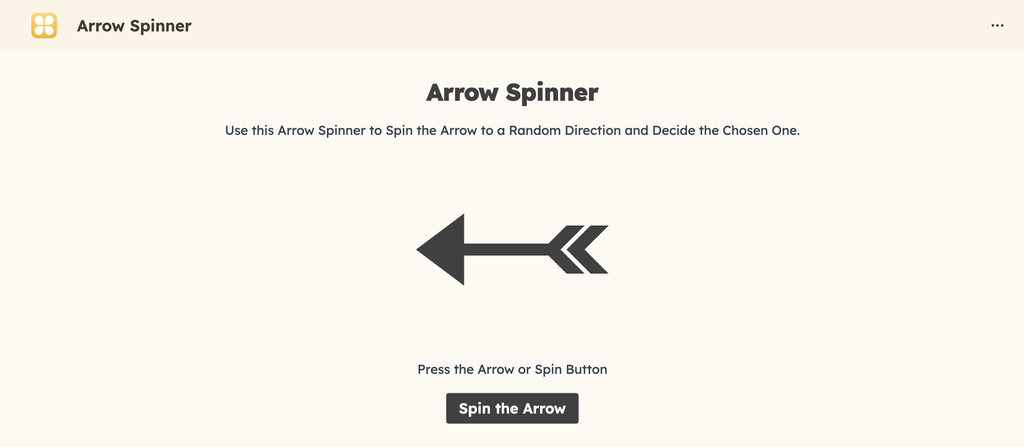
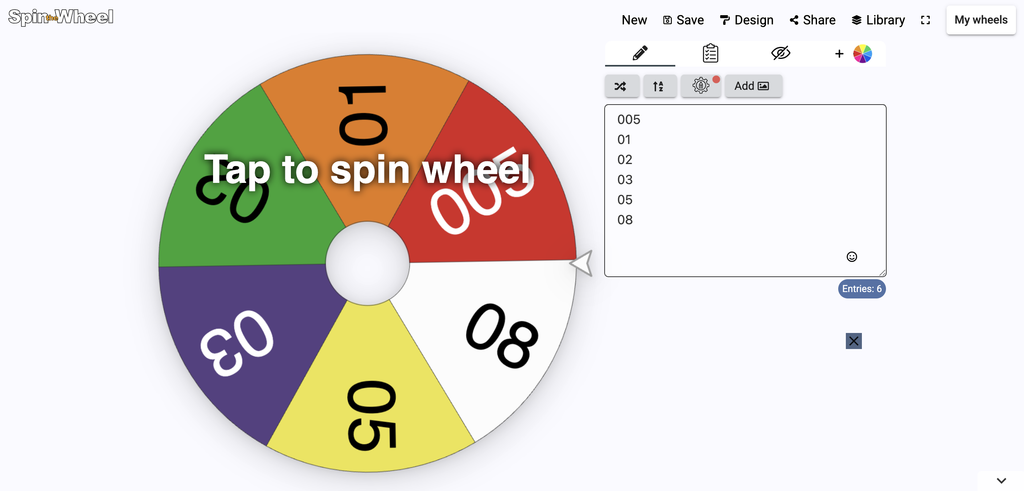
I wanted to try a similar idea but with more than one variable in play. Instead of one randomizer I used two spinners on my iPad. The first picks a pen thickness from my set of Microns (005, 01, 02, 03, 05, 08). The second picks the direction of the next line. Even though the spinners are digital, but they do the same job a coin or a dice would do.
The system
Outputs
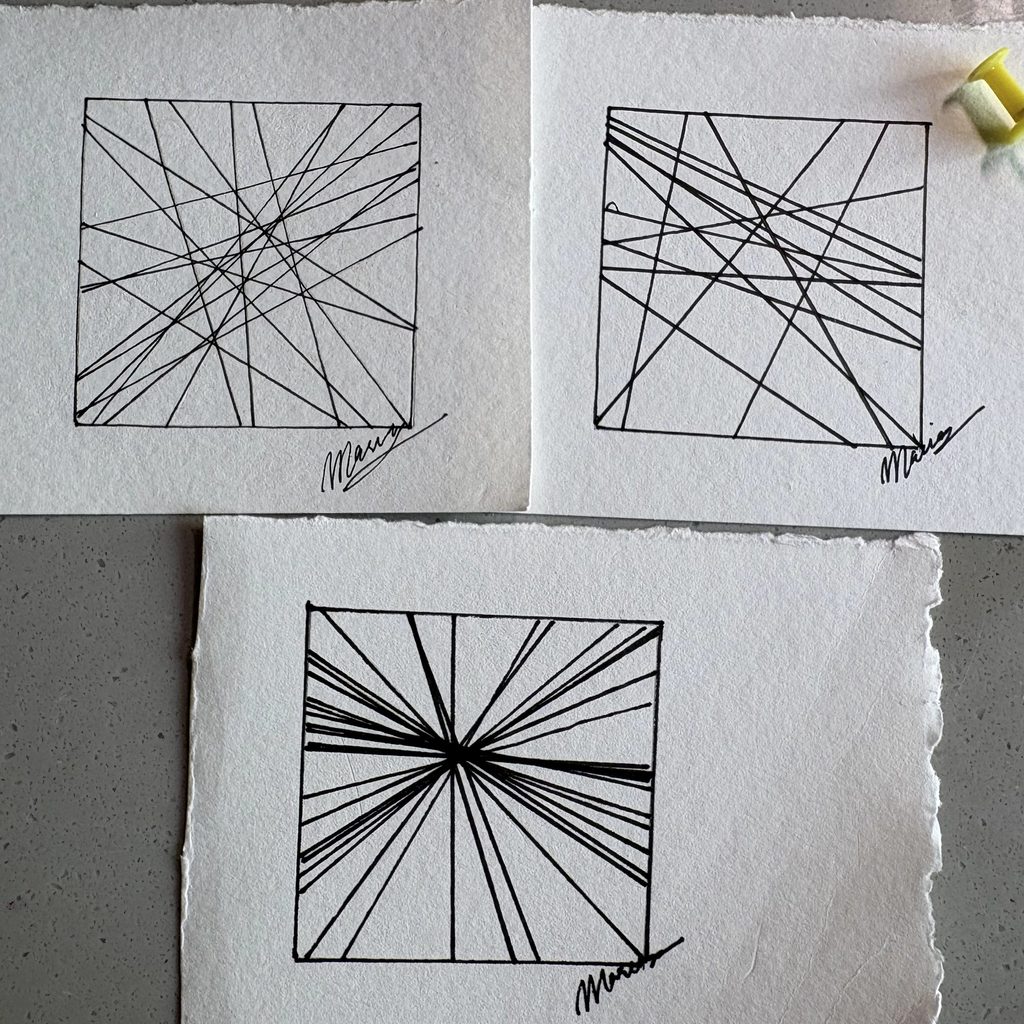
I made three drawings, each with one rule changed.
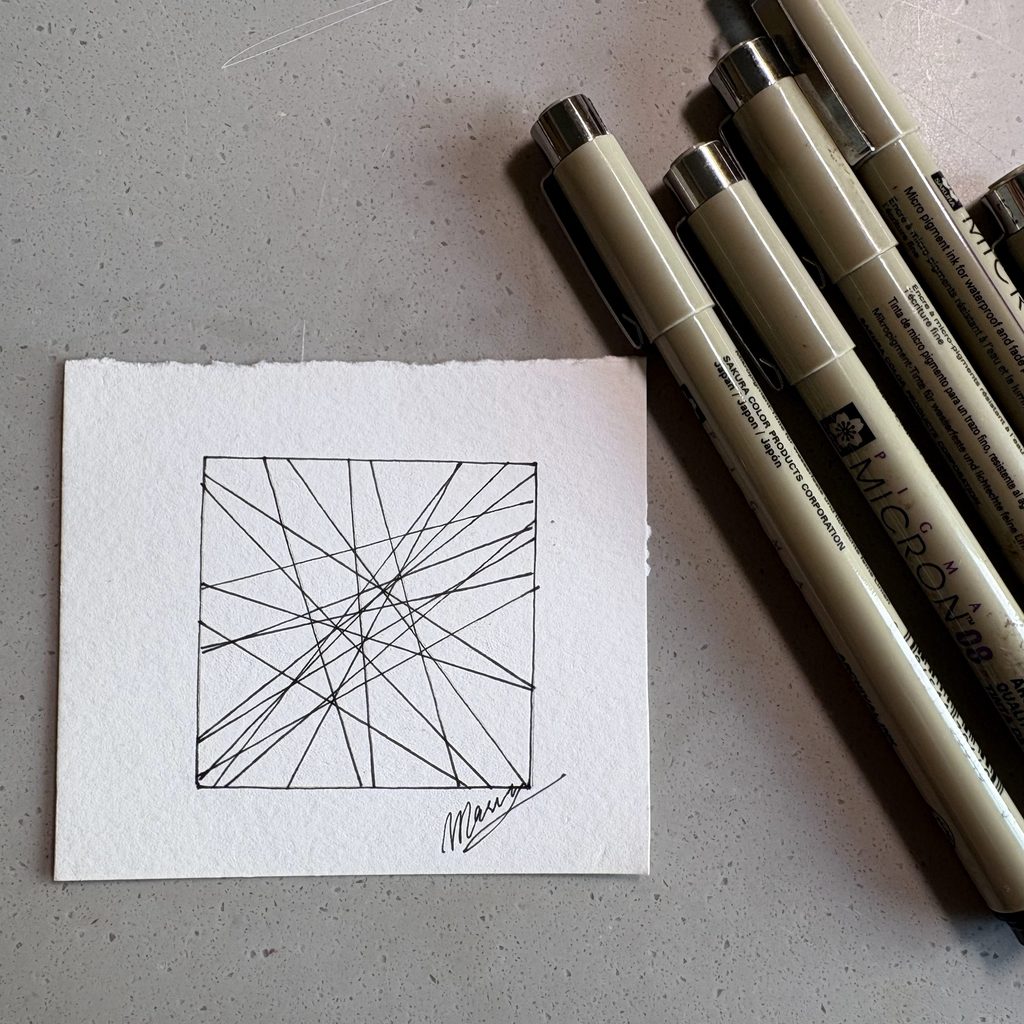
The first one is the base system. I spun for direction and drew the line, over and over, until it felt finished. Micron 02.
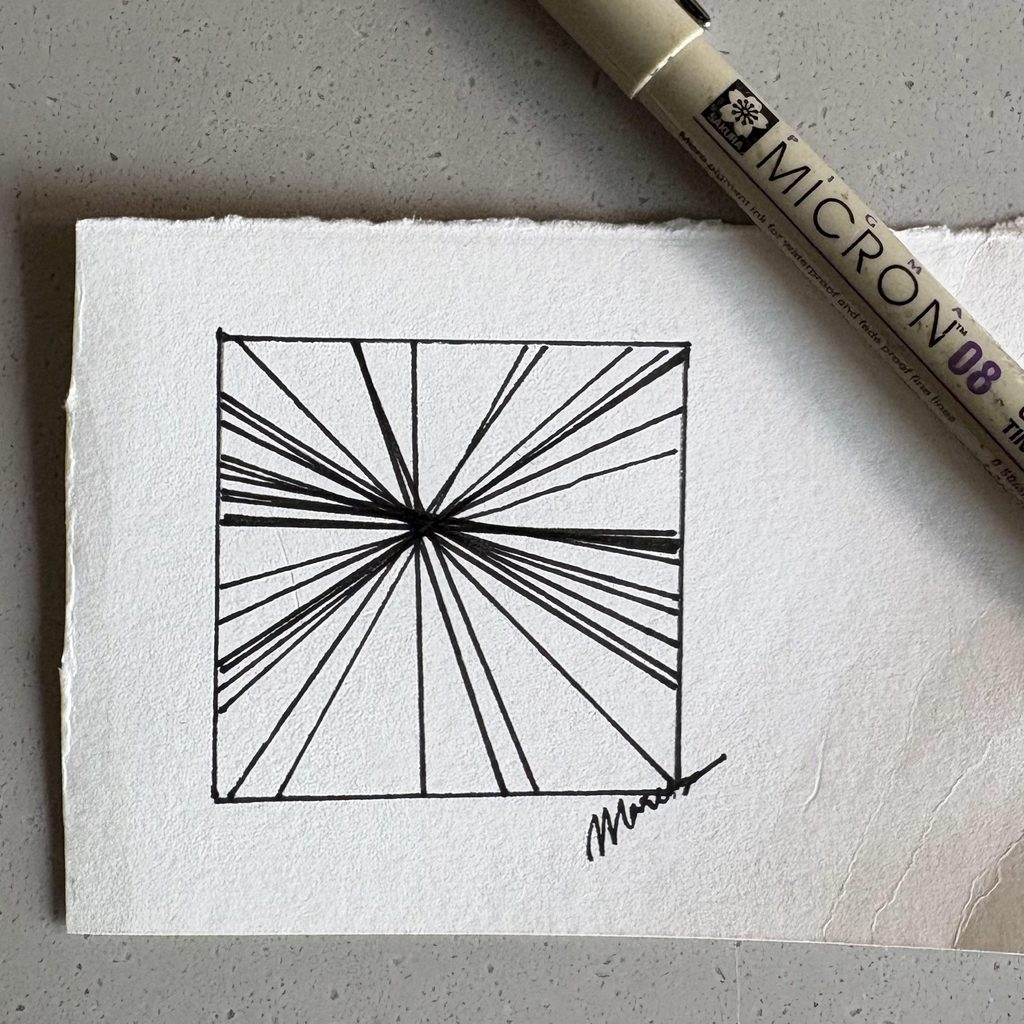
The second one keeps the direction spins with the arrow but forces every line to pass through a single point. Micron 08.
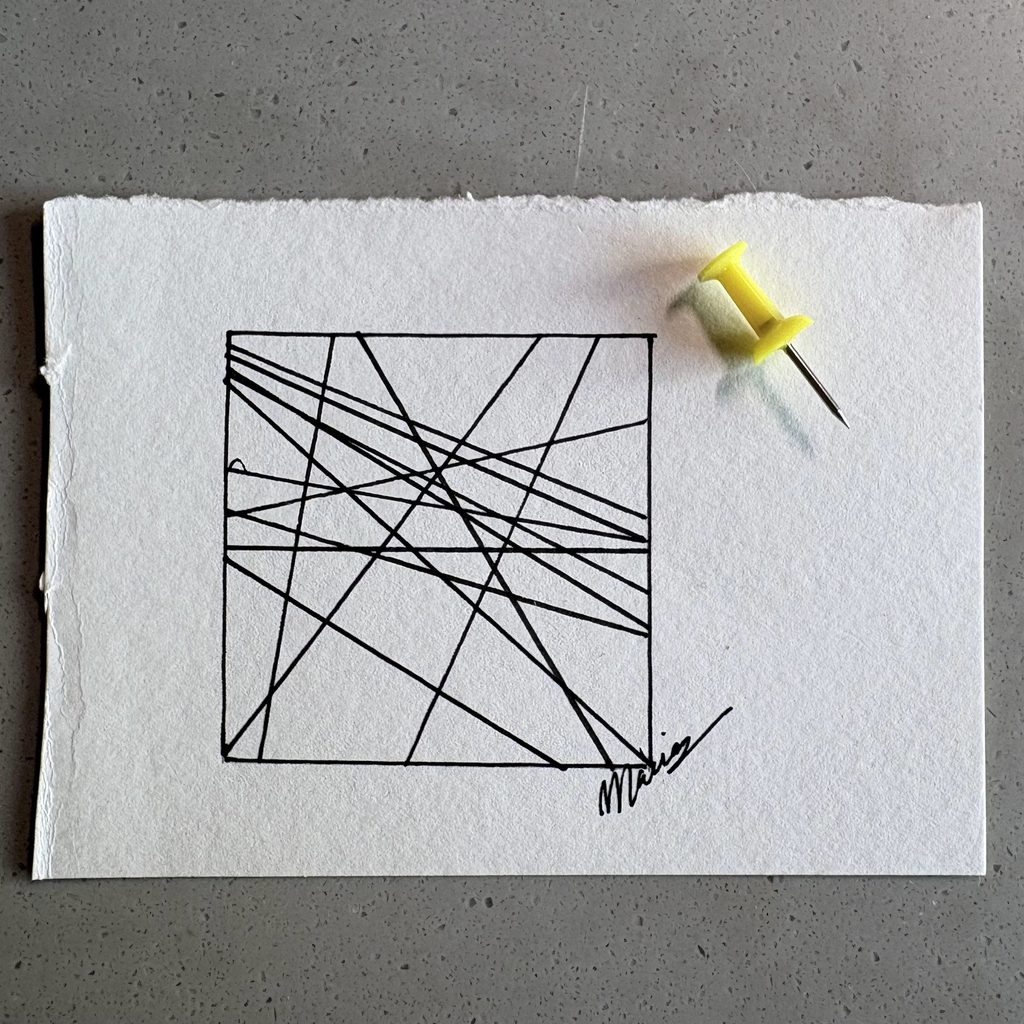
The third one uses a thumbtack instead of a spinner. I dropped it on the page and started each line from wherever it landed, running in whatever direction it pointed. Micron 05.
Process & Challenges
I spun for thickness before each drawing. However, what I did keep control of was when to stop. Spieker decided on 100 before he started, so the stopping point was already out of his hands. I just drew until it looked done to me. So the directions are chance but the density is mine, and I think that is one of the biggest differences between his drawings and mine.
The second drawing is the one that surprised me. It feels like the same amount of randomness as the first, but pulling every line through one point made it look planned and intentional. I did not expect one small rule to hide the chance that completely.
I also signed all three without thinking about it (out of habit). It only made me question later: how much of a drawing is truly mine if I leave it up to a protocol and chance?
Control, chance and authorship
In relation to LeWitt’s Paragraphs on Conceptual Art, the idea sits mostly in my design decisions, not in the machine.
LeWitt says that the idea becomes a machine that makes the art, and his wall drawings were installed by draftsmen he never met. That works because the instructions were complete. Nothing was left for the person holding the pen to decide.
Mine are not complete. My rule set had gaps in it: the stopping condition, the pen weight, whether to constrain the lines to a point. I filled every one of them myself, in the moment, while drawing. I could not hand this protocol to someone else and get my drawings back. That makes me the author much more than the system is.
If I ran it again I would fix N before starting and try to give the whole thing to someone else to execute. Then the answer might genuinely be the machine.