Mariam & Haya
Concept
We started out really wanting to make a spirograph. Then we reread the brief and remembered we could only use servos, and our servos only turn 180 degrees, which is half a circle, which turned out to be a problem because the entire premise of a spirograph is that something goes around 360 degrees without stopping. We spent a while trying to get around this (we looked into whether ours were secretly the continuous kind, we were not so lucky) before accepting that the constraint was not going anywhere and we should probably design with it instead of against it.
The machine
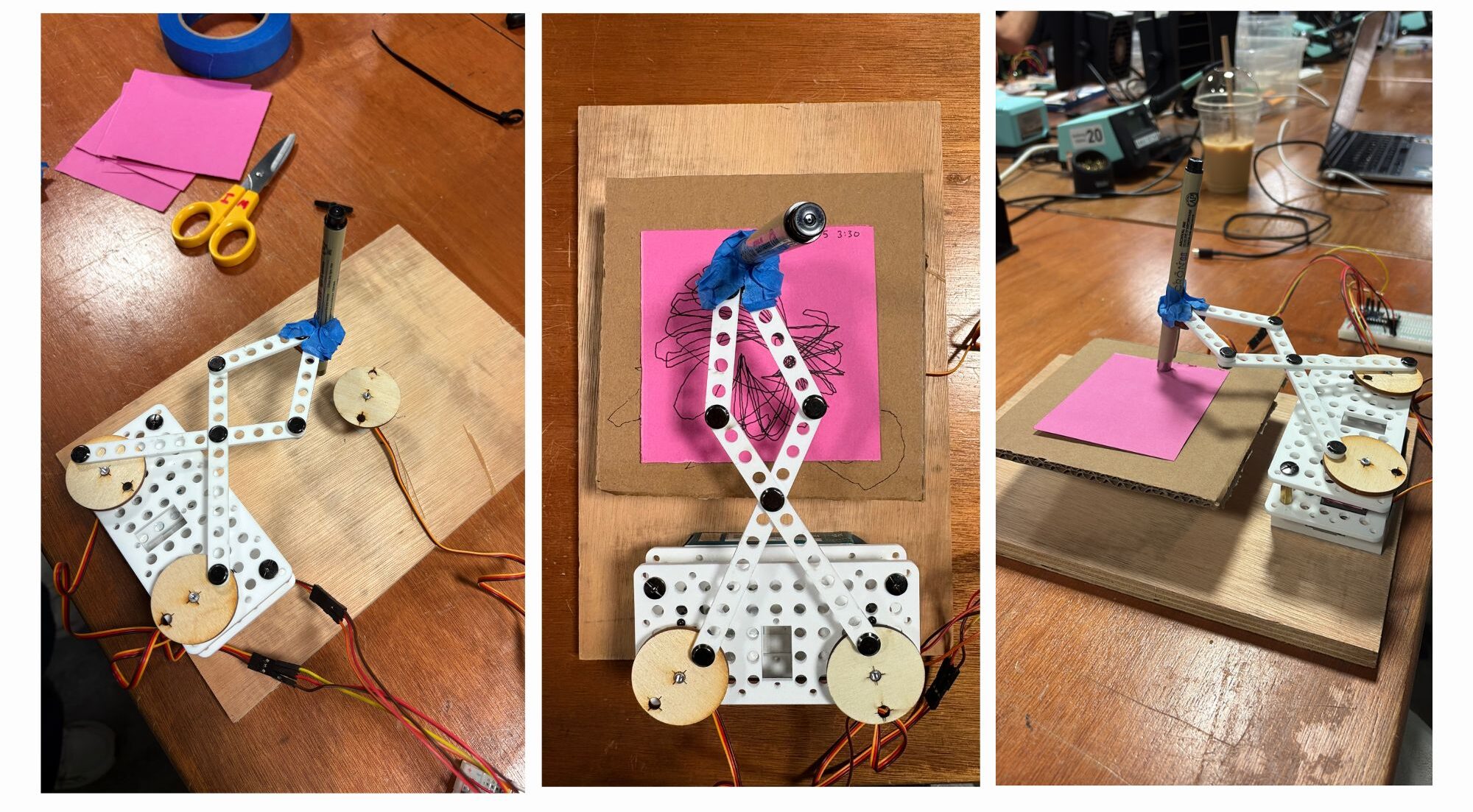
We built a four bar linkage. Two servos sit bolted to the base, each one drives a long link out to an elbow, and then two shorter links run back inward and meet at a single joint where the pen is taped. They both push at the same time and the pen goes wherever those four links allow it to go.
Then we put a third servo across this mechanism and made it turn a cardboard turn-table with the paper while the arms were drawing, and that turned out to be the backbone of our entire project. Without it the pen just retraces the same figure over and over until you stop it.
Outputs
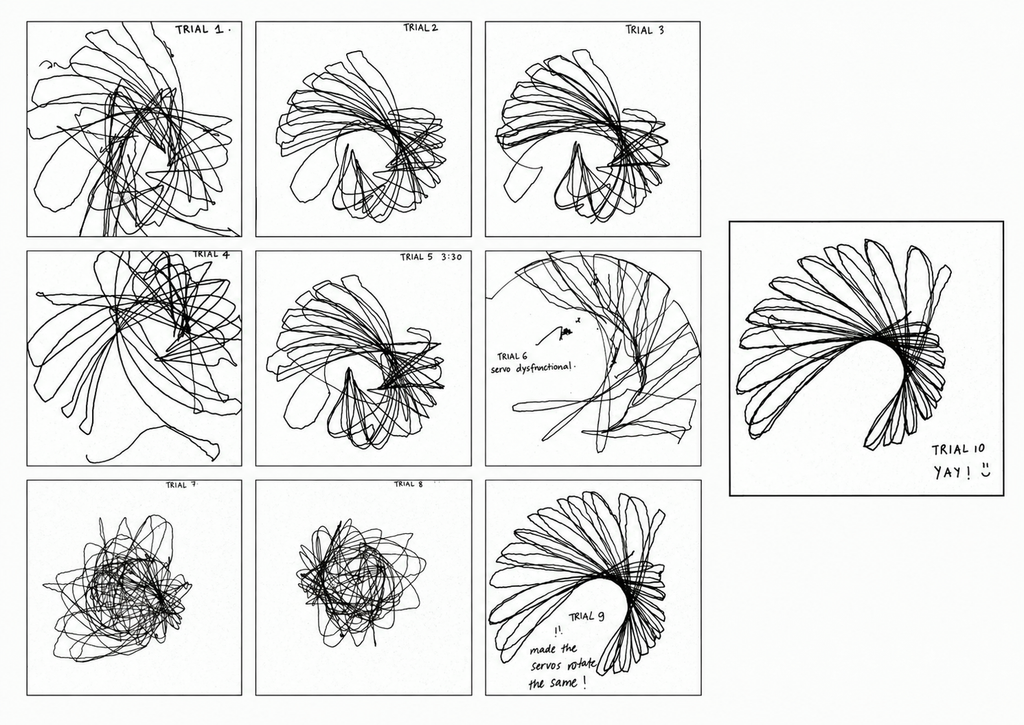
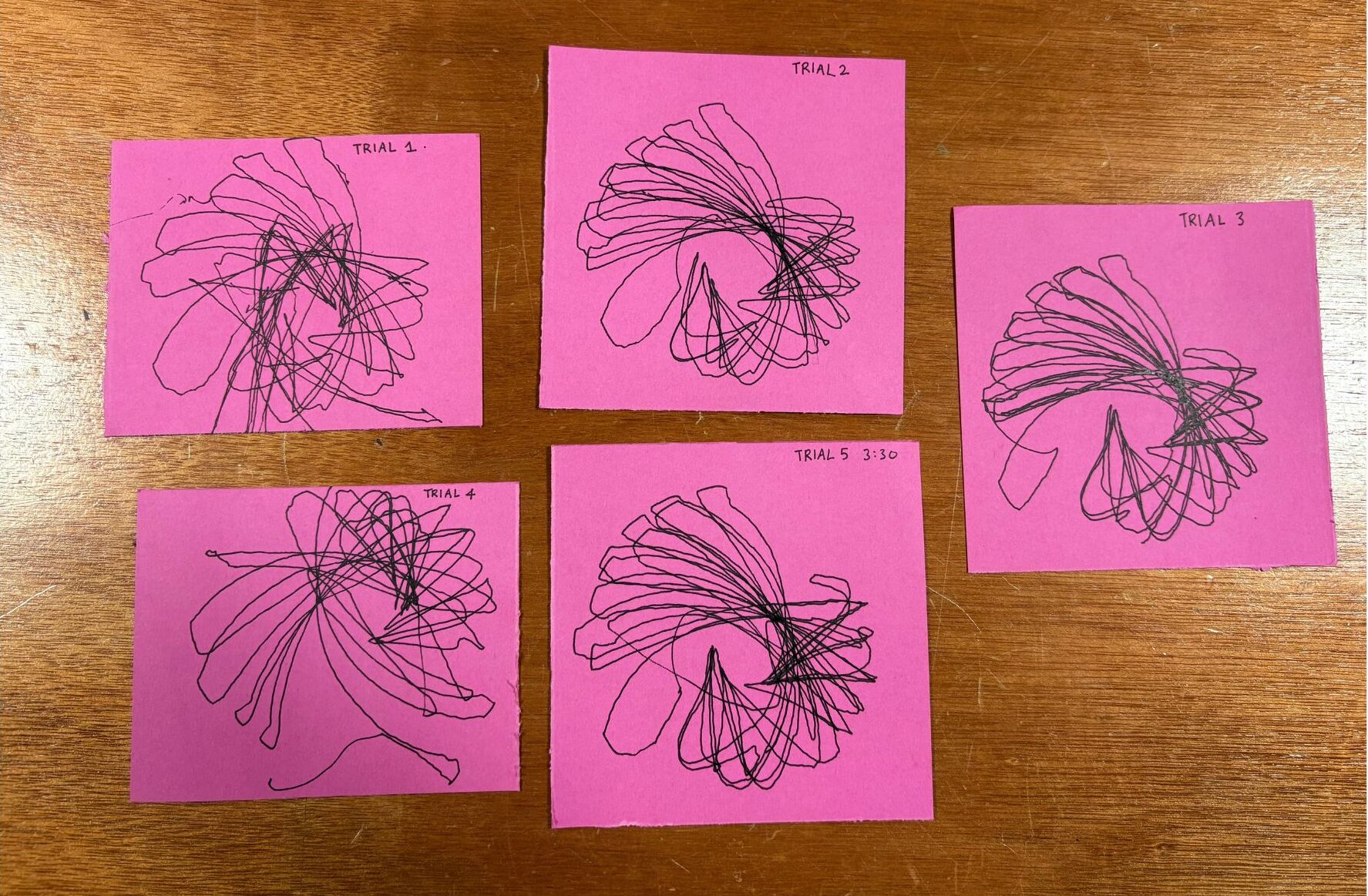
We did ten runs and the short version is that trials 1 to 5 use our first version of the code where the two arms swing in opposite directions at different speeds (the second arm running at 1.7 times the first, which is deliberately not a whole number so the two never line back up and the pattern keeps drifting), trial 6 is where a servo stopped cooperating, trials 7 and 8 are what happened when we tried to fix it and made it much worse, and trials 9 and 10 are the final version where both arms move together.
The bird
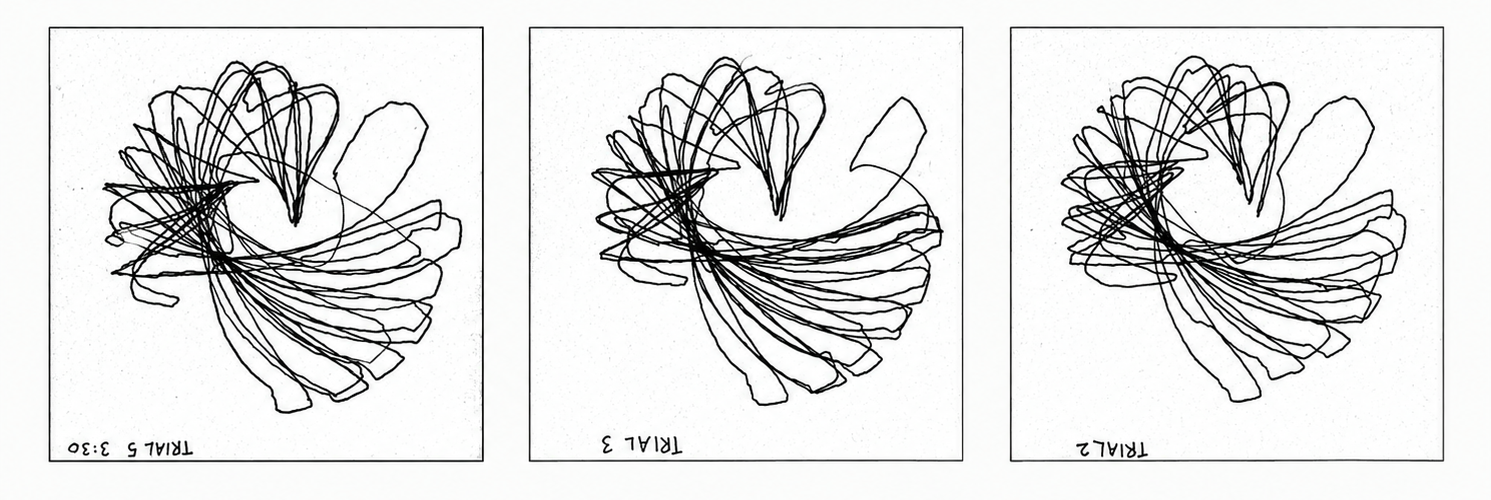
Trials 2, 3 and 5 are our favourites and here is why.
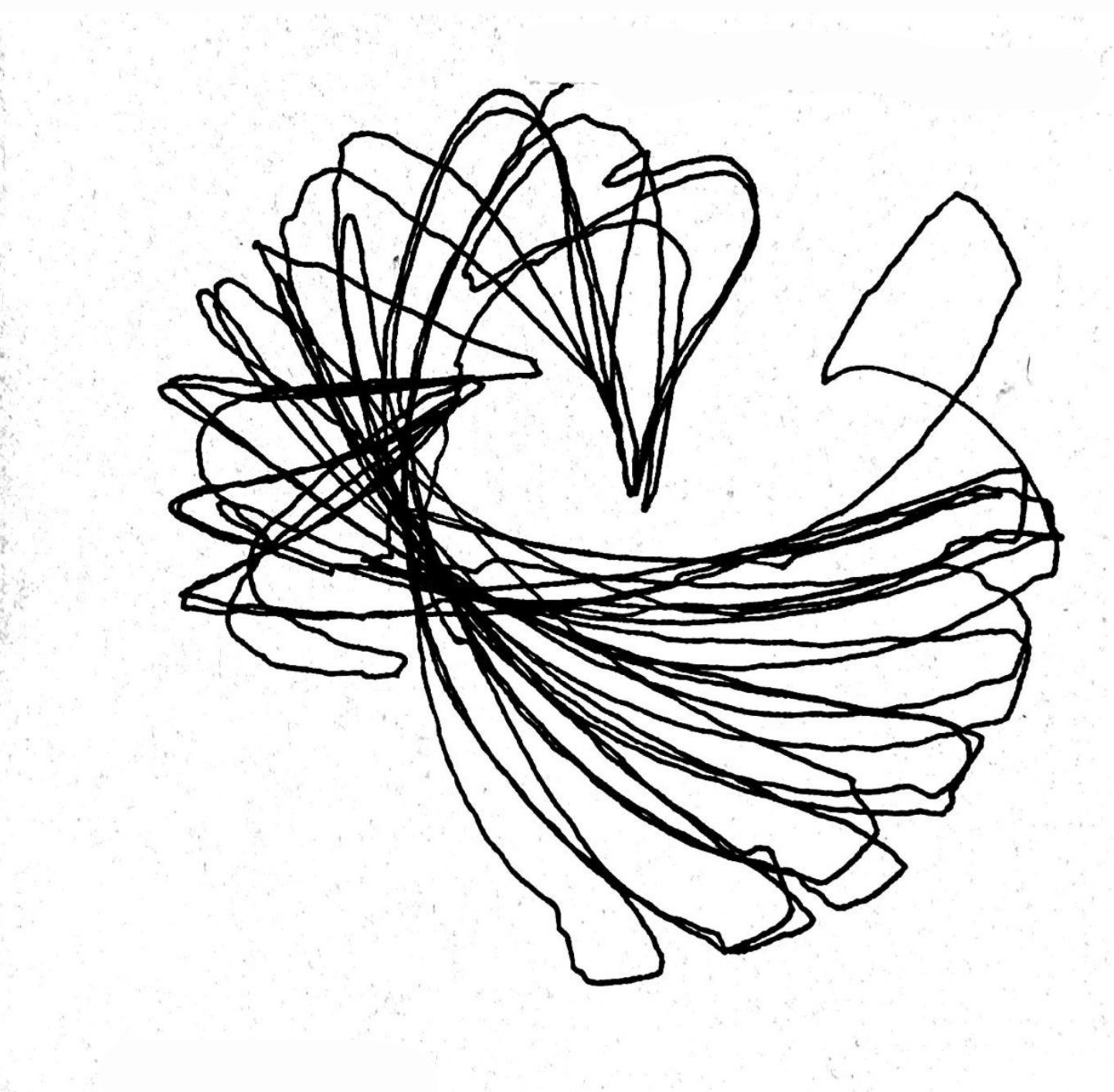
They look like a bird! which might sound like a reach until you look at one properly and cannot unsee it. There is a body in the middle where all the lines converge and get dense, there is a tail sweeping out low and wide to one side in long overlapping strokes that genuinely taper the way feathers taper, and up at the top there is a crest fanning open in these pointed loops that come to a sharp tip, which is the beak and then curl back.
This bird is more beautiful to us than what a completed geometric spirograph ever could’ve been.
Process and challenges
Trial 6 is where things went sideways, because one of the servos stopped holding its position properly and the other one started essentially dragging the entire linkage around by itself, and you can actually see the exact moment it happens in the drawing, because half of it has clear structure and the other half is just one arm being hauled sideways by the other
We decided the problem must be tension in the joints and loosened the screws, which felt like a reasonable thing to do at the time and was completely wrong. Trials 7 and 8 came out as a dense scribble sitting in the middle of the page with absolutely no structure holding it together, because loose joints mean every link gets to shift a little before it actually starts moving the next one along, so the whole machine wobbles instead of tracing anything.
Which is a good lesson, even though it cost us two drawings, because eight trials in, the single change that affected the marks the most was not anything in the code, it was how tight a screw was.
For the last two runs we stopped being clever about it and just made both arms move in the same direction to see what would happen, and that gave us the flower.
Reflection
The thing we actually learned is that the mechanism and the code are not two separate variables that you tune independently.
The screws prove it going one way, because the code was identical across trials 5 and 7 and the only thing that changed was how tight the joints were, and the drawings do not look like they came from the same machine.
And then the code proved it going the other way, which is slightly embarrassing but is genuinely the most interesting thing we found. In the final version both arms run at the same speed in the same direction, at this point they stopped functioning as two separate inputs and started functioning as one, so the linkage effectively went rigid and stopped contributing anything, and the only part of the machine still generating a pattern was the turn-table. That is exactly why trials 9 and 10 look so clean and so resolved and so finished.
Which is also the whole reason we prefer the bird. The petal drawings might be objectively prettier but we are prouder of the mess, because the mess is the one where all three parts of the machine were harmoniously functioning together to create this unintended but highly appreciated creature.
Moving forward we want to try different speed ratios between the arms, add phase offsets so they start out of step with each other, and run the table much faster and much slower against the same arm motion to see how much of the character comes from that one servo. We want more birds!!!