Concept
For this project, I wanted to create a simple low-tech drawing system that combines my control with an element of randomness. My idea was to use a spherical object covered in paint and allow it to move across a sheet of paper, creating lines and marks as it moves. I would control the marble’s movement indirectly by tilting or moving the surface. The marble rolls, changes direction, and interacts with the edges of the surface, making it difficult to predict the exact drawing in advance. I was curious to explore how a simple system could produce a result I could influence but not fully control.
The Drawing Machine
My drawing machine was made using a hard surface (my discrete book) that I can move, a blank sheet of paper, edges made of paper board, ink, and a roughly spherical object made from paper and a marble covered in tape. I taped the paper to the surface and placed the edges so that the marble wouldn’t fall out, and covered the marble and the paper object with red ink. I then moved the surface in different directions, allowing the ball to roll across the paper and leave paint marks behind. The surface provided a stable ground for the marble to move freely. However, its uneven shape made its path less predictable. The machine’s focus was on the process of producing the drawing rather than on building a complicated mechanism.
Below are a couple of trials where I was testing how much the edges could remain in place when moving the marble and the paper around.
Drawing Outputs
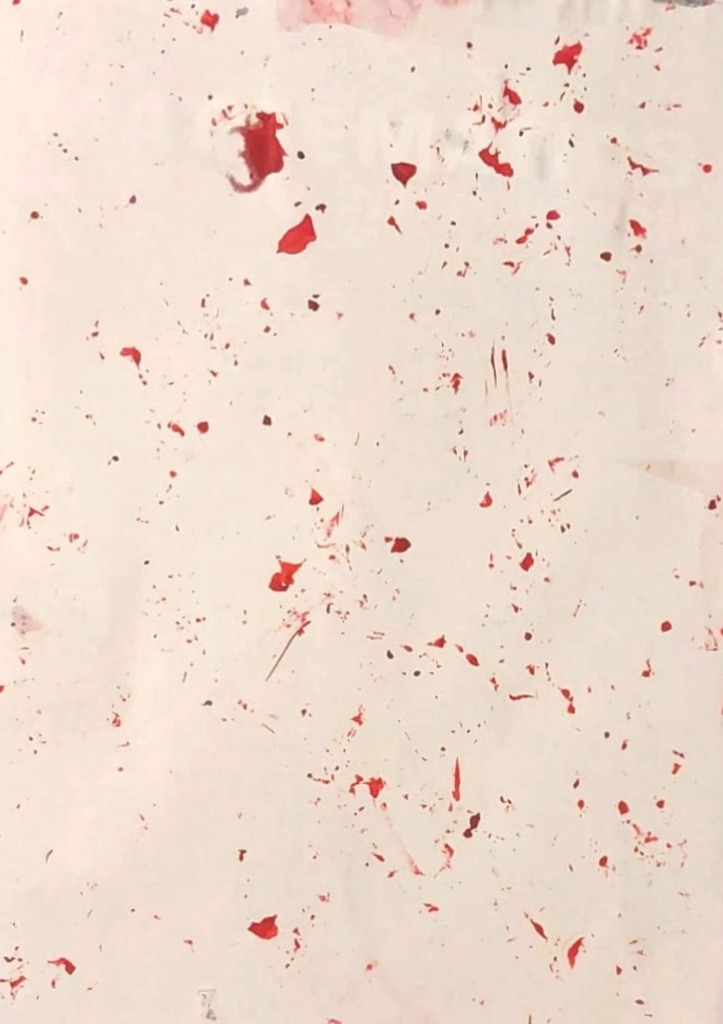
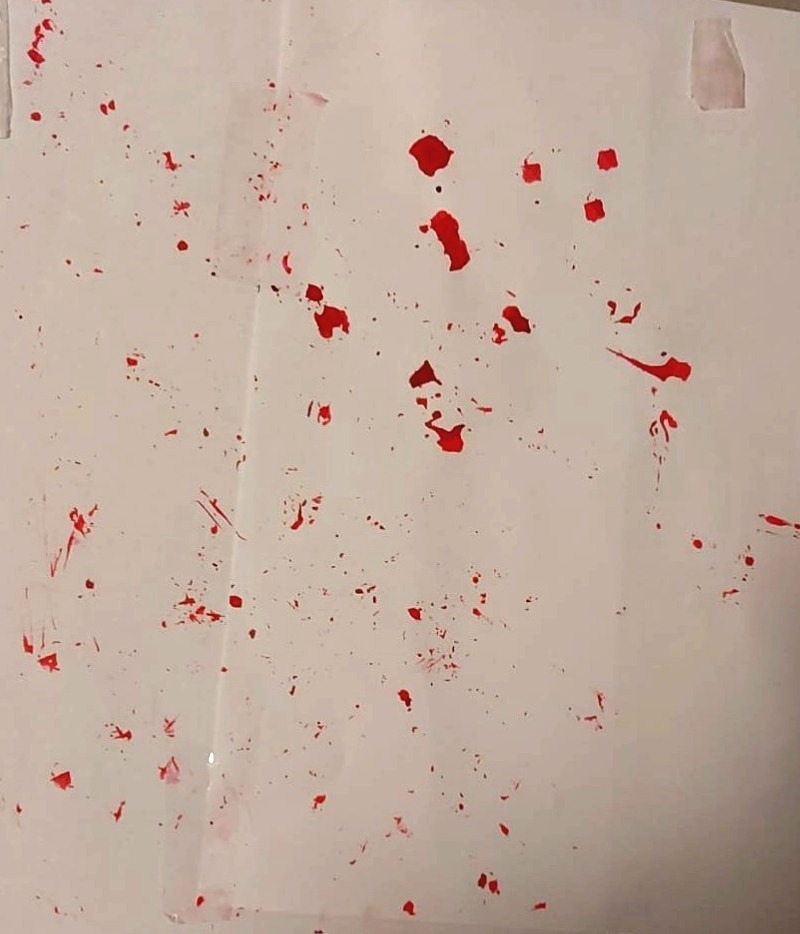
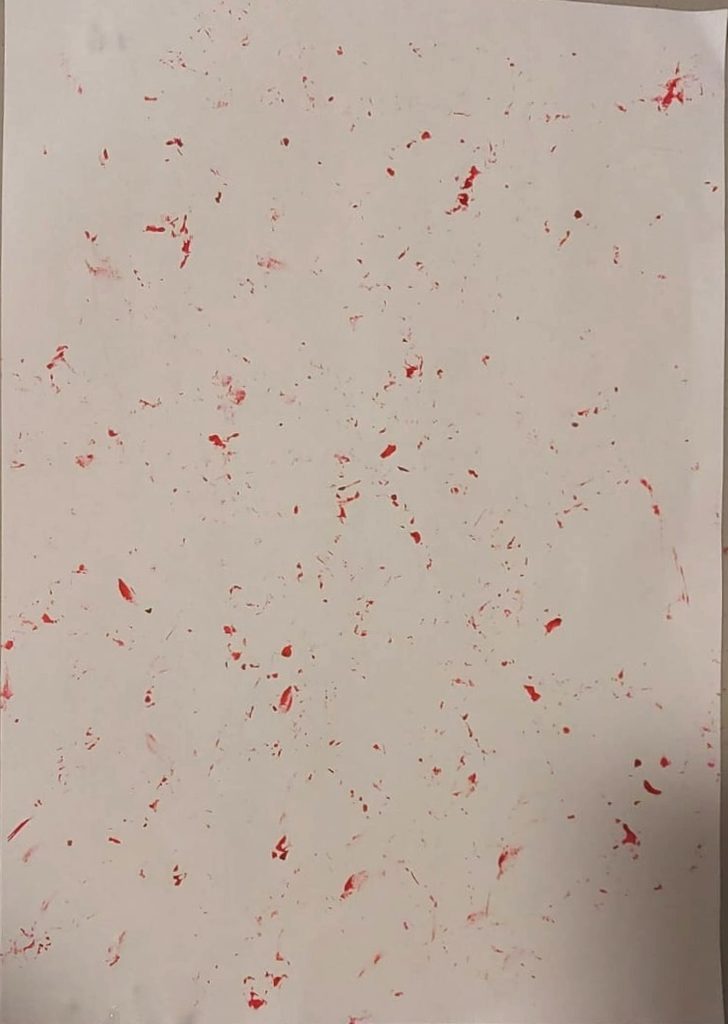
I produced several drawings by changing the way I moved the surface. In some attempts, I moved the surface slowly and gently, which allowed the ball to create more controlled lines. In other attempts, the marble would get stuck near the edges, and the paper sphere often stopped producing more irregular and overlapping marks. The amount of paint and the shape of the ball also affected the results. Although I could influence the general movement, I could not determine the exact path of every line. This made each drawing unique, even though they were created using the same objects.
Trial 1 output:
Trial 2 output:
Trial 3:
Process and Challenges
The process began with finding materials that could work together to create a simple drawing machine. One challenge was finding a suitable spherical object. Since I did not initially have a marble available, I considered making one from aluminum foil. However, the object did not end up being perfectly spherical, but its irregular shape could actually contribute to the unpredictability of the drawing. Another challenge was controlling the amount of paint. Too much paint could create large smudges, while too little might make the marks difficult to see. I also had to experiment with how much to tilt or move the surface. Through these experiments, I learned that small changes in the materials or movement could produce noticeably different results. Also, one challenge was that while the marble moved more or less normally, the spherical paper ball barely moved, which made the results unexpected. In addition to the way I tried to tape everything together, sometimes the tape would not hold the edges properly, which caused the marble to fall out of the edges.
Reflection: Control, Chance, and Authorship
This project made me think about the difference between controlling a drawing and creating the conditions for a drawing to happen. I controlled the materials, the design of the machine, the amount of paint, and the general movement of the surface. However, I did not control the exact path of the marble or the final drawing. The imperfect shape of the marble, its interactions with the surface, and the movement of the paint introduced an element of chance. I still consider myself the author of the work because I designed the system and made the decisions that allowed the drawings to exist. In addition to moving the surface. However, the final images were produced through a collaboration between moving the surface by myself, the machine itself, and the unpredictable movement of the imperfect marble.
Relation to Sol LeWitt’s Paragraphs on Conceptual Art
In relation to Sol LeWitt’s Paragraphs on Conceptual Art, I think the main idea of my drawing is in the way I designed the machine and the process I used. The final drawing is important, but I think the idea behind how it was made matters more. I chose the materials and decided how the ball would move, but I couldn’t fully control the lines it created. The machine and chance helped shape the final result. For me, the drawing is about the process and the balance between what I control and what I leave to chance.